

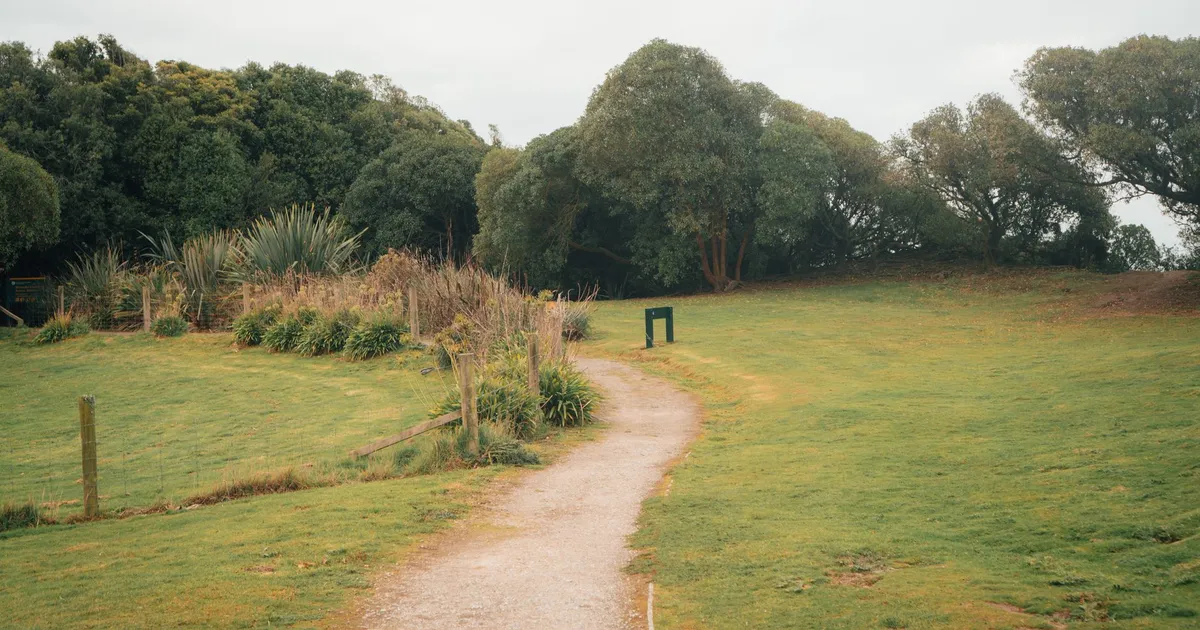
Waitaki District Council has started doing what cash-strapped households do when the bills outrun the income. It is looking around the house for things to sell. The council is reviewing its parks and reserves with a view to selling ‘red-listed’ sites, including a 4.7 hectare portion of Kurow Hill, to cut maintenance costs.
Expect the public debate to fixate on individual hillsides and much-loved patches of grass. The more important story is the arithmetic forcing the question, and the national rules that may soon force it on dozens of other councils.
A decade of rating too little
The council describes the exercise as a ‘massive project’ covering roughly 2,500 hectares, testing whether reserves are still used for their intended purpose. That framing is polite. The real driver sits in the council’s Annual Plan pre-engagement document, which projects a $14 million loss for 2026-27, made up of a $5 million operating deficit and $9 million in unfunded water depreciation. The council has deliberately under-funded that depreciation to keep rates down, which simply pushes the replacement bill onto future ratepayers. Diesel costs jumping 43% in March did not help.
Mayor Mel Tavendale was candid about the cause in May, telling RNZ the council had run deficits in nine of the last ten years. “We haven’t been rating enough for a number of years to cover our actual operating costs,” she said. Council was then consulting on rises of 19%, 27% or 45%, in a district where median household income sits at about $32,000, roughly $10,000 below the national figure. In that same discussion, support services director Paul Hope floated the idea that the council could sell properties to recoup costs. Few noticed at the time. It now looks like a preview.
Ratepayers closed one door, so council opened another
By late June, hundreds of ratepayers protested in Oamaru against a reduced 17% rise, carrying a petition signed by thousands and warning that residents would be choosing between rates and food or power. The final Annual Plan 2026-27 landed on a 16.9% average increase, with water charges up 43% to meet government standards, capital expenditure nearly five times what it was a decade ago, and external debt closing in on the 175% of revenue cap. The plan’s own verdict is blunt: there is “no sweat left in the assets”.
So the community capped rates through protest, borrowing is nearly maxed out, and deferred maintenance cannot be deferred again. Something has to give. Parks and recreation take $1.07 of every $10 in rates, making them one of the few discretionary lines big enough to matter.
That is a legitimate place to look. Councils accumulate land over generations, often for purposes that no longer exist. Mowing, fencing and spraying reserves nobody uses is not public service, it is habit. A site-by-site test of whether land earns its keep is exactly what a fiscally responsible council should be doing, and Waitaki deserves credit for asking the question openly rather than quietly letting assets rot.
The trap in selling once
The caution is that a sale fixes a balance sheet only once. Back in 2023, University of Technology Sydney local government scholar Andy Asquith argued that asset sales deliver “a one-off capital hit” and that politicians everywhere have a strong track record of selling assets and then spending the proceeds. His point was aimed at income-producing assets like ports and airports, which a scrubby reserve is not. But the principle holds. Proceeds from Kurow Hill should retire debt or fund the deferred renewals, not paper over another year’s operating deficit. If they plug the gap, Waitaki will be back looking for land in two years with less of it to sell.
Waitaki is the early version of a national pattern
The bigger concern is structural. Recreation Aotearoa’s analysis of the Rates Capping Amendment Bill 2026 warns that because water costs sit outside the cap while other budgets are capped, councils will absorb water pressure by cutting elsewhere. It goes further, arguing that conditioning financial relief on asset sales “creates an incentive for local authorities to sell off public open space”, land that is very hard to recover once built on. The group puts council spending on sport and recreation at more than $1.3 billion a year, with a claimed $2.12 social return for every dollar.
That return is an average, not a guarantee for every hectare, and an advocacy group has obvious reasons to stress it. Still, the warning about incentives is worth taking seriously. A rates cap is a reasonable discipline on councils that have overspent for years. A regime that nudges them toward one-off land sales as the easiest escape is not discipline, it is a slow liquidation. Stats NZ’s local authority statistics already show how heavily the sector leans on rates income, which is precisely why the pressure will hunt for alternatives.
For Waitaki businesses, the practical questions are whether service quality on roads, water and facilities holds up, and whether sale proceeds go anywhere useful. For businesses in other small, asset-rich, low-income districts, the signal is simpler. Watch for your council’s own red list over the next 12 to 24 months. Waitaki has merely gone first, and with Southern Waters taking over its water assets from July 2027, it may also be the first to find out whether selling land buys breathing room or just time.
Sources
- Otago Daily Times: Waitaki ponders selling off parks and reserves to reduce maintenance costs (2026-11-17)
- Waitaki District Council: Looking after our land (2026-11-02)
- Waitaki District Council: Annual Plan 2026-2027 Pre-Engagement (2026-11-02)
- Waitaki District Council: Annual Plan 2026-27 (2026-06-23)
- RNZ: Waitaki mayor Mel Tavendale concedes 22 percent rate hike will be a ‘tough ask’ (2026-05-28)
- RNZ: Waitaki residents protest against ‘unaffordable’ rate hikes (2026-06-25)
- RNZ: Asset sales not the solution to council debt – local government scholar (2023-12-05)
- Recreation Aotearoa: Protecting Our Parks, Pools, and Places – Why the Rates Capping Bill Threatens Active Recreation (2026-09-24)
- Stats NZ: Local authority statistics, June 2025 quarter (2025-09-08)
Join the discussion
Add useful context, ask a good question, or challenge an idea — keep it specific and respectful.