

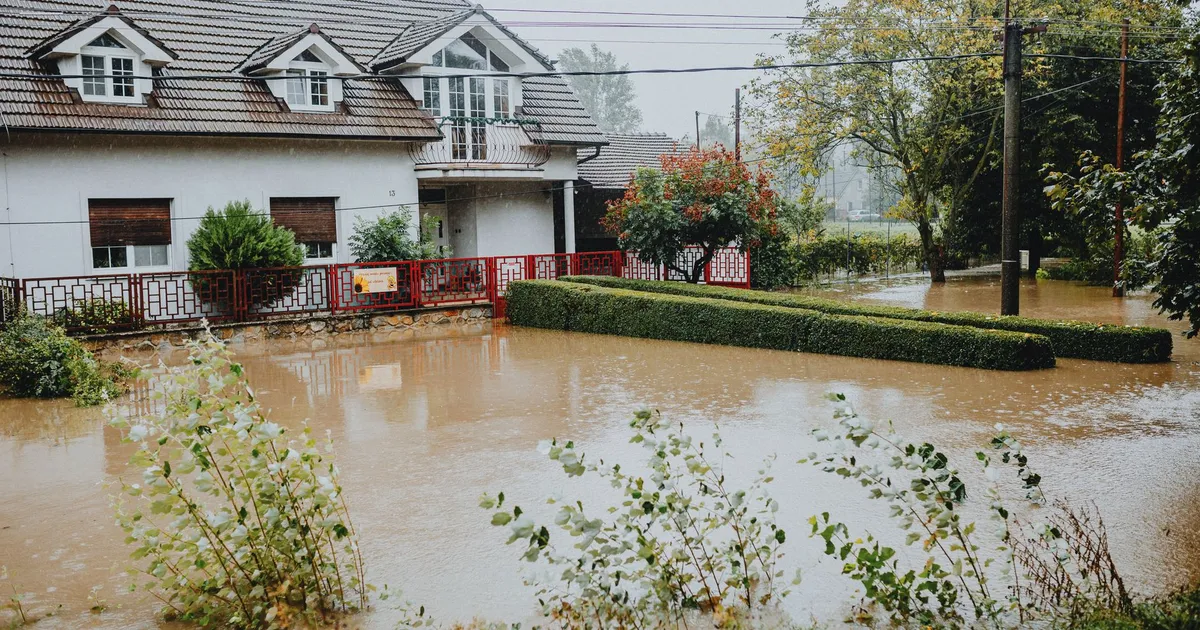
New Zealand’s flood risk has just become a number attached to every property, and the number that matters is no longer the valuation. Cotality has scored every home in the country on combined river, coastal and surface flooding, using the same third-party data some banks and insurers already rely on. In some districts, more than half of homes score moderate to high.
The market has not priced this in. The lenders and insurers who decide whether a sale can happen are starting to.
Small towns lead the list, big cities carry the risk
Wairoa tops the table with 66% of homes scoring three to five, ahead of Buller at 61%, Napier at 56%, Gore at 50% and Westland at 43%. But Cotality chief property economist Kelvin Davidson argues scale is the systemic story. Christchurch has about 24,000 higher-risk homes, Napier 13,900, Auckland 11,300 and Lower Hutt 10,400.
“The bigger concentrations in terms of scale are Christchurch, Wellington, Auckland,” Davidson says. That matters for bank balance sheets far more than a small West Coast town ever could.
The broader numbers back him up. In 2025, Stats NZ reported 219,000 homes in flood-prone coastal zones representing $180 billion in assets. Back in 2021, well before Cyclone Gabrielle, Treasury estimated 250,050 homes, or 14.5% of the national stock, were exposed to flooding. The baseline has only grown since.
Buyers are paying more for the riskiest homes
Here is the paradox. Properties with the highest flood score have grown 26.1% in value since January 2020, against 19.8% for zero-risk homes. They trade at a discount, then outperform as buyers chase affordability.
Cotality chief data officer Craig Dargusch puts it bluntly: “Affordability wins today, but risk shapes tomorrow.” He warns of a coming friction point, because “insurance is a non-negotiable prerequisite for mortgage lending” and “any future retreat by insurers means no loan and no liquidity.”
That is the real mechanism. A house is only worth what the next buyer can borrow against it.
Insurers move first, banks follow
The retreat has already started at the edges. AA Insurance temporarily stopped offering new home policies in Westport earlier this year. The Climate Commission’s 2026 adaptation assessment found roughly 4% of flood-zone properties already cannot get quotes from two or more insurers, a leading indicator of withdrawal.
None of this should surprise anyone. In 2024, the Reserve Bank flagged that insurers were moving towards granular risk-based pricing, warning of gradual withdrawal from high-risk properties and underinsurance as owners lift excesses to cope with premiums.
Banks are now the pivot. Last week Westpac became the first NZ bank to say publicly it will factor natural hazard risk into mortgage decisions. Head of consumer lending Jo McGregor says it will affect loan size or term in “no more than two percent” of cases. A beachfront home with erosion risk might attract $800,000 instead of $1 million, or a 25-year term instead of 30. Existing mortgages are untouched.
That is a sensible, measured approach, and Westpac deserves credit for being upfront. Davidson suspects other banks are doing the same quietly. Expect them to.
Why the bank cares more than the buyer
The Reserve Bank’s 2023 stress test, run before the Auckland floods and Gabrielle, found nearly a quarter of Auckland mortgage exposure was at risk from one-in-100-year rainfall flooding. That was the moment banks started paying attention. Granular scoring now lets them act on it property by property.
For landlords and investors, the implication is uncomfortable. A property can look fine on today’s comparable sales while its score silently shrinks the borrowing capacity of every future buyer. For developers, insurability belongs in the feasibility study, not the post-settlement panic.
Politicians have left the rulebook to the private sector
A 2025 government-commissioned report chaired by Matt Whineray concluded the Crown cannot keep buying out flood-affected homes at market rates as it did after Gabrielle. Yet the government has pushed any decision on cost-sharing beyond the next term, offering a non-binding framework and a National Flood Map due in early 2027.
Letting markets price risk is the right instinct. Pretending the state will not be asked to pick up the tab when the next cyclone hits is not. The longer the cost-sharing question is dodged, the more insurers and banks will set the rules by default.
The next valuation shock will not come from a valuer. It will come from an insurer declining a quote or a bank trimming a loan offer. Owners in high-scoring areas should check their number now, while they still have time to decide what to do about it.
Sources
- RNZ: Over 50% of homes in some districts face moderate to high flood risk (2026-11-18)
- RNZ: Westpac to factor natural hazard risk into mortgage decisions (2026-11-11)
- Building Today: Flood-prone property affordability outweighs climate risk fears (2026-07-07)
- Stats NZ: Evidence shows rising risks to coasts and communities – Our Marine Environment 2025 (2025-10-08)
- Treasury: A National Flood Risk Assessment of NZ (2021-09-01)
- Climate Commission: National insights relevant for adaptation planning (NAPPA 2026) (2026)
Join the discussion
Add useful context, ask a good question, or challenge an idea — keep it specific and respectful.