

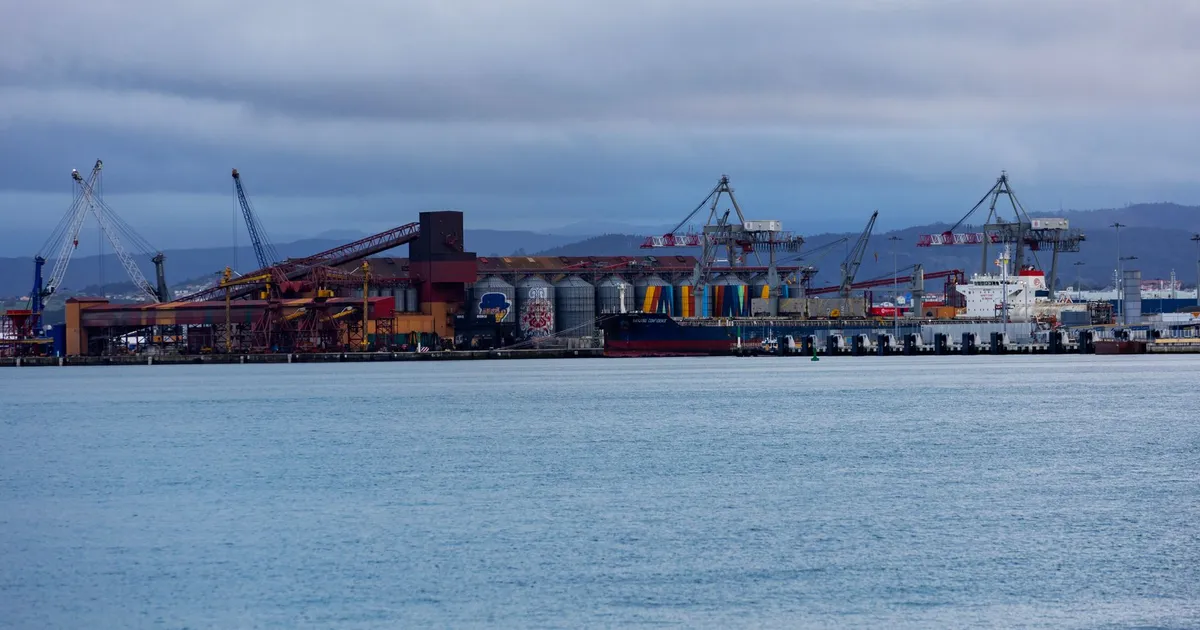
Napier Port’s full-year result reads like a volume story until you look at the volumes. The Hawke’s Bay operator posted net profit of $35.5 million, up 15%, on revenue of $176.2 million, with container volumes flat at 250,000 TEU. Bulk cargo slipped 3% to 3.3 million tonnes and cruise calls fell 30% to 55.
So where did the money come from? Price, mix and a tariff schedule built to capture value at every step. That pricing power is now funding a $20 million-plus wager on autonomous trucks, and that is the part of this result that matters most for the wider sector.
Same boxes, much better money
The key number is revenue per container. Container services revenue rose 18.9% to $112.6 million, with average revenue per TEU climbing from $378 to $449, driven by a richer cargo mix, tariff and levy increases, fuel cost recovery and growth in the Viewpoint supply chain business. Full export and import boxes rose while lower-paying empties and transhipments eased.
That flowed straight to the bottom line. Underlying net profit jumped 30.4% to $36.9 million, more than double the rate of revenue growth. The board reported an operating margin of 43%, and guidance for an underlying operating result of $80-85 million in FY2027, against $75.7 million this year.
Part of that confidence comes from geography. Napier is picking up cargo squeezed out of Auckland and Tauranga, with out-of-region volumes setting monthly records as meat exporters, forwarders and importers railed freight in via Palmerston North. BusinessDesk noted the port is positioning itself as the alternate North Island gateway. When your competitors are congested, customers stop haggling.
The next price rise is already locked in
FY2027 guidance is not a guess. From 1 October, Napier applied a 5% increase across most of its public tariff schedule and lifted the full-container infrastructure levy from $110 to $140 per TEU. The vehicle booking charge rose from $50 to $65, and a new $20 per TEU levy on empty containers kicked in on 1 November, monetising exactly the low-yield movements management was steering away from. A weekly fuel adjustment factor passes diesel costs through almost in real time.
For exporters and importers, that is the bill. A 27% jump in the full-container levy is not trivial for a Hawke’s Bay meat or fruit shipper on thin margins. The fair question is what they get in return.
Where the margin is going
The answer is automation. Napier is spending more than $20 million on 12 battery-electric, fully autonomous truck and trailer units, a first for a New Zealand port. The 2025 annual report framed the Napier Port Transformation programme around productivity, reliability, safety and emissions. The half-year report confirmed a private 5G network was live and civil works complete, and the port now has core infrastructure finished and trial trucks running, with autonomous operations due during 2027.
Management is careful to frame this as change management rather than a tech toy. “It is primarily a people-led initiative and engagement process,” the port told analysts.
Auckland is the ghost in the yard
Scepticism is warranted, because New Zealand has done this badly before. In 2025 the Maritime Union pointed to Port of Auckland’s abandoned straddle carrier programme, scrapped in 2022 with a $65 million write-off and an estimated $1.2 billion in wider economic damage. Carl Findlay, then the union’s national secretary, called Napier’s project “a threat to jobs, safety, and productivity across the sector”.
But Napier’s design is deliberately less ambitious than Auckland’s. Reach stackers will keep lifting containers from the stacks and simply hand them to the driverless units for the run to the cranes. Automating only the horizontal leg cuts wear on expensive plant, frees space between rows and lifts storage capacity, without betting the whole terminal on one software stack.
Even the freight industry, normally the loudest critic of port charges, has been won over. After a briefing in March 2026, NZ Trucking wrote that it had been “pretty vocal about port charges and how those additional funds are being invested to improve productivity, so it was remarkable to see what could and is already being done.”
The bargain customers are being asked to accept
This is a well-run port using genuine pricing power and reinvesting it in productivity. That is how infrastructure should work. The deal implied to customers is simple: pay more per box now, get a faster, more reliable terminal later.
2027 is when that deal gets tested. If the autonomous fleet delivers measurable gains in crane rates and yard capacity, Napier will have proven a template every other port operator will copy, and its higher tariffs will look like money well spent. If it stumbles, shippers will have funded another Auckland, and they will remember who sent the invoice.
Sources
- NZX: 2026 Full Year Results – Napier Port (2026-11-17)
- RNZ: Napier Port net profit swells to $35.5 million (2026-11-18)
- Investing.com: Earnings call transcript – Napier Port lifts FY 2026 profit and guides higher (2026-11-17)
- Investing.com: Earnings call transcript – Napier Port lifts FY 2026 profit and guides higher (2026-11-17)
- BusinessDesk: Napier Port reports increased earnings as it readies for major automation project (2026-11-17)
- Napier Port: Annual Tariff Schedule Review (2026-08-25)
- NZ Herald Hawke’s Bay Today: Self-driving trucks at Napier Port a first for NZ ports (2026-09-03)
- Napier Port: 2025 Annual Report (2025-12)
- Napier Port: Half-Year Report for the Six Months Ended 31 March 2026 (2026-05)
- Maritime Union of New Zealand: Napier Port automation may come at high cost (2025-09-26)
- NZ Trucking: The good, the bad and the ugly (2026-03-06)
Join the discussion
Add useful context, ask a good question, or challenge an idea — keep it specific and respectful.