

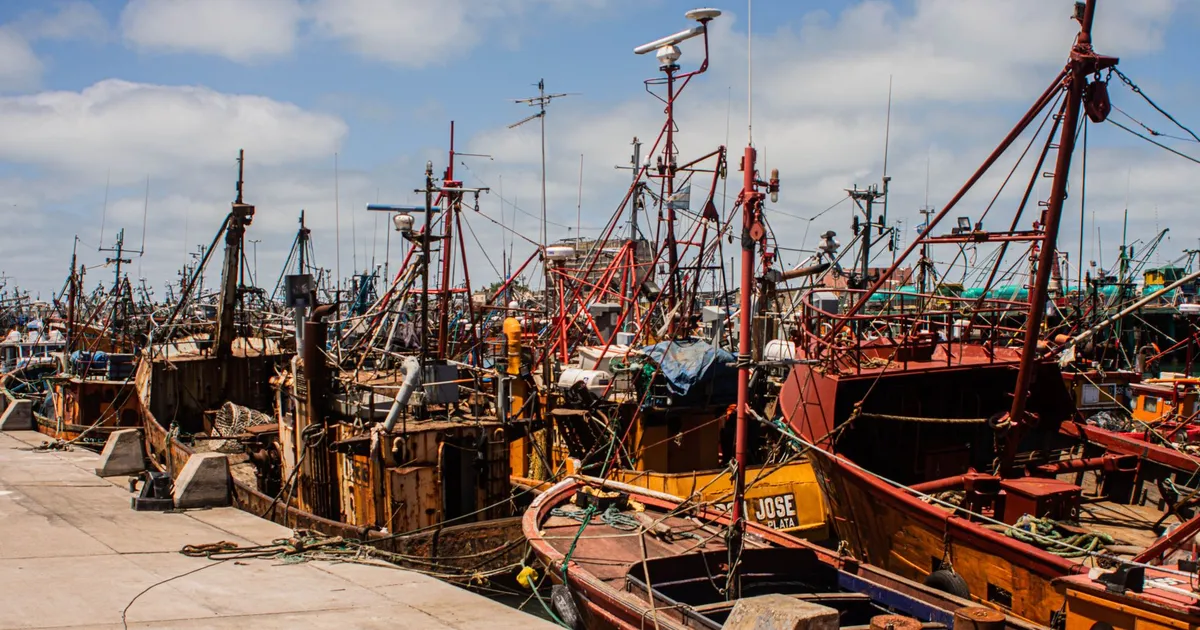
Sanford has just delivered the best result in its history, and it deserves credit for it. The seafood company posted net profit of $74.5 million, up 17%, on record revenue of $598.6 million and doubled its dividend to 10 cents a share. For a business that looked stretched two years ago, that is a serious turnaround.
The harder question is how much of it is repeatable. The answer matters to anyone holding the shares, employing people in fishing towns, or watching how quota-backed industries justify their access to a public resource.
A turnaround built on discipline
Start with what Sanford controlled. In FY24 the company earned just $19.7 million with net debt of $185.5 million. In 2025 it reported a 224% profit surge to $63.7 million, which Forsyth Barr’s Matt Montgomerie, speaking at the time, framed as an efficiency and market conditions story. In May, the half-year accounts already showed record interim profit of $42.4 million, with capital spending held tight.
FY26 extended that run. Gross margin rose to 27.8%, adjusted EBIT reached $116.6 million and net debt fell to $53.6 million. Taking debt from $185.5 million to $53.6 million in two years is the sort of balance sheet repair most boards only talk about.
Chief executive David Mair is refreshingly blunt about the strategy. “Sanford is now focused on operating as a commodity player, where reducing costs and operating more efficiently are critical for our continued success,” he told RNZ, adding that individual productivity gains “may appear incremental, but collectively they compound over time.”
That is the lesson for every commodity exporter. When you cannot set the global price, you win on cost. Sanford grew profit roughly seven times faster than revenue by doing exactly that.
The tailwinds nobody can bank
Now the less comfortable part. The FY26 accounts show hoki prices hit record levels because of a northern hemisphere white fish shortage, while half-shell mussel prices softened. Aquaculture still made up 54% of sales, but it was the wild catch carrying the year.
Victor Sage’s analysis for Middle.news puts it plainly: the record rests on “an unusually strong squid catch and a sharp fall in mussel profitability”. He notes management itself warns several FY26 contributors “were outside the company’s control and should not be assumed to repeat”.
Squid catches normalise. Foreign supply shortages end. If both reverse in FY27, the cost discipline will still be there, but the headline growth rate will not. Investors should treat this result as a high-water mark until full ownership of North Island Mussels proves it can lift returns in a weak half-shell market.
China crept back in while America shut the door
The market mix is the other warning light. The same accounts show China’s share of sales jumped from 15% to 25%, while North America fell from 27% to 23%, largely because US trade policy hit half-shell mussel exports.
That runs against the company’s own stated direction. In 2025, then-managing director Mair said Sanford had “become concentrated in several large traditional markets, particularly China and the US” and flagged a push into Japan, South Korea and Southeast Asia. A year later, concentration in China has deepened. That is not mismanagement so much as a reminder that Washington can redraw an exporter’s map faster than any diversification plan.
Quota politics is the real long-term variable
Sanford’s numbers also land in a live policy fight. A Berl report commissioned by Seafood New Zealand found the sector supports more than 14,500 jobs and $6.4 billion of economic output, with commercial catch down 15% since 2020 even as catch value rose from $1.29 billion to $1.53 billion. That is an industry squeezing more value from less fish, which is precisely what policymakers should want.
Seafood New Zealand chief executive Lisa Futschek is urging the government to weigh that commercial value before changing the rules, arguing the debate should be about sustainable management, not industry versus environment. Analysts have previously suggested reform would have only a modest effect on Sanford, but regulatory risk to quota settings remains the one variable that could outweigh any commodity cycle.
What FY27 has to prove
Sanford has shown that a quota-backed seafood business, run tightly, can generate real returns, pay shareholders properly and keep regional jobs viable. That is a genuine success.
But pricing power borrowed from a foreign fish shortage is not pricing power you own. FY27 will reveal whether the mussel bet and the cost programme can stand on their own once the squid and the hoki prices come back to earth. If they can, this result is a new baseline. If not, it was a very good year, and the market should price it as one.
Sources
- RNZ: Seafood company Sanford reports record profit (2026-11-17)
- NZX: Sanford Annual Report FY26 (2026-11-17)
- Sanford: Annual Report FY25 (2025-11)
- The Post: Fishery giant Sanford posts 224% profit surge (2025-11-17)
- Newstalk ZB: Sanford profit surges as debt falls and aquaculture lifts earnings (2025-11-18)
- NZ Herald: Sanford profit hits record $42.4m as salmon and wild catch drive gains (2026-05-13)
- The Post: ‘Taihoa, stop and think’: Industry urges government to weigh commercial fishing value before making changes (2026-09-02)
Join the discussion
Add useful context, ask a good question, or challenge an idea — keep it specific and respectful.