

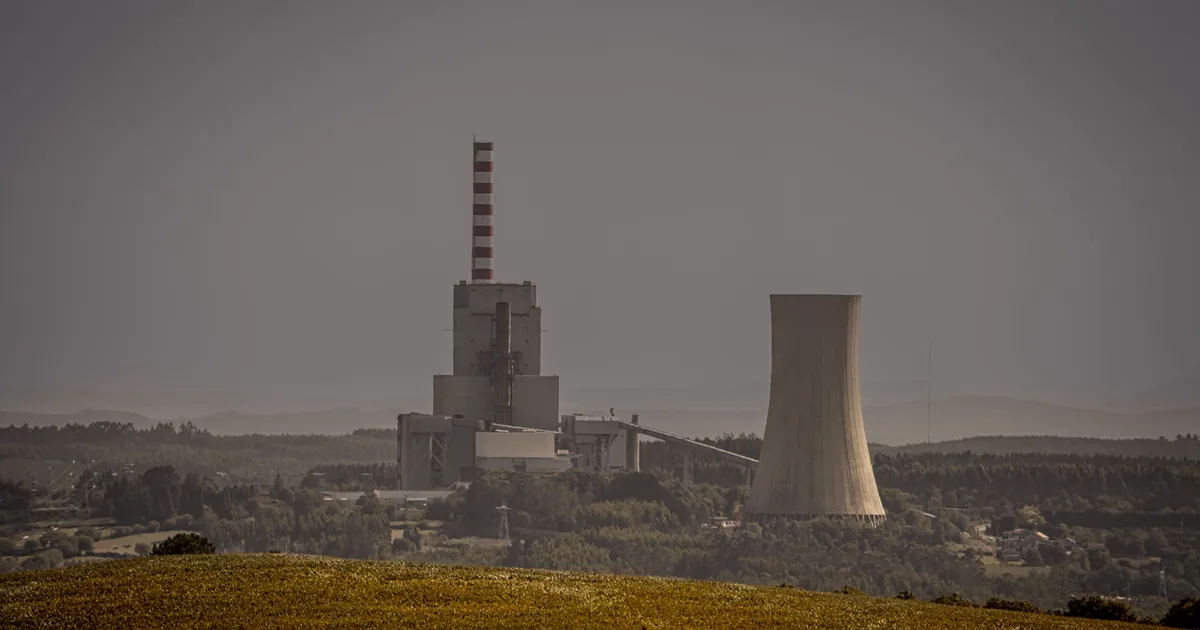
Genesis Energy has been ordered to pay $301,875, the largest pecuniary penalty the Electricity Authority’s Rulings Panel has ever imposed, for failing to follow Transpower’s dispatch instructions at Huntly. That sounds tough until you look at the context. It is the first fine after years of repeat breaches of the same rule, it arrived almost three years after the event, and it sits at roughly 15% of the maximum the law allows.
The question for every business that buys power is simple. Does this change how gentailers behave? On the evidence, probably not.
A thin grid on a summer morning
The breach happened on 26 January 2024, across two half-hour trading periods at Huntly Unit 5. The system was already stretched. Newsroom reports that Contact’s two 100MW Stratford peakers were out, three 125MW units at Manapōuri were offline and three of Genesis’s five Huntly units were down. Genesis had just brought its 400MW Unit 5 back and was ramping it up when Transpower asked for more. Genesis said it could deliver. It could not ramp the unit within safe temperature limits, and the promised output never arrived.
Genesis admitted the breach of clause 13.82(2) of the Code, and says it wasn’t motivated by financial gain. That is credible. Nobody is suggesting Genesis gamed the market. The problem is a pattern of over-promising, and a penalty regime that took far too long to price it.
The maths that shrank the bill
The Panel’s written decision started at $350,000, added a 15% uplift of $52,500 for Genesis’s history of breaches and warnings, then subtracted 25% for early admission and 10% for remedial steps. Net result, a penalty lower than the starting point, despite the Panel explicitly recognising a repeat offender. Genesis also pays $9,937.50 in costs.
The Panel rated the market impact as “moderate”, calculating a $51,539 underpayment to generators and a $55,477 undercharge to purchasers over just two trading periods. Small numbers, but they show how quickly a single dispatch failure distorts prices, and that was a mild day. The $2 million maximum has been available since September 2022. Regulators used about a seventh of it.
Eighteen times is a habit
The most damning detail comes from Mike Casey, chief executive of think-tank Rewiring Aotearoa. He told RNZ that Genesis has self-reported 17 breaches of this same clause since January 2020, and the Authority has sent seven warning letters. Credit to Genesis for reporting them. But a warning-letter system that runs to seven letters before anyone writes an invoice is not enforcement. It is correspondence.
Casey put it bluntly on Morning Report: “A $300,000 fine is you know being portrayed as a record fine but is that really just the cost of doing business in an organisation that makes hundreds of millions of dollars of profit a year?”
Then there is the timeline. The breach occurred in January 2024. The Authority did not lodge its complaint until December 2025. The decision landed in November 2026. A penalty that arrives nearly three years after the conduct loses most of its signalling value.
Price is not the real risk
The Panel priced the market impact. The bigger issue is security. The Authority’s own referral notice flagged that shortfalls from non-compliance could limit frequency keeping stations’ ability to respond to an under-frequency event. For a manufacturer, a cold store or a data centre, that is the scenario that matters, not a $55,000 pricing error.
Casey made the point directly: Genesis promised power, “that power didn’t show up and it actually put our grid in quite a vulnerable situation which puts our whole economy in a vulnerable situation.”
Nor is Genesis necessarily alone. Trading firm Haast Energy told Newsroom there are “even more serious gentailer breaches that should be investigated”. If that is right, the Huntly case is the visible tip of a compliance culture the regulator has been slow to test.
A market only works if the rules bite
This is not an argument for more regulation. It is an argument for enforcing the rules already on the books, quickly and predictably. A wholesale market depends on generators doing what they say when dispatched. Competitors who invest in reliability, and customers who pay scarcity prices, are entitled to expect that over-promising carries a real cost.
That means penalties that escalate automatically with repeat breaches, discounts that cannot outweigh a documented history, and cases resolved in months rather than years. Huntly’s role is also shifting. Genesis chief executive Malcolm Johns told the company’s annual meeting it is “challenging to see an attractive commercial case for Unit 5 beyond the very near term”, as renewables and storage grow. Until that transition is complete, the grid still leans on the plant in tight moments.
The Authority now has a precedent and a ceiling it has barely touched. The next repeat breach will show whether “record” was a turning point or just a bigger rounding error.
Sources
- Electricity Authority: Rulings Panel decision on Code breach by Genesis Energy (2026-11-16)
- Newsroom: Genesis Energy fined a record $300k for failing to deliver Huntly gas power (2026-11-16)
- NZ Herald: Genesis Energy ordered to pay record $301k fine for electricity code breach after failure to follow power dispatch instructions (2026-11-16)
- Electricity Rulings Panel: Decision C-2025-004, Electricity Authority v Genesis Energy Limited (2026-11-11)
- RNZ: Questions over whether $300,000 Genesis fine enough (2026-11-17)
- RNZ Morning Report: Mike Casey on Genesis Energy’s $300,000 fine (2026-11-17)
- Electricity Authority: R29 Notice Rulings Panel referral Genesis Huntly unit 5 dispatch non-compliance
Join the discussion
Add useful context, ask a good question, or challenge an idea — keep it specific and respectful.