

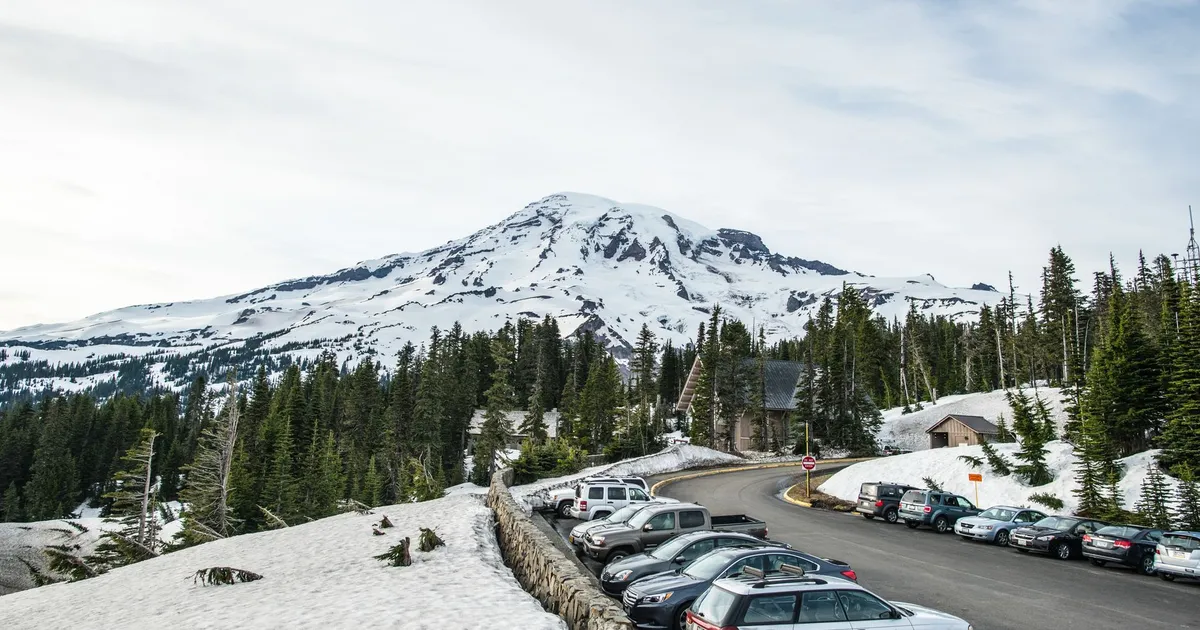
The Department of Conservation will charge $20 a day to park at eight more of the country’s most popular sites from December. On its own, that is hard to argue with. Visitors who use the conservation estate should help pay for it, and DOC has the numbers to show the model works. But the fee does not land on its own. It lands on top of a growing pile of small, separately designed visitor charges, and tourism operators are the ones left to explain them at the point of sale.
Eight sites, one familiar price list
The full list covers Tasman Glacier, the Kepler Track control gates, Kura Tāwhiti/Castle Hill, Blue Pools, Routeburn Divide, Deepwater Basin at Milford, Devils Punchbowl and the Goat Island marine reserve. Pricing follows the template refined during the pilot: 10 minutes free for drop-off, $2.50 per half-hour, $20 a day, with variations at Deepwater Basin and Goat Island. Skip payment and a company called Stellar sends a $75 breach notice. DOC expects about $3 million over the following year.
Locals can buy a $10 annual permit covering two vehicles, and commercial operators with valid concessions, school groups, volunteers and community groups are exempt. DOC’s director of heritage and visitors, David Butt, says the expansion is “a way for visitors to contribute to nature and the experiences they enjoy”, with revenue reinvested into wildlife, heritage and visitor infrastructure.
The pilot genuinely worked
Credit where it is due. The seven-month pilot at Punakaiki, Franz Josef and Aoraki/Mount Cook raised $1,511,574 from 161,163 transactions, with White Horse Hill alone bringing in $826,739. DOC’s monitoring found no drop in visitor numbers or car park use. Catherine Wilson, then DOC’s director of heritage and visitors, called it “very successful” with “general acceptance from visitors”. DOC also listened, moving to half-hour billing, clarifying same-day re-entry and adjusting free periods.
That is evidence-based user-pays policy, and it deserves to be recognised as such. Nobody serious thinks $20 is an outrageous price for a day at Blue Pools.
The warnings were about the stack, not the price
The industry’s concerns were never really about one parking meter. In 2025, Tourism Industry Aotearoa told DOC its Aoraki pilot “will not solve the core issue” of insufficient peak capacity, and went further: “TIA is concerned about the cumulative costs faced by travellers that can arise from multiple small charges.”
That same year, Police, NZTA, Heritage NZ and the Alpine Club raised fears that charges would push drivers onto roadsides and state highways. DOC itself conceded at the time that “paid carparking will not resolve capacity issues in the short term”. In other words, the fee raises money. It does not fix the overflowing car park.
In 2025, TIA chief executive Rebecca Ingram argued the charges were “unlikely to be a major barrier” for international visitors used to US park fees. Fair enough. But in the same report, café owner Grant Parrett put the domestic problem plainly: “New Zealanders don’t like paying for parking.” Casual visitors who skip the stop are the ones who would have bought the coffee.
The bigger bill is still coming
Parking is the warm-up act. Since 2025, the government has been weighing entry fees of $20 to $40 for international visitors at Aoraki, Tongariro, Milford Sound and Cathedral Cove, with six more sites to follow, aimed at raising over $60 million a year. Academic analysis has warned that a site-by-site model risks starving less glamorous conservation areas while flagship sites get flush.
Add the sharply higher international visitor levy and rising visa costs, and the export sector’s long-running complaint starts to look less like special pleading. The message offshore buyers hear is simple: New Zealand is getting more expensive.
What operators now have to sell
Here is the business problem. Concession holders are exempt from parking, so the big coach and guided-walk firms are fine. Everyone around them is not. The motel owner in Te Anau, the rental car desk in Queenstown, the café at Castle Hill and the inbound agent building a self-drive itinerary now have to explain a patchwork of different meters, permits, free windows and enforcement regimes. None of it is their design, and every line item chips away at the pitch of an open, welcoming country.
Individually, each charge is modest and well-intentioned. Collectively, they turn a day of scenery into a series of transactions.
The fix is not to scrap the fees. It is for DOC and the government to treat visitor charging as one system rather than a string of separate experiments: one pass, one set of rules, revenue visibly tied to the site that earns it, and capacity investment that actually solves the roadside parking problem. Get that right before the entry-fee decision lands, and operators have a coherent story to sell. Get it wrong, and the $20 parking fee will be remembered as the first item on a very long receipt.
Sources
- NZ Herald: Department of Conservation to charge $20 a day for parking at eight popular sites (2026-11-15)
- DOC: Start of car park fees at various DOC sites (2026-11-16)
- DOC: Paid car parking to continue at DOC sites (2026-07-02)
- Tourism Industry Aotearoa: Feedback on Paid Parking at Aoraki Mount Cook (2025-10-22)
- RNZ: ‘No quick fixes’ for high visitor numbers at iconic sites (2025-12-16)
- RNZ: What you need to know about new parking fees at New Zealand tourist destinations (2025-11-22)
- RNZ: Tourist trap – Why charging entry fees at iconic NZ natural attractions could have hidden costs (2025-08-30)
- The Conversation: Tourist trap – why charging entry fees at iconic NZ natural attractions could have hidden costs
- Tourism Export Council: DOC Proposes Visitor Fee Increases
Join the discussion
Add useful context, ask a good question, or challenge an idea — keep it specific and respectful.