

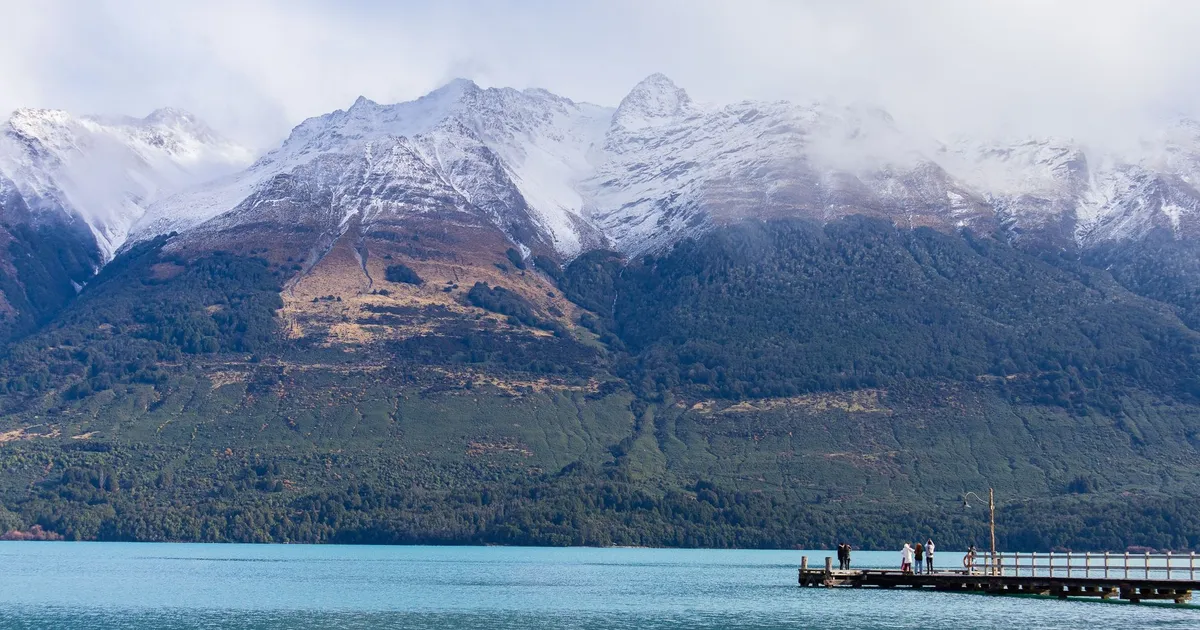
Queenstown has spent seven years talking about turning Lake Whakatipu into a “blue highway”. It now has an operator running the service, ridership that climbs every time the timetable improves, and a jetty site with Environment Court approval. What it does not have is a council willing to offer workable lease terms.
Iraj Barabi, whose company runs the public ferry between Frankton and Queenstown Bay, wants to build that court-approved jetty at a specific spot in the bay. He says the lease conditions on offer from Queenstown Lakes District Council are not acceptable, and he describes the council as “unhelpful”. The full detail of those conditions sits behind the ODT paywall, and no public QLDC response was available at the time of writing. But the shape of the problem is clear enough. The bottleneck is no longer demand, money or legal approval. It is a landlord.
The ferry is already doing the work
This is not a speculative pitch. Two weeks before the jetty dispute surfaced, the ferry began a half-hourly peak-time trial between Frankton and Queenstown Bay, doubling frequency from hourly, backed by Otago Regional councillor Matt Hollyer. The stated purpose is to move commuters off the roads. The cost to ratepayers is nothing extra.
The track record backs it up. In September 2025 the Otago Regional Council made Barabi’s Watersports Ltd the long-term operator and expanded sailings to hourly from 8.15am to 9.45pm, with late-night services seven nights a week. The service carried 71,123 trips in 2024/25, ridership rose 4 percent even after half-price fares ended, and adding late-night sailings lifted patronage 9 percent the following month. At the time, Barabi said he wanted ferries to be “a preferred option rather than just an option”, and flagged a new boat plus possible routes to Homestead Bay and the airport.
That is the pattern any business owner would recognise. Improve the product, customers respond. More capacity needs more berthing, and berthing needs a jetty.
Officialdom said it wouldn’t work
The irony is that the official modelling was lukewarm. The 2024 Queenstown Public Transport Business Case found no strong investment case for additional ferry routes, discounting most options over capacity, operating costs, catchment and capital expenditure. Its preferred path was a slow ratchet to 30-minute frequency on the Kelvin Heights route by the 2027-30 funding period.
An operator-led model has since beaten that timetable at no added public cost. Funding was meant to be the constraint too. In late 2024 councillor Alexa Forbes warned the system was being “set up to fail” by farebox recovery rules, noting that when ferry concessions were removed, “patronage plummeted and it’s never come back”. NZTA had also rejected a proposal to fund new ferries. Private investment has stepped into that gap. Now the council is the gap.
A bay where nothing moves quickly
Anyone surprised by a stalled jetty lease has not followed Queenstown Bay. The council’s own record of a nearby jetty-access case is a lesson in attrition. Consent was publicly notified in March 2020, drew 265 submissions (96 for, 167 against), and was declined by QLDC in December 2022. The Environment Court then set an agreed access area, and only after the business changed hands in June 2025 did the successor apply for a licence, requiring the council to amend its reserve management plan. Five years, start to licence.
Wharf operators have complained before. In 2020, Betty Perkins of Million Dollar Cruise said short-term lease uncertainty left her business “in limbo”, unable even to sell without a lease. In 2022, QLDC allocated $700,000, half NZTA-funded, for a Frankton Beach wharf, despite no agreement yet on the services that would use it.
It was never for lack of stated ambition. In 2019, then-ORC chairman Stephen Woodhead said the lake could become “a natural highway for commuters”, and by early 2020 QLDC had committed to provide ferry infrastructure alongside ORC and Waka Kotahi. Six years on, the council’s job in this partnership is to be a reasonable landlord.
What congestion actually costs
For Queenstown businesses, traffic is not an abstraction. It is hospitality staff arriving late, tradies losing billable hours on the Frankton Road, deliveries slipping and visitors spending holiday time in a queue. Every commuter on the water is one fewer car in that queue, and the ferry can add capacity in months, not the decade a road project takes.
Councils are right to protect public foreshore and extract fair value from it. But lease terms that a proven operator with legal approval cannot accept are not stewardship, they are a veto by paperwork. QLDC should publish what it is asking for and why. If the conditions are reasonable, ratepayers can judge Barabi’s complaint for themselves. If they are not, the council should fix them before the summer peak, because the cheapest congestion relief Queenstown has is already tied up at the wharf, waiting.
Sources
- ODT: Blue highway ‘road blocks’ (2026-11-14)
- Move Queenstown: Ferry trial aims to ease traffic (2026-10-30)
- RNZ: Lake Whakatipu ferry service in Queenstown expanded, now permanent (2025-09-22)
- ORC: Queenstown Public Transport Business Case summary document (2024-04-03)
- Crux: ‘Pretty much impossible’ to keep Queenstown bus fares low (2024-11-28)
- ODT: Wharf users do trial to clarify ferry plans (2020-05-26)
- Crux: New Frankton Beach wharf for next year, but will the ferries come? (2022-11-18)
- RNZ: Public ferry service may be on the cards for Queenstown (2019-02-01)
Join the discussion
Add useful context, ask a good question, or challenge an idea — keep it specific and respectful.