

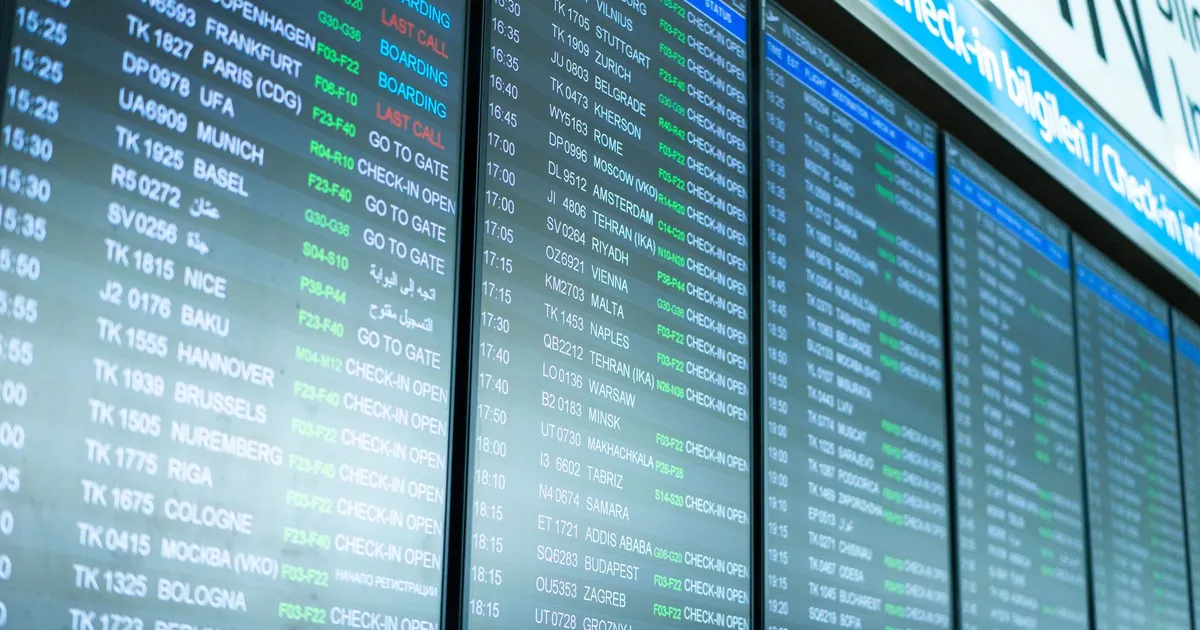
On 13 November the US Federal Aviation Administration did something it has done only a handful of times in its history. It issued a nationwide ground stop for every airport in the country after a communications fault hit 22 regional Air Route Traffic Control Centres. Planes in the air were allowed to land. Planes on the ground stayed there.
For New Zealand the direct damage was modest. But the event exposes something business leaders tend to forget until it bites. The reliability of a Kiwi executive’s trip to a board meeting in Los Angeles or a deal signing in New York rests on infrastructure that no one in New Zealand owns, funds or can fix.
A phone-line problem stopped a superpower
The centres that failed are the backbone of US airspace. Former FAA safety official Tom Lintner told the Washington Post they “help manage planes traveling between airports, guiding them along their routes and ensuring they maintain enough distance between each other”. Lose communications with them and flying becomes an unacceptable safety risk. The FAA had no partial option, so it shut everything.
FlightAware recorded nearly 7,000 flights delayed or cancelled. This was the first nationwide ground stop since January 2023, when a key FAA computer system malfunctioned, and aviation safety expert Steve Arroyo said the fault resembled a smaller regional outage in the US Northeast in September, only on a national scale and possibly linked to outdated controller technology.
Two national shutdowns in under four years, plus a regional dress rehearsal two months ago, is not bad luck. It is a pattern.
Air New Zealand played it safe
Air New Zealand responded sensibly. A spokesperson said the airline had proactively delayed its US-to-New Zealand services by two hours as a precaution, with no outbound departures to the US scheduled until the evening. It committed to contacting affected customers directly.
Kiwis already inside the US system had a rougher day. Auckland’s Leigh Robertson, trying to board a Delta flight from San Francisco to Los Angeles, told the NZ Herald: “We haven’t been told anything by the airport, like nothing at all. My flight just keeps getting rolling delays.” After three delays and more than three hours she was relying on Google for information and weighing whether to “cancel a flight and then get the train down or a rental car”.
That is the real business risk. Not the long-haul leg home, which an airline can buffer, but the domestic US connections that turn a two-day trip into a four-day one.
Money is not the same as a fix
Washington knows the system is creaking. Congress approved US$12.5 billion in 2025 for an air traffic control overhaul, and on the day of the outage the FAA and White House sought a further US$30.1 billion. That is about US$42.6 billion in total, and the network still fell over.
Writer Ian Bogost argued in The Atlantic that the chaos “arrived long before today”, with reliability eroding slowly for years even as flying stays statistically safe. Large public infrastructure programmes take a decade to deliver. New Zealand travellers should assume the old system remains in service for a long while yet.
The second offshore failure Kiwis already paid for
This is not New Zealand’s only exposure to problems made elsewhere. In its 2025 annual report, Air New Zealand said global engine maintenance delays grounded up to 11 aircraft at times, about 20 percent of its jet fleet, costing an estimated $165 million in earnings before tax. International long-haul capacity fell 5.3 percent that year because of Boeing 787 engine availability, and the airline recovered only $129 million in compensation from manufacturers.
One failure was a US government network. The other was a global engine supply chain. Neither started here and no New Zealand decision-maker could have prevented either in real time.
Price resilience in before the next outage
The practical response is not hand-wringing about remoteness. It is treating travel resilience as a cost-benefit decision rather than an afterthought. For deal-critical trips that means a buffer day either side, flexible fares that cost more upfront but pay out when things go wrong, and travel insurance that actually covers consequential disruption rather than a cancelled hotel night. It means routing important US meetings through a single hub city where possible, avoiding tight domestic connections, and having a video fallback agreed with counterparties in advance.
None of this is exotic. But most firms only think about it after an executive has missed the meeting. The FAA has now shut American skies twice since 2023 and is asking for tens of billions more to stop it happening again. Until that money turns into working systems, Kiwi businesses should plan as though the next ground stop is a question of when, not if.
Sources
- FAA: FAA Statement on Nationwide Ground Stop (2026-11-13)
- 1News: Air NZ delays flights from US after communications issue grounds planes (2026-11-14)
- Stuff: Flights halted at airports across US due to air traffic control communications problems, FAA says (2026-11-14)
- Otago Daily Times: Air NZ delays flights as US grounds planes nationwide (2026-11-14)
- NZ Herald: US FAA-ordered flight ground stop leaves Kiwi travellers facing lengthy delays (2026-11-14)
Join the discussion
Add useful context, ask a good question, or challenge an idea — keep it specific and respectful.