

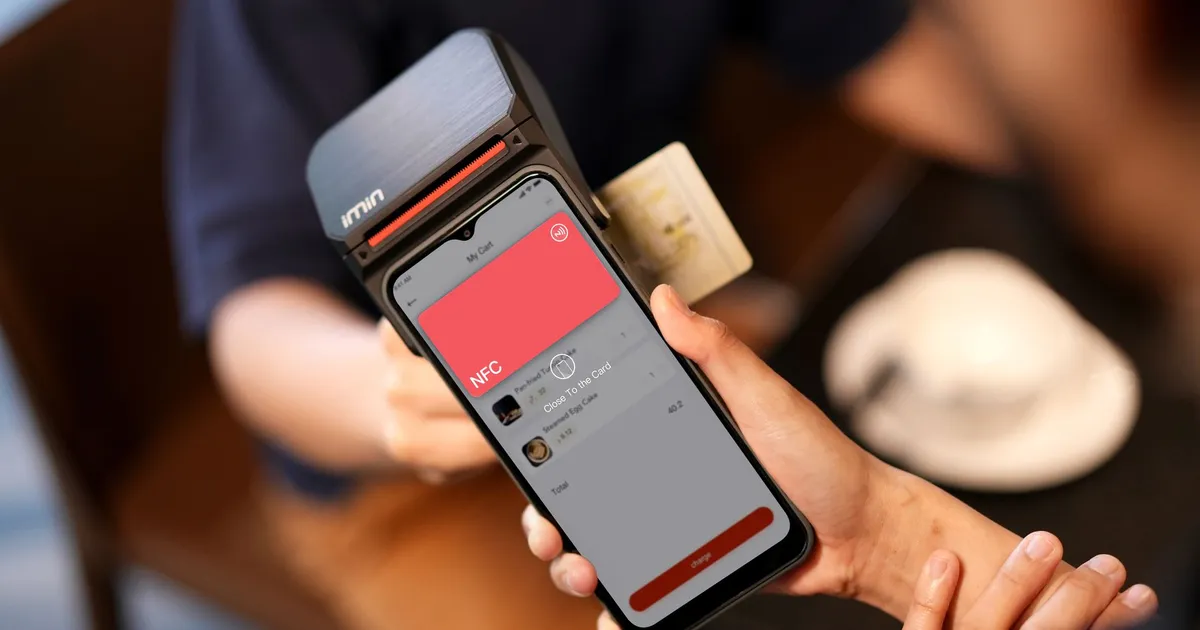
Cuscal Paymark is turning the payment terminals already sitting on New Zealand counters into identity checkpoints. The company is building a digital ID acceptance network into existing hardware, giving merchants a way to accept the Kiwi Access Card, the country’s first fully digital ID and the successor to the 18+ Card, without buying a single new device.
That is genuinely good engineering. It is also a quiet transfer of responsibility. Identity verification is moving from paperwork and a squint at a laminated card to a live, on-screen moment at the till, right when a bar or bottle store has the least time to handle a dispute.
Reusing the hardware is the smart part
The process is simple. A customer orders a drink, the terminal prompts for ID, the customer taps their phone and unlocks it biometrically, staff check the photo and credential on screen, then payment goes through.
Chief executive Mike Blomfield makes the obvious case. “The worst way to do it is to require a whole set of new devices… A payment terminal’s perfect, right, because they’re everywhere,” he says.
He is right, and the rest of the industry agrees. EFTPOS New Zealand is rolling out Verifone Victa terminals that let customers pay by face or palm, with age verification, digital identity and payment in a single interaction. EFTPOS NZ serves more than 90,000 businesses and about 700 million transactions a year, so the reach is national from day one. Worldline was already running in-store age validation pilots with the Department of Internal Affairs in 2025, according to a Payments NZ whitepaper published that year. When three competitors land on the same answer independently, this is a structural shift, not a product launch.
The prize is big and fraud is the headline number
The economics are hard to ignore. In 2025, a government regulatory impact statement put the benefit of a secure digital identity ecosystem at 0.5 to 3% of GDP, roughly $1.5 billion to $9 billion. The 2025 Payments NZ paper also cited EU pilots where combining identity with payments cut fraud by 90 to 95%.
There is a privacy upside too. Back in 2024, Worldline argued that a physical licence exposes all the information on it, while a digital credential simply answers whether someone is over 18. For a bouncer, less data on display is a feature.
And age checks are only the start. Cuscal Paymark head of digital identity and data Helen Littlewood says plainly, “We are not building for a single use case,” pointing to onboarding, loyalty and consent-based data sharing. Her benchmark is the “Friday night test”, where the customer buys a beer with a digital ID, “the operator is happy. Ben’s happy, and it’s legal.”
Where the Friday night test gets messy
Notice who is missing from that sentence. Nobody is yet explaining what happens when the test fails. What if a credential will not load during a packed service? What if a customer disputes a refusal, or a staff member waves through a mismatched photo? Who carries the liability when consent for loyalty data was captured in a two-second tap?
The providers stress choice. “We’re not forcing anyone to take this up,” says Kristy Gregory, EFTPOS NZ’s head of merchant sales and strategic partners. Voluntary adoption is the right design, and it keeps these systems at the consumer-choice end of the privacy spectrum. But voluntary for the merchant also means the merchant owns the decision, and the fallout.
Retail NZ chief executive Carolyn Young sees the customer-facing problem. She says rollout will need “quite a lot of education and language” and has captured the confusion many shoppers will feel: “How’s my face going to know my bank account?” That education will happen at the counter, delivered by staff who were hired to pour drinks.
The rulebook is still catching up
The Digital Identity Services Trust Framework Act came into force in November 2024, and it is opt-in for private providers. As recently as late 2025, officials were still finalising the second tranche of regulations, covering accreditation renewal and levels of assurance, which were expected in early 2026. Commercial rollout is moving at the speed of a software update. The surrounding rules on accountability are moving at the speed of government.
What merchants should do before switching it on
None of this is a reason to hold back. A system that cuts fraud, speeds service and reduces the data staff see is a clear improvement on the status quo, and it costs merchants almost nothing in hardware. But licensed venues and retailers should ask their provider three questions first. Who is liable if a verified customer turns out to be underage? What audit trail exists when a check is disputed? And what happens to consent and loyalty data after the tap?
The terminal is about to become identity infrastructure. The businesses that win from it will be the ones that treat it like infrastructure, with written procedures, trained staff and clear answers, before the first awkward Friday night arrives.
Sources
- NZ Herald: Payment terminals will soon validate digital IDs as Cuscal Paymark upgrades system (2026-11-10)
- RNZ: New EFTPOS terminals remove the need for cards or phones (2026-07-30)
- 1News: Could you soon be making purchases with your hand or face? (2026-08-06)
- Digital Trust Hui Taumata: Designed for Real Life, How Everyday Moments Build the Digital ID Ecosystem (2026-08-13)
- Digital Trust Hui Taumata: Safer, faster, simpler, How a digital identity could transform our day-to-day lives (2024-07-15)
- Regulation.govt.nz: Regulatory Impact Statement, Digital Identity Services Trust Framework Regulations Tranche Two (2025-10-23)
- Payments NZ: Digital identity in the digital economy (2025-09)
- AACS: Eftpos New Zealand rolls out facial recognition payment terminals (2026-08-07)
Join the discussion
Add useful context, ask a good question, or challenge an idea — keep it specific and respectful.