

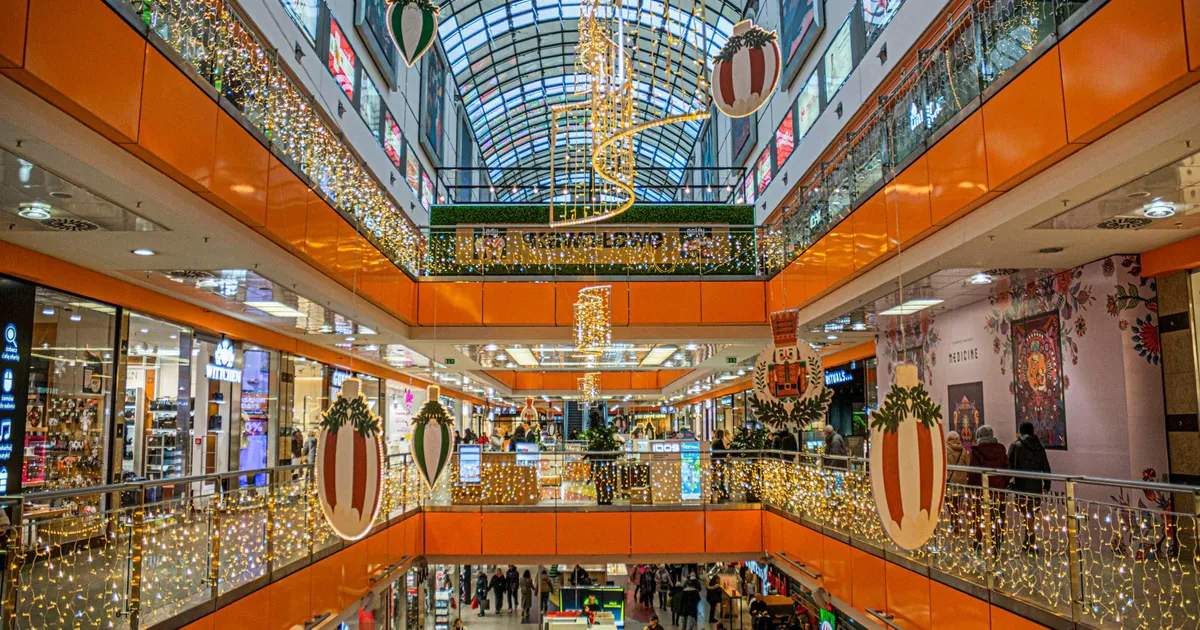
Retailers placed their Christmas orders, set their rosters and booked their marketing months ago. The customers they planned for have not turned up. Paymark data shows retail spending fell 1 percent in October, with core spending at $3.68 billion. For a business carrying fixed rent, a peak-season wage bill and a warehouse of seasonal stock, that is not a rounding error. It is margin disappearing before the busiest weeks of the year have even started.
Three months of the same story
October was not a one-off. Paymark recorded core spending down 1.8 percent in August and 1.3 percent in September year-on-year, as petrol prices spiked, interest rates rose and bad weather kept people home. Stats NZ card data told the same story, with core retail down 0.7 percent in September, the second consecutive monthly fall.
The category split is where it gets uncomfortable. Paymark chief sales officer Bruce Proffit says groceries and petrol remain ahead of last year, while most other categories are down on October 2025. Retail NZ’s analysis of September found apparel down 5.2 percent and hospitality down 4.4 percent, while food and alcohol rose 3 percent, still behind 4.1 percent inflation. Households are paying for the essentials and skipping the rest.
The headline national numbers can hide this. Reserve Bank figures show quarterly retail trade sales of $31,466 million in June, but that is nominal growth inflated by prices. In volume terms, discretionary retail is going backwards.
Squeezed at both ends of the ledger
Retail NZ chief executive Carolyn Young has been blunt about why. “When Kiwis have to put more money towards putting petrol in the tank and their mortgage repayments, something else has to give,” she said in October.
The same costs are hitting the shop floor. Young points to an accelerated rise in freight after the school holidays, with fuel prices set to push it higher still. A retailer facing softer sales and dearer logistics at the same time has two choices, cut price and eat the margin, or hold price and risk sitting on stock in January.
The sector is not uniformly suffering. Young says technology retailers such as JB Hi-Fi and Noel Leeming are seeing good sales and volume, while apparel faces “really difficult sales” and continued closures. Some retailers are hiring for Christmas as usual. Others are holding existing staff and declining to add stock. The cautious ones look smarter by the week.
Black Friday meets polling day
Here is the detail most retailers will be watching. Young attributes the softness directly to the tight election, and notes the result isn’t due until Black Friday, the 27th of November. The single biggest trading day of the year lands under maximum political uncertainty.
“I’m hopeful, and that’s my heart talking. But my head says I’m cautious,” Young said. Her bigger complaint is volatility: “up and down, up and down,” making it “really hard to know what stock levels you need, and where to price your goods.”
That is the real cost. Uncertainty does not just delay spending, it forces retailers to guess, and guessing wrong on Christmas inventory can wipe out a year’s profit.
Battered but not broken
The surprising part is that retailers themselves are feeling sturdier. Retail NZ’s latest Retail Radar found 73.7 percent of retailers confident of surviving the next 12 months, up from a 68.7 percent average over the previous eight quarters. Only 6.7 percent were not confident, against a 9 percent average.
That is not a sector in freefall. It is one that has already cut hard, trimmed rosters and learned to trade thin. The weaker operators have largely gone. Those left have priced in a tough market and, as the NZ Herald reported, many were hiring extra staff more than 10 weeks out.
Resilience is not the same as recovery, though. Retailers want the incoming government to stabilise fuel prices and lower power prices, and they are right that the cost base, not just consumer mood, is the problem. Online is a small bright spot, with online EFTPOS spending up nearly 7 percent, but at $33.4 million it will not carry the season.
What the next six weeks decide
The confidence numbers were captured before October’s fall. If a clear election result on 27 November unlocks pent-up spending, the sector’s cost discipline will pay off handsomely. If it does not, retailers face a January of heavy markdowns and ugly cashflow. Businesses still deciding on final stock orders and casual hires should plan for the second scenario and treat the first as upside. The survivors of 2026 got there by not betting on shoppers who had not yet shown up. This is no time to start.
Sources
- RNZ: Retail spending subdued ahead of holiday season (2026-11-10)
- RNZ: Petrol, rates and weather: Consumer spending hit by three ‘tough knocks’ (2026-10-05)
- The Post: Spending falls again in September, despite economic recovery under way (2026-10-15)
- Inside Retail: ‘Significant lift’ in consumer confidence needed before Christmas (2026-10-07)
- Podcast: Retailers pin hopes on Christmas sales (2026-10-28)
- The Post: Why the typical end of year retail spend-up is yet to arrive (2026-11-09)
- Retail NZ: 2026 Q3 Retail Radar Report (2026-11-01)
- NZ Herald: Retailers gearing up for Christmas, but will consumers be ready? (2026-10-11)
- The Post: Retail’s recovery needs a good Christmas (2026-11-09)
Join the discussion
Add useful context, ask a good question, or challenge an idea — keep it specific and respectful.