

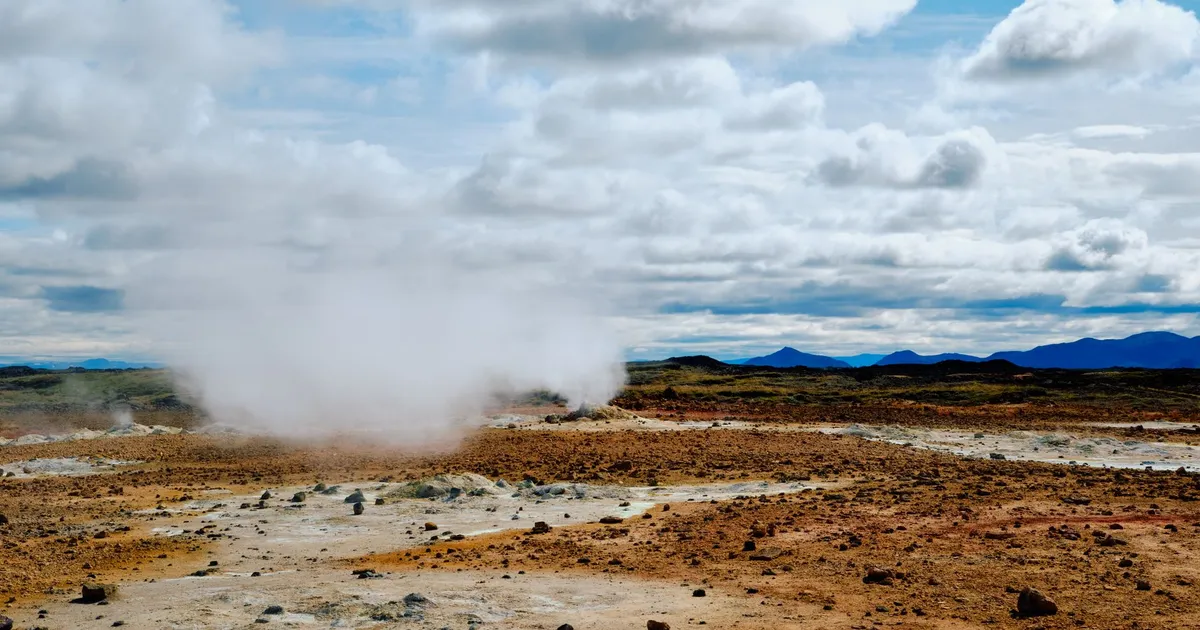
Two Māori-led incorporations have received a combined $5.95 million from the Regional Infrastructure Fund to drill for geothermal heat. Against the scale of New Zealand’s energy transition, that is a rounding error. It is also the most sensible kind of energy spending the government does, because it funds the riskiest, cheapest-to-fix stage of building firm renewable supply.
For manufacturers, processors and anyone weighing electrification against gas, that distinction matters more than the headline number.
Test wells, not ribbon cuttings
Per the RNZ report, Parininihi ki Waitōtara Incorporation gets $3 million for the Taranaki Geoheat Demonstrator, drilling two shallow test wells into the Matemateāonga Formation to assess low-temperature heat. Wairarapa Moana ki Pouākani Incorporation gets $2.95 million to explore the South Mangakino resource beneath Māori freehold land in South Waikato. A further $3 million goes to a national geothermal database to pull together fragmented resource data.
A day earlier, Ngāti Rangiteaorere secured a $3.82 million government loan towards a $5.53 million exploration programme in the Tikitere-Ruahine field near Rotorua. Regional Development Minister Shane Jones said the work would support “Māori land-owner led stewardship” while creating work for specialist contractors.
Jones, to his credit, is not overselling it. Future development, he says, “would depend on what the exploration found, alongside further investment and consenting”. That is the honest framing. These are bets on information, not power stations.
Why the state belongs at the drilling stage
The money sits inside a $50 million RIF commitment launched in March 2026 alongside the From the Ground Up strategy, which set a target to double geothermal use by 2040. At that launch Jones said “early-stage geothermal exploration involves high upfront costs”, and the first tranche put $10 million loans each into the Taumanu and Kopura projects near Rotomā and Kawerau, plus a $3 million grant for Whakatāne wells. Separately, a $60 million pot ring-fenced in 2024 is funding New Zealand’s first supercritical well near Taupō, with Todd Energy as preferred contractor.
The case for public money here is narrow but sound. Exploration is a classic market gap. You spend millions before you know whether there is anything to sell, and the knowledge you generate leaks to everyone. MBIE’s strategy noted exploration had stagnated since the Crown’s own drilling decades ago, and that “Māori landowners often face additional hurdles in accessing affordable capital and technical expertise”. Much of the resource sits under their land. Derisking the first wells, often by loan rather than handout, unlocks private capital later. That beats subsidising output or slogans about energy security.
The $3 million database may prove the best value of the lot. Fragmented subsurface data is a tax on every new entrant.
The workhorse nobody talks about
Geothermal already carries more of the grid than most people realise. The 2024 national geothermal review, published in November 2025, recorded a record 8,741 GWh of generation, 19% of national supply, from 1,207 MWe across 22 stations. Direct use for industry, agriculture and buildings ran to 7.38 PJ in 2024.
The business argument is reliability. The Geothermal Association’s 2025 Geoheat guide put it plainly: geoheat “is not weather dependent” and supplies constant thermal energy around the clock, taking pressure off the electricity grid rather than adding to it. Tissue maker Essity was cited in 2025 as having switched its drying machines to 100% geothermal. In a country exposed to dry hydro years and firming costs for wind and solar, that is the profile industrial users want.
Kennie Tsui, then leading the Geothermal Association, said in 2025 the sector expected to “double that” capacity long term.
The pipeline is not guaranteed
The caveats are real. The same 2024 review found 56% of installed capacity is over a decade old, and that operators had deferred some projects due to adverse market conditions. Shallow Taranaki heat is a direct-use play, not a power station. And consenting, the perennial killer of New Zealand infrastructure, still sits between any successful well and a bankable asset.
That is why the focus on exploration is right. Government cannot pick which reservoirs will pay off, but it can make sure the first expensive question gets asked.
What to watch
The test comes over the next 18 months as these wells report results. If Taranaki and South Mangakino show usable heat, the question shifts to whether private developers and industrial customers sign up, and whether consent processes move at the speed the 2040 target demands. Businesses planning heat or power decisions in those regions should be watching the drilling data closely. Under $6 million is small money. Firm, local, weatherproof energy is not a small prize.
Sources
- RNZ: Māori-led projects get $5.95m for geothermal exploration (2026-11-04)
- NZ Herald: Rotorua geothermal exploration, Ngāti Rangiteaorere project receives $3.82m Government loan (2026-11-03)
- 1News: Govt backs geothermal expansion with $50m funding boost (2026-03-18)
- NZ Herald: Resources Minister Shane Jones unveils $50m fund for geothermal projects (2026-03-17)
- University of Auckland: 2024 annual Aotearoa New Zealand geothermal review (2025-11)
- Engineering New Zealand: Geothermal energy “our secret weapon” (2025-09-02)
- NZ Geothermal Association: Geoheat business guide in Aotearoa New Zealand (2025-07)
Join the discussion
Add useful context, ask a good question, or challenge an idea — keep it specific and respectful.