

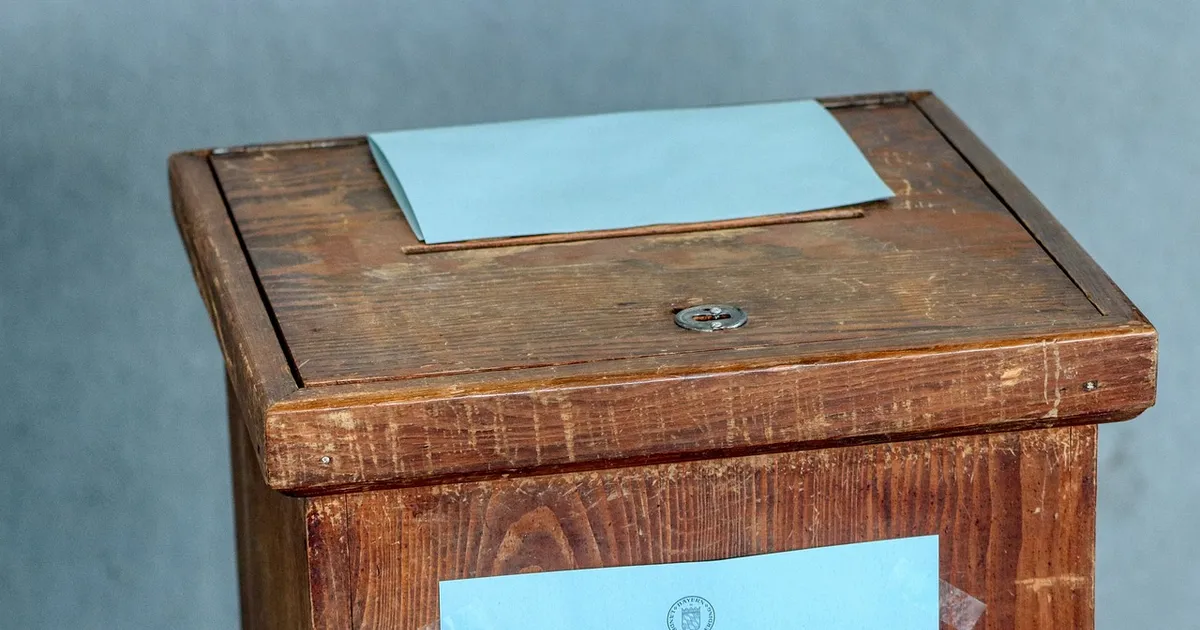
Complaining about MMP used to be something business owners did over a second glass of wine. It is now an organised campaign. Newsroom reports that Harry Mowbray, patriarch of the billionaire Mowbray family behind Zuru, is convening conservative business leaders at a Coatesville mansion to push for replacing MMP with a supplementary member system. The rallying cry is stopping the tail wagging the dog.
The timing is not an accident. The final week of polling suggests a party sitting around 5% could decide who governs. For anyone making a capital allocation decision with a five or ten-year horizon, that is no longer a constitutional curiosity. It is investment risk.
The arithmetic nobody can call
BusinessDesk’s poll tracker has National on 27.9% and Labour on 28.7%, with the right bloc on 58 seats against the left’s 54. That leaves Opportunity’s 8 seats as the hinge. The final 1News-Verian poll puts National at 30% and calls the race too close to call, partly hinging on which party triggers the largest overhang. A third poll reported by Stuff points to a hung Parliament with Opportunity on 7 seats.
The overhang is where it gets genuinely strange. The New Zealand Initiative noted in October that National holds 44 electorate seats, 37% of Parliament, while polling at 28%, which would proportionally entitle it to around 35 or 36. Every electorate it wins beyond its share inflates Parliament and shifts the majority line. Meanwhile a narrow miss by Opportunity on the 5% threshold would flip two seats to the centre-right. Outcomes worth billions in policy direction are riding on decimal points.
Donors have damaged their own case
Business frustration is legitimate. The way some donors have acted on it is not helping. In September, The Post reported that the Mowbray family had given $450,000 to coalition parties this year and that Mowbray was organising a vote-splitting campaign designed to manufacture an extra 10 to 30 right-bloc MPs through the overhang, without persuading a single new voter. The parties meant to benefit were, in the Post’s words, “completely aghast at the idea”.
It has since got worse. Police have confirmed they are investigating the campaign after an Electoral Commission referral. To be fair, gaming is not a right-wing monopoly. Te Pāti Māori faces its own Commission scrutiny over unauthorised vote-splitting ads urging support for Labour or the Greens. But a donor under police investigation for trying to exploit MMP’s loopholes is an awkward figurehead for a campaign to replace it.
The fix has been sitting on the shelf since 2012
Here is the part that should annoy business most. The flaws now driving the panic were diagnosed long ago. The 2012 Electoral Commission review recommended abolishing the one-electorate coat-tailing rule, cutting the threshold to 4% and scrapping overhangs if coat-tailing went. The 2023 Independent Electoral Review went further, recommending a 3.5% threshold, a fixed 60:40 electorate-to-list ratio and a Parliament that always has an uneven number of seats, specifically to prevent deadlock.
Neither Labour nor National legislated any of it. Both have found the distortions useful at one point or another.
In 2025, the New Zealand Initiative’s Nick Clark argued in the Herald for abolishing overhangs outright, noting the 2023 election had already pushed Parliament to 123 MPs. The payoff, he said, would be “more predictable parliamentary arithmetic” and “reduced policy uncertainty. And, ultimately, a stronger economy.” That is the business case in one line, and it does not require abandoning proportionality.
Old grievance, new urgency
Business unease with MMP is structural. Back in 2011, a Grant Thornton survey reported by NBR found 54% of business owners preferred FPP against 18% for MMP. In 2024, BusinessNZ argued that investment horizons outlast three-year terms and that policy flip-flops damage New Zealand’s reputation as a safe place to invest. By August this year, the Democracy Project was tracking calls to “stop this farce of 5% parties controlling the outcome of Government”.
The problem with supplementary member as the answer is that it swaps one kind of volatility for another. Larger winning margins for big parties mean bigger swings when government changes hands, and New Zealand has a long memory of what policy whiplash under FPP looked like. Predictability comes from stable rules and broad coalitions, not from handing a 35% party a majority.
What happens after Saturday
If the result lands on an overhang or an Opportunity deal, expect the Coatesville crowd to claim vindication and the losing side to cry foul. Business should resist both reactions. The sensible ask of whoever governs is narrow and achievable: legislate the 2023 review’s core recommendations within the first term, before the next close race. Kill overhangs, kill coat-tailing, guarantee an odd-numbered House. That removes the arithmetic lottery without a referendum fight that would consume years of political oxygen. The cheapest risk to price is the one you remove.
Sources
- Newsroom: Harry Mowbray calls Coatesville mansion summit to get rid of MMP (2026-11-04)
- BusinessDesk: MMP overhang – Why National needs electorate wins to stay in government (2026-11-03)
- NZ Herald: Election poll points to Opportunity being in kingmaker position unless National triggers overhang (2026-11-03)
- Stuff: New poll predicts hung Parliament with Opportunity on 7 seats (2026-11-03)
- New Zealand Initiative: NZ’s mixed-up electoral system threatens to blow results out of proportion (2026-10-14)
- The Post: Why the Mowbray plot to skew the election probably won’t work (2026-09-25)
- Electoral Commission: Report on the Review of the MMP Voting System (2012-10-29)
- Ministry of Justice: Independent Electoral Review Final Report (2023-11)
- NZ Herald: We need to fix the flaws in our electoral system – Nick Clark (2025-10-29)
- BusinessNZ: The case for a four-year electoral term (2024-10)
- Democracy Project: Democracy Briefing – Constitutional reform by talkback (2026-08-06)
Join the discussion
Add useful context, ask a good question, or challenge an idea — keep it specific and respectful.