

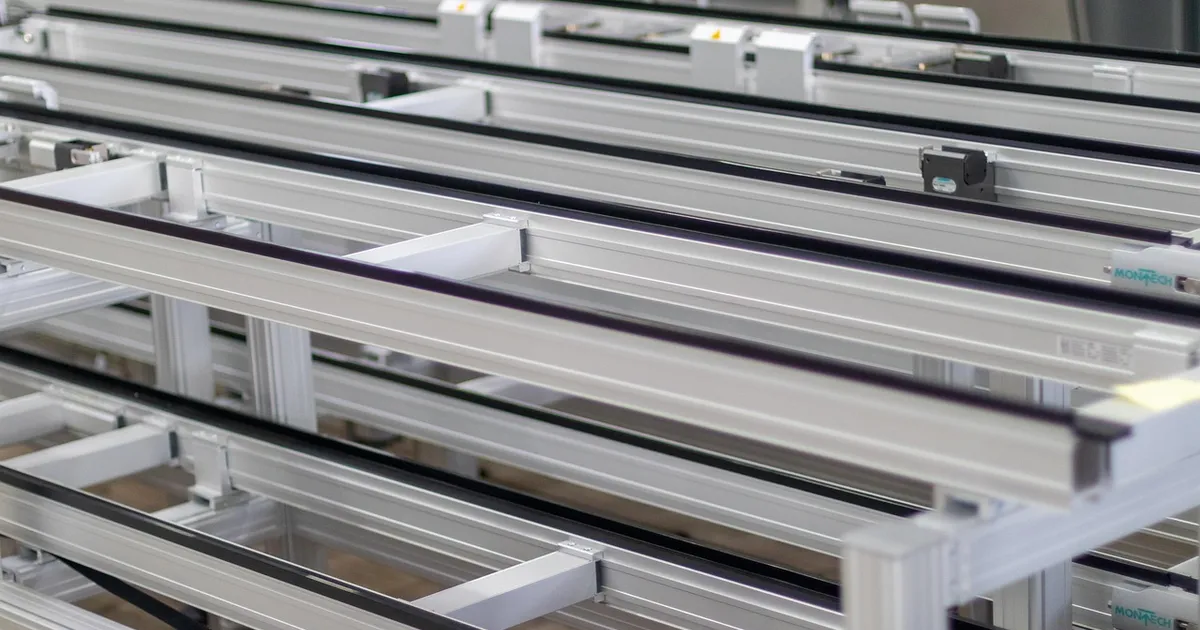
Something odd is happening at the border. In the first nine months of 2026, imports of hollow aluminium extrusions rose 192% and their declared values fell 31%, while global raw aluminium prices climbed 23.6%. Product is getting cheaper as its main input gets dearer. That is not ordinary competition. It is a test of whether New Zealand can defend its manufacturers against distorted trade without abandoning the free-trade principles that serve the rest of the economy.
So far the government is passing the free-trade half of that test and fumbling the enforcement half.
The surge the report never saw
Commerce Minister Cameron Brewer has written to Alenz chair Nick Collins declining to direct a fresh safeguards application. Brewer says any new bid is a matter for the industry and needs evidence materially different from what MBIE already considered.
The problem is timing. MBIE’s analysis used data only through July 2026. The sharpest part of the surge came in August and September. “Import volumes are surging, average import values falling and the global price of aluminium is rising,” Collins said in the industry’s formal challenge. “That combination goes to the heart of the competitive pressures facing New Zealand, yet we believe it was not adequately assessed by officials.”
Asking for materially different evidence while ignoring the two months that are materially different is not rigour. It is procedure protecting itself.
Officials already conceded the injury
MBIE’s own report acknowledged “serious injury” to the domestic industry. It simply attributed that injury mainly to a contracting local market and rising costs rather than imports. That is not a fringe sector. Extrusion is worth roughly $600 million, or $2 billion including powder coating, anodising, fabrication and window manufacturing.
MBIE also warned that safeguards would likely raise consumer prices and undermine New Zealand’s trade goals. That argument deserves respect. Safeguards are blunt, they tax builders and homeowners already squeezed by construction costs, and a small trading nation that lectures others on open markets cannot reach for tariffs every time a sector hurts.
Cheaper than the metal inside it
But the industry’s core complaint is not that Chinese extruders are better. It is that they are selling below the cost of raw material. Collins, also chief executive of Metals New Zealand, notes raw material makes up 65-80% of manufactured cost, and that extruders everywhere buy billet off the London or Shanghai metal exchanges. There is a transparent global reference price. Arriving below it, he argues, is “only possible with state subsidies and export incentives.”
McKechnie Aluminium Solutions managing director Dave Slomp says Chinese extrusion is landing for less than local manufacturers pay for the raw billet, that production has slowed 40%, and that the minister has “thrown a whole industry sector under the bus.”
That is the line between competition and distortion. Free traders should be the first to say so.
Anti-dumping is the right tool, and it is built to be hard
The government’s preferred route is anti-dumping, which targets specific unfair pricing rather than taxing all imports. In principle that is the better instrument. In practice Slomp says it is deliberately hard to prove: China’s domestic construction market has fallen around 70% since 2021, and a case requires pricing detail from Chinese manufacturers themselves to show New Zealand prices undercut their home market.
Australia has found a way. It already applies duties to Chinese extrusions, and its Anti-Dumping Commission announced interim measures on 14 October over Chinese aluminium windows and doors. Product diverted from a market with duties tends to find one without them.
A slow squeeze, not a sudden collapse
McKechnie is a 75-year-old Bell Block firm employing about 300 people. Slomp expects the damage to come gradually, through reduced shifts, capacity and investment before closures. “I would have thought that a government elected to be business friendly would look to support rather than throw under the bus, a world-class strategic industry,” he said.
For downstream businesses, the cheap imports are a short-term gift. The risk is a supply chain that ends up with no local capacity, longer lead times and full exposure to whatever Beijing decides next.
What the minister should do next
Brewer is right not to reach reflexively for safeguards on hollow and other profile categories that feed the whole building sector. He is wrong to treat the August and September data as a problem for the industry to solve alone. The obvious fix is for MBIE to assess the newer figures, and to resource an anti-dumping investigation that uses exchange-traded metal prices as a benchmark instead of waiting for Chinese firms to volunteer their books.
Free trade only keeps its political licence if the rules against subsidised dumping actually bite. If a sector selling below the cost of its own metal cannot get a hearing, the protectionists will be the ones who win the next argument.
Sources
- BusinessDesk: Brewer declines to back fresh aluminium safeguard bid (2026-11-02)
- BusinessDesk: Aluminium extruders cite new import surge in challenge to safeguard decision (2026-10-27)
- RNZ: Government rejects aluminium industry’s call for import protection (2026-10-13)
- The Post: Government aluminium decision made on flawed advice (2026-10-18)
- Omny/Mike Hosking Breakfast: Dave Slomp on the Government rejecting the sector’s call for import protections (2026-11-04)
- Newstalk ZB: Aluminium sector frustrated by lack of protection as cheap Chinese imports flood market (2026-11-04)
- The Post: McKechnie boss blasts decision on cheap aluminium imports (2026-10-14)
Join the discussion
Add useful context, ask a good question, or challenge an idea — keep it specific and respectful.