

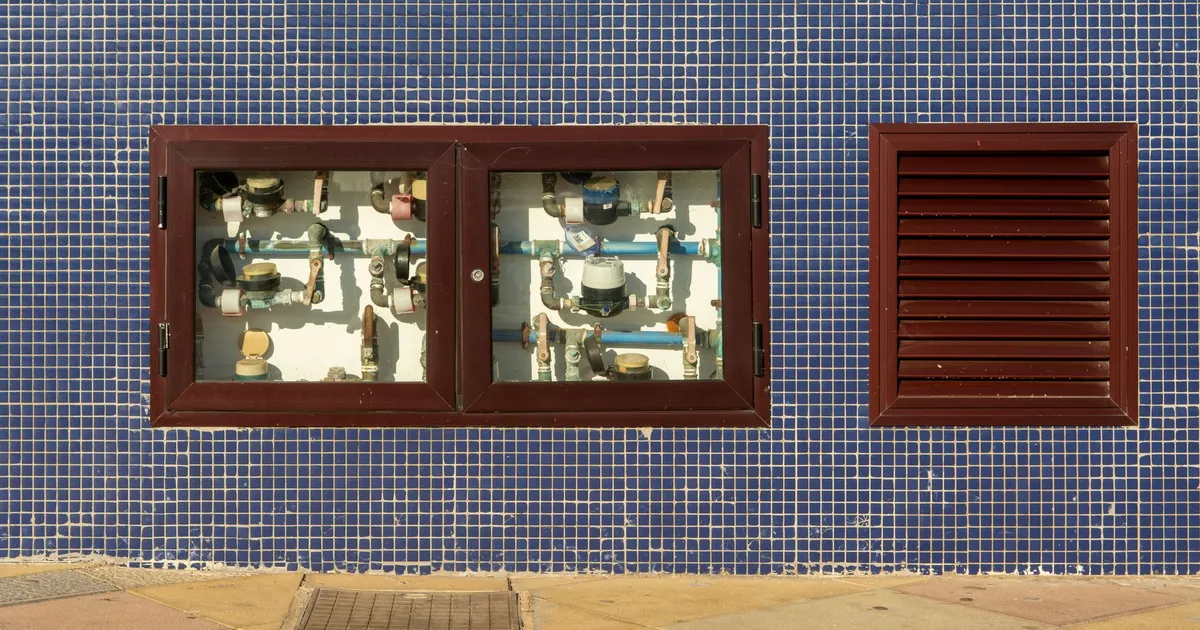
New Zealand’s flat water charges have a built-in flaw. They price water as if every extra litre costs nothing, while councils face the largest pipe renewal bill in generations. Ashburton has just become the latest council to run into that problem.
Ashburton district councillor Russell Ellis told the council’s three waters committee this week that Taumata Arowai, the Water Services Authority, had made clear that “within five years every household will have a meter, and it will be volumetric charging”. That is his interpretation of regulatory intent. Local Water Done Well sets a five-year transition towards usage-based mechanisms but does not yet require volumetric charging. Chief executive Hamish Riach said the council’s long-term plan work “does not reflect a proposal to change to volumetric charging”.
Councillor Richard Wilson put it more usefully for business readers. Nobody actually pays for water, he said. What changes is the mechanism that decides who pays for the infrastructure. That is the right way to frame it. A flat charge does not make water cheaper. It moves the cost of leaks and heavy users onto everyone else.
Ashburton cannot see its own leaks
The district’s numbers support the case. Its 2025/26 annual report recorded average consumption of 786 litres per resident per day, against a 720-litre target. The report concedes that without universal metering the council cannot reliably tell high consumption apart from leakage.
The rollout meant to solve this is behind schedule. Infrastructure general manager Neil McCann said the Rakaia trial of 350 smart meters, run with Intellihub, is six months late because of connectivity problems, and replacement units are not expected until January. The roughly 10,000 meters needed for Ashburton and the rest of Rakaia have slipped to the 2027-28 and 2028-29 financial years. New connections already have to install smart meters, but McCann admitted the council is “not currently harvesting data”.
A five-year deadline is hard to take seriously when a 350-meter pilot cannot get a reliable signal.
The evidence was settled years ago
Where councils have pushed through, the results have been consistent. A 2018 Auditor-General report found Kāpiti Coast’s peak daily water use fell about 25% in the two years after universal metering. Most of that came from fixing leaks. The council deferred a new dam by an estimated 40 years, and 75% of ratepayers ended up paying less than under fixed charges.
In 2024, then-Kāpiti mayor Janet Holborow told RNZ the $8 million meter investment had “paid itself back”, after 443 leaks were found and water lost to leaks dropped 90%. Private use fell 26%, and the highest users cut their consumption by 70%.
Te Waihanga’s 2024 research reached the same conclusion at national level. It found 40% of New Zealanders lacked a metered supply, that unmetered Wellington and Hamilton households used more than a third more water than metered ones, and that Tauranga’s average water costs fell 40% against projected increases. The same research found 72% of people regarded volumetric charging as the fairest way to pay.
This is about deferring capital spending
Conservation is the easy argument for meters. The more important one is financial. In 2024, then-acting Te Waihanga chief executive Geoff Cooper warned of “a wall of renewals” arriving just as population growth and cost-of-living pressure peak. Metering, he said, helps “unlock capacity” and supports better investment decisions.
Every dam, treatment plant upgrade or trunk main that a council can delay is capital it does not have to borrow for. The new water entities depend on borrowing. BusinessDesk reported in 2024 that the Local Government Funding Authority would let them borrow up to 500% of annual revenue. Lenders are more comfortable when that revenue is tied to actual use and demand can be measured.
The obstacle is electoral
If the economics are this clear, the delay comes down to politics. Newsroom called meters the “third rail” of council politics back in 2020. In the 2024 BusinessDesk piece, an anonymous council leader described a fully metered district whose ratepayers thanked them when rates fell, then explained why others hold back: “the mayor gets third or fourth in the next election.”
Coverage has improved slowly for a long time. Water New Zealand reported that in 2017/18, 82% of non-residential properties but only 47.6% of residential ones were metered. Business has been on meters for years. Households are the ones being shielded.
The fairness objection, that large and low-income households pay more, is real. It is a pricing design problem, though, and does not justify keeping demand invisible. Te Waihanga’s analysis notes that low-income households tend to be smaller and use less water.
What businesses should do now
The official policy in Ashburton and many other districts is still flat charges. Firms should not plan around that lasting. New Plymouth has already voted to move to volumetric billing once its meters are installed. Councillors there flagged a problem landlords should note: tenants who had water bundled into their rent may now be billed separately.
High-use operators should assume volumetric charges will arrive within the next long-term plan cycle. That includes food processors, horticulture packhouses, hospitality, and multi-unit developments. Build it into site selection, lease terms and capital budgets now. The councils that switch first will find their leaks and stretch their pipe budgets further, while the rest keep charging everyone for water nobody is measuring.
Sources
- ODT: Households can expect pay-per-litre water bills ‘within five years’ (2026-10-29)
- Office of the Auditor-General: Managing the supply of and demand for drinking water (2018-09)
- RNZ: Water meters in Wellington? How it worked in Kāpiti (2024-01-29)
- Te Waihanga: Valuing water – sustainable water services and the role of volumetric charging (2024-08-02)
- Te Waihanga: Giving New Zealanders more bang for buck from infrastructure (2024-08-02)
- BusinessDesk: Turning the Tap – Show me the money (2024-10-14)
- Newsroom: Water meters, the ‘third rail’ of council politics (2020-02-26)
- Water New Zealand submission to Treasury on Thriving Communities and Future Wellbeing (2019-02-11)
Join the discussion
Add useful context, ask a good question, or challenge an idea — keep it specific and respectful.