

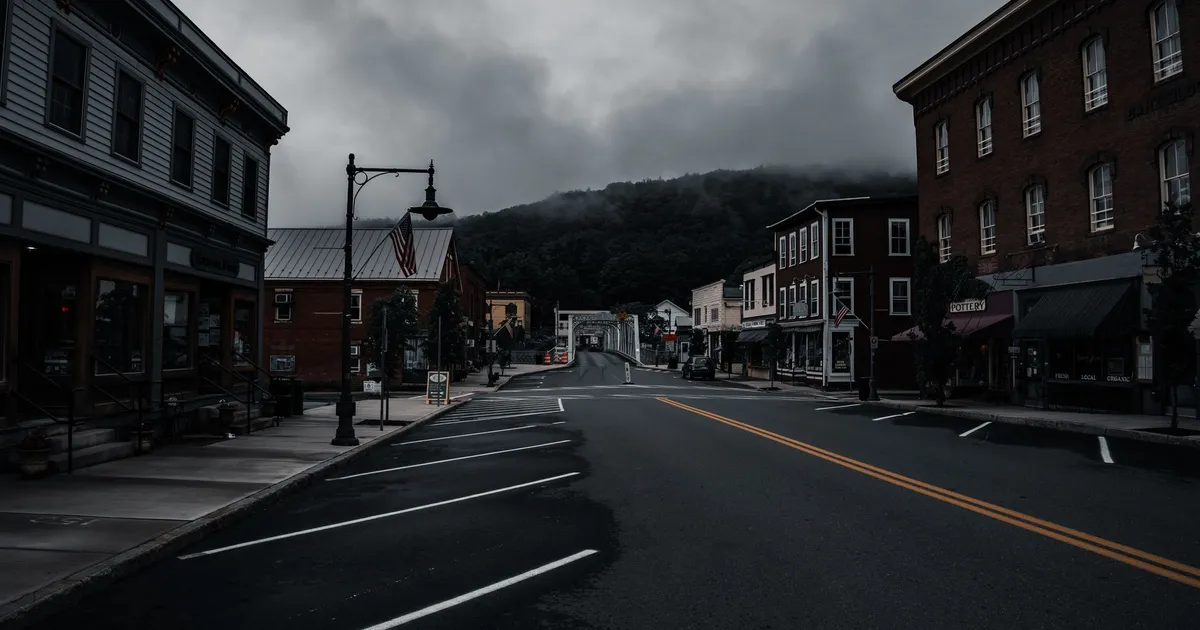
The NZ Herald’s Election 2026 feature on Raetihi goes back to a town that made headlines for a few weeks in 2024 and then dropped off the national radar. Its finding is blunt. Raetihi is still battling the aftermath of the Winstone mill closures.
That should not surprise anyone who runs a business. When a small district loses its biggest payroll, the damage does not stop at the factory gate. It moves through every shop, every school roll and every mortgage in town.
Big wages in a small place
In September 2024, Winstone Pulp International confirmed it would close its Karioi pulp mill and Tangiwai sawmill, ending 45 years of operation between Ohakune and Waiouru. Then-chief executive Mike Ryan said the company could not “offset the dual impacts of internationally uncompetitive energy prices” alongside weak pulp and timber prices.
The headline number was 230 jobs. The more telling detail was that the mill was the biggest single employer in the Rangitīkei electorate, drawing workers from Raetihi, Ohakune, Waiouru and as far as Taihape, where then-MP Suze Redmayne said 40 families had someone at the mill.
In Auckland, 230 redundancies is a bad week. In Ruapehu, those well-paid industrial wages were a large slice of the local economy.
The money stopped circulating
By October 2024, RNZ was documenting ripple effects well beyond the mill. A local logging truck company laid off dozens of drivers, while Napier Port and KiwiRail flagged job cuts tied to lost freight. Bus operator Darren Dempsey, 35 years in business, said he had lost about a third of his work and let two staff go. Cafe owner Angie Robson reported takings down about $800 a day on the year before, and relayed her bank manager’s doubt that the area would survive another year.
The social infrastructure felt it too. Brenda Burnard, manager of the Nancy Winter Early Childhood Centre, warned at the time that the region was losing skilled workers and enrolments would drop, putting the centre’s viability at risk.
Redmayne made the same point about dual-income households in 2024, noting mill workers had partners in the local health service, which was already struggling to recruit. Lose one job and you can lose the family, and with it a nurse, a teacher or a volunteer firefighter. Infometrics principal economist Brad Olsen walked through that cascade the day the closure was confirmed.
Power prices pulled the trigger, not the whole gun
The energy story is messier than either side admits. The Electricity Authority’s investigation into August 2024 prices found wholesale spot prices topped $800/MWh during fuel scarcity, and that Winstone, Oji Fibre Solutions and Pan Pac were all exposed to unhedged spot pricing, with large users struggling to secure hedges. A separate Authority analysis argued that market options were available to big users that winter. The regulator’s own record does not tell one clean story.
Ministers at the time leaned on that ambiguity. In 2024, then-Social Development Minister Louise Upston called energy “only one of several factors” and warned “short term Band-Aids” would not help. Then-Energy Minister Simeon Brown called it a sad day, said “energy prices underpin our competitiveness”, and declined to intervene in what he viewed as a commercial decision.
Refusing to subsidise a single mill facing a soft global pulp market was defensible. Taxpayers should not be propping up plants the world price will not support. But Brown’s own words are the problem. If energy prices underpin competitiveness, then an electricity market where heavy users cannot buy cover during a dry winter is not a commercial matter. It is a policy failure, and it is exactly the kind of fix government is supposed to deliver.
The opposition’s plan was thin too
Labour’s then-spokesperson Helen White asked in 2024 “Where’s the plan?” and lamented the scrapping of an industry training plan. In 2025, the E tū union called closures “symptoms of a deeper failure” and said Aotearoa was “letting decades of expertise and infrastructure slip away”.
Fair enough on the diagnosis. But no training plan or industrial strategy document would have lifted pulp prices or filled a hydro lake. Calls for a plan are cheap. Costed proposals on firming generation, hedge market liquidity and worker transition are not.
The test for 2026
The Herald’s return trip to Raetihi is a useful benchmark for this campaign. Every party will promise regional growth. Business owners should ask the specific questions. Will industrial users be able to hedge through the next dry year? What happens to workers and the businesses that serve them in the 18 months after a major employer leaves? And what would make a new employer choose Ruapehu?
Raetihi has had two years to answer those questions on its own. Whoever governs after this election should not leave the next mill town to do the same.
Sources
- NZ Herald: Election 2026: Small town struggles, Raetihi battles Winstone mill closures aftermath (2026-10-16)
- RNZ: ‘Just stunned silence’: Mill closure shocks rural community (2024-09-11)
- 1News: Mill job losses: Rangitīkei MP ‘gutted’, concerned for regional economy (2024-09-10)
- RNZ: Fears mill closures could create ‘ghost towns’ in the central North Island (2024-10-08)
- Newstalk ZB: Expert weighs up economic impacts of Ruapehu mill closures (2024-09-10)
- Electricity Authority: Investigation into high wholesale electricity prices August 2024 (2024-10-24)
- Electricity Authority: Market options were available to large energy users in winter 2024
- RNZ: Winstone Pulp closures: ‘It’s just a really bad day for those communities’ – local MP (2024-09-27)
- E tū: Manufacturing in crisis: closures hit hard in 2025 (2025)
Join the discussion
Add useful context, ask a good question, or challenge an idea — keep it specific and respectful.