

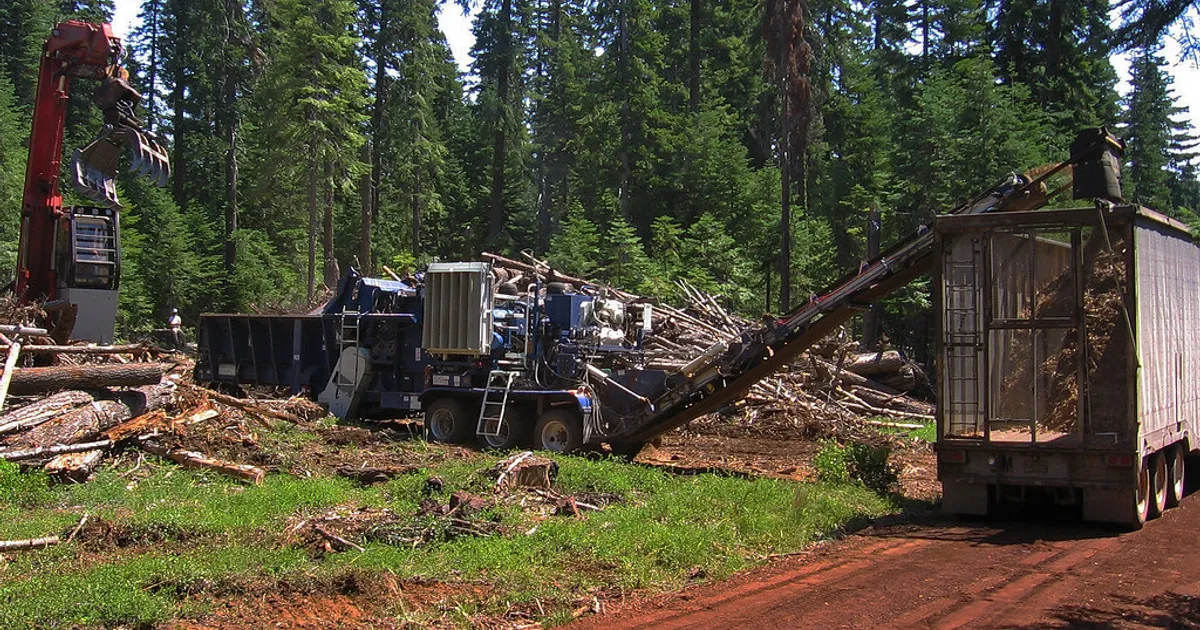
Carterton District Council has fixed an error in its rating review, and the fix lands almost entirely on one sector. Corrected modelling now puts the average forestry rates increase at 1260%, taking the typical forestry bill from $2,825 to $38,391. The same correction trims dairy’s proposed rise from 144.4% to 91.8%, while residential and lifestyle ratepayers get a cut. The Post first reported the figures on 13 October.
The council frames this as a technical correction. It is more than that. A rate that lifts one land use’s bill more than thirteen-fold, built on model inputs that have already shifted once in two months, works as a land-use tax by another name.
One correction, and forestry pays more
Carterton, Masterton and South Wairarapa councils jointly hired Morrison Low to work out who causes the wear on rural roads. The original model counted dairy production from herds in neighbouring Tararua district but left out the matching Tararua land. That inflated dairy’s share of freight tonnage and understated forestry’s. Councillor John Stevenson, a dairy farmer and Fonterra shareholder, spotted the problem.
The result is that the average forestry increase has jumped from the roughly 793% in August’s consultation document to 1260%. In dollar terms, the typical forest owner’s extra annual bill grows from about $22,400 to about $35,600, around 59% more, without a single extra log truck on the road.
Mayor Steve Cretney has been candid. “The original information should have been accurate, and we acknowledge that,” he said, adding that the council had corrected the reports and commissioned an Infometrics peer review. Credit for owning it. But a review that went to consultation with dairy figures wrong by that margin should make every ratepayer ask what else has not been checked.
The user-pays logic is not crazy
To be fair to the council, the principle has merit. More than 92% of Carterton’s road network serves rural areas. Of total 2026/27 roading spend of about $2.87 million, heavy vehicles account for 56%. Allocated by freight tonnage, forestry carries 56% of rural heavy-vehicle costs on 152,354 tonnes, dairy 31% and general farming 12%.
The headline percentage is also partly a low-base effect. Unimproved forest land carries low capital value, so forestry has historically paid little. Switch to a tonnage-based targeted rate and the relative jump looks enormous. Logging trucks do chew up rural roads, and a centre-right reader should have some sympathy for making heavy users pay for what they damage.
The problem is not the principle. It is the precision being claimed for it.
The harvest numbers are still stale
Buried in the Infometrics peer review is the detail that matters most. Morrison Low’s model relies on MPI forestry removal forecasts last updated in 2021. Actual Southern North Island harvest volumes from 2022 to 2026 came in at 17,380, against the MPI forecast of 28,235, roughly 38% below.
So the corrected model producing the 1260% figure still assumes far more logging traffic than has actually occurred. For an industry running 25 to 30 year rotations, that is the real risk. Nobody can plan a harvest or replanting decision around a rate whose inputs have already moved once and are flagged as unreliable again.
Paying twice for the same road
Forest owners also argue they already pay for road damage through road user charges. Juken New Zealand chief forest officer Sean McBride notes that “forests can go decades without generating logging traffic, while owners face rates bills every year.” The question of whether rates modelling should account for RUCs was raised in earlier local debate and has never been properly answered.
Juken’s September submission, written when the average hit was still approximately 793%, warned that “sudden increases of this magnitude risk creating unintended consequences for forestry investment, processing activity and employment within the district.” The numbers have only got worse since.
NZ Forest Owners Association chief operating officer Joseph Brolly says increases of this scale “threaten the viability of all forestry businesses” and the rural jobs they support.
What happens next
Consultation now closes on 26 October, and the forestry lobby wants more time. It should get it. A council that has rebuilt its numbers once has no business locking in a thirteen-fold increase on data its own reviewer says is outdated.
Other councils facing rising road costs and stretched general rates are watching. If Carterton pushes this through, usage-based targeted rates will spread. The minimum ratepayers should demand is that the harvest forecasts are updated, RUCs are counted, and any increase is phased in. Otherwise Carterton will have proven that the easiest way to balance a roading budget is to find a concentrated sector and send it the bill.
Sources
- NZ Herald: Carterton forestry rates – Corrected modelling raises average increase to 1260% (2026-10-15)
- The Post: 1260% rates hike proposed for Carterton forestry (2026-10-13)
- Carterton District Council: Roading Modelling Report (Milk Solids Updated), Morrison Low (2026-10-02)
- Carterton District Council: Infometrics Review of Carterton Roading Modelling (2026-10-15)
- Scoop: Forestry Rates Blowout After Council Modelling Error (2026-10-16)
- Infrastructure News: ‘Defensible but unpalatable’ – Road rate aims to put repair costs on higher users
- Carterton District Council: Juken New Zealand response to Carterton District Council Rates Review (2026-09)
Join the discussion
Add useful context, ask a good question, or challenge an idea — keep it specific and respectful.