

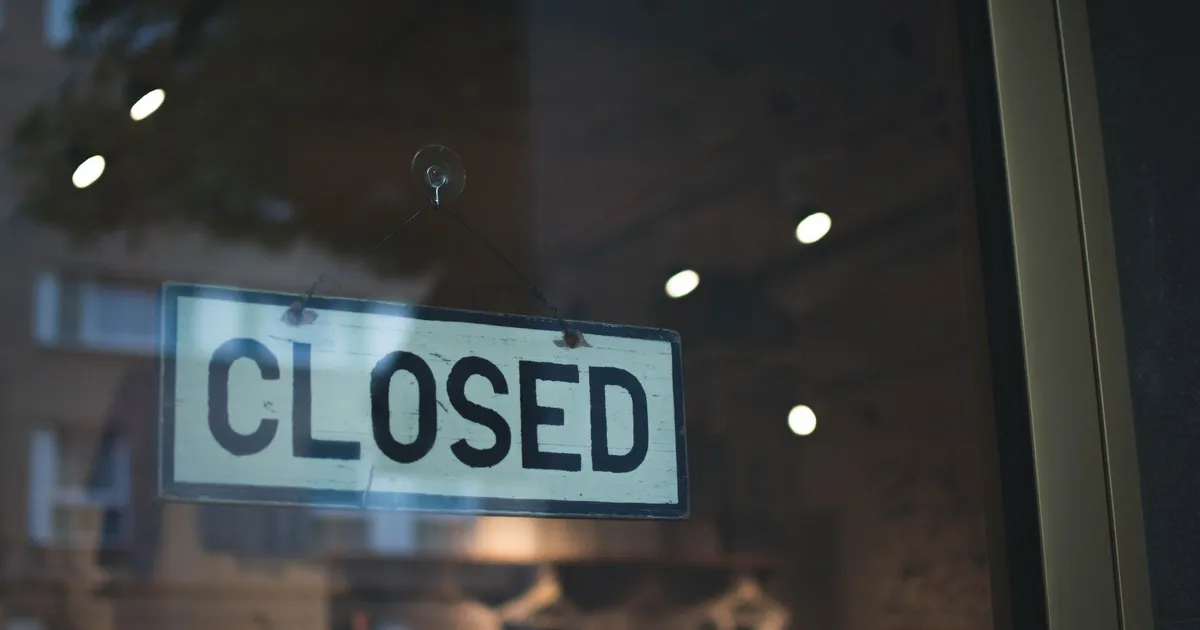
New Zealand’s economists have spent much of 2026 telling business owners the worst is behind them. The liquidators are telling a different story. As at the end of September, creditors had filed 1,072 winding-up applications and there had been 2,411 corporate insolvency appointments, a pace that puts this year on course for the highest annual total since the global financial crisis.
Both things are true at once. The recovery is real, and it is late. For owners, suppliers and lenders, the question is no longer whether conditions improve, but whether a given balance sheet survives long enough to see it.
Confidence surveys don’t pay the bills
In April 2026, business confidence sat at a 12-year high, and Xero data showed small business sales up 4.8 percent year-on-year in the December 2025 quarter, the best result in three years.
The official failure numbers ignored the memo. Companies Office data shows 889 liquidator appointments in the December 2025 quarter, up 34.7 percent on a year earlier, followed by 800 in the June 2026 quarter, up 14.4 percent. There is no reversal in that trend, only a slower rate of deterioration.
The mechanics are not mysterious. A business can be profitable on paper and still run dry if customers pay slowly, wages fall due before invoices settle and suppliers want cash upfront. Rising revenue in the early stage of a recovery often makes this worse, because growth eats working capital before it returns any.
The debt was run up years ago
The most telling number in this cycle is not the volume of failures but who is failing. Shamubeel Eaqub, chief economist at Simplicity, points out that the median age of an insolvent business is now 7.2 years, up from six in 2019. These are not start-ups that never found their feet, nor simply Covid casualties. They are established firms that limped through the pandemic, absorbed the rate cycle and are now buckling under obligations accumulated along the way. Eaqub also notes the per-company failure rate remains below its 2009 peak, which matters: this is a grinding, concentrated squeeze rather than a systemic collapse.
BWA Insolvency put it more colourfully in its latest quarterly report. For heavily geared firms, it said, doing business is like trying to front wheel-drive a penny-farthing up Baldwin Street. A few extra sales do not fix a balance sheet that broke in 2023.
Inland Revenue has stopped waiting
The single biggest accelerant is the tax department. Inland Revenue is closing in on $10 billion of tax owing and usually ranks first among creditors when a company is wound up. After years of pandemic-era forbearance, it is now collecting hard.
There is nothing wrong with the Crown chasing tax. Every firm that pays on time is effectively subsidising those that don’t. But the sequencing deserves criticism. A creditor that tolerated mounting arrears for years, letting penalties and interest compound, then turns enforcement up just as conditions ease, is manufacturing some of the failures it is counting. Leniency that allows a debt to grow beyond recovery is not kindness, and it is not good revenue management either.
Deloitte’s quarterly insolvency analysis also flags heightened IRD enforcement alongside new rules on overdrawn shareholder current accounts and a regulatory focus on phoenix company activity. Owners who have been treating the company account as a personal float should assume that tolerance is over.
The pressure is moving, not lifting
BWA counted 760 insolvency cases in the June quarter, up 3 percent year-on-year, with construction falling from 207 to 169 quarter-on-quarter. Construction is still the biggest single sector by volume, but the baton is passing. Deloitte points to hospitality margins being squeezed by rising labour costs and subdued consumer spending, and repair, personal services, retail and transport have all featured more heavily through 2026.
That shift is a warning for anyone extending credit. The sector that dominated last year’s headlines is no longer the only place the risk sits.
What this means for owners, suppliers and lenders
First, do not loosen credit terms because a confidence survey says so. The failures still coming through will hit trade creditors well after GDP turns. Watch counterparties with long tax arrears, stretched payment days and owners drawing heavily on the business.
Second, if your own balance sheet is carrying legacy debt, act now. New Zealand firms in distress still overwhelmingly end in liquidation rather than a formal turnaround, largely because owners wait until restructuring is no longer an option.
Third, plan for the lag. Insolvency practitioners expect elevated failures to run at least into 2027. The recovery will reward the firms that are still standing when it arrives, and right now that is a matter of cash, not confidence.
Sources
- RNZ: Business failures hit decade high (2026-10-14)
- RNZ: Insolvencies on track for worst year since global financial crisis (2026-09-11)
- Newswire: Business confidence at 12-year high but insolvency wave reveals the uneven face of NZ recovery (2026-04-12)
- Companies Office: Latest company statistics (2026-10-05)
- Deloitte New Zealand: New Zealand insolvency trends (2026-06-01)
- BWA Insolvency: Quarterly Market Report Q2 2026 (2026-08)
Join the discussion
Add useful context, ask a good question, or challenge an idea — keep it specific and respectful.