

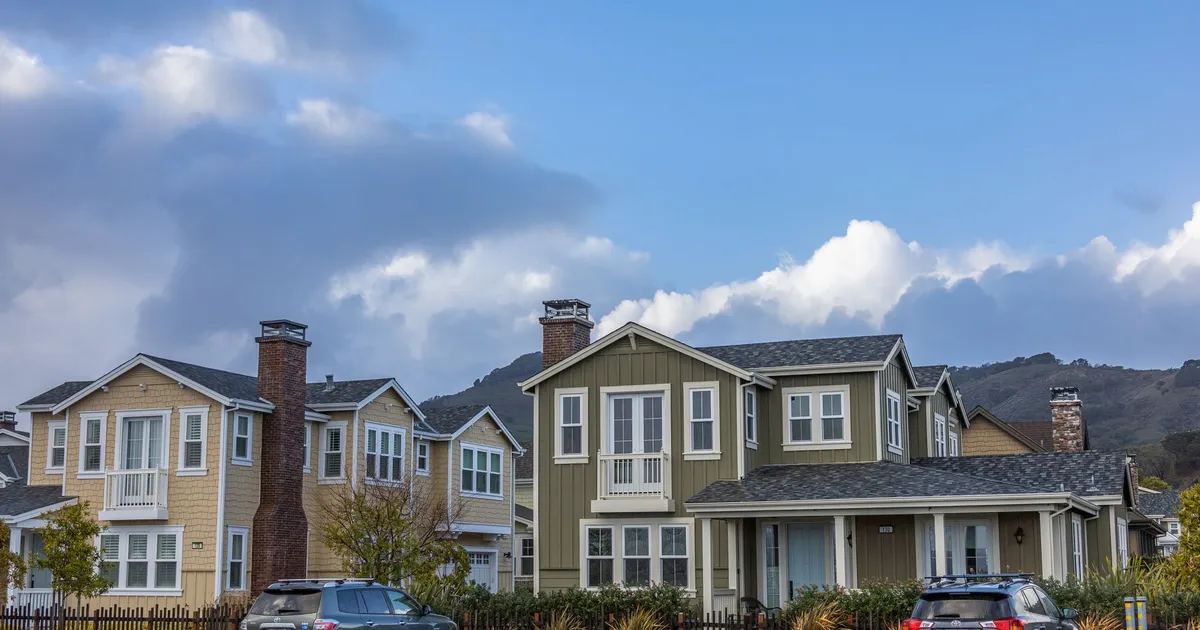
National wants to hand Auckland councils back the power to make developers build car parks. It is being sold as relief for clogged suburban streets. The bill lands on suburban townhouses, new subdivisions and business parks, where a single stall can cost around $65,000 to provide.
That is a strange position for a party that talks up housing supply and lighter regulation. Telling a developer how many car parks a site must have is about as pure an example of planners overriding the market as you will find.
What National is actually promising
The commitment sits in National’s nine-page Auckland platform, which promises to remove the blanket ban on minimum car parking requirements in council plans. Transport spokesperson Chris Bishop says the ban “has not worked” and that “the economic theory behind it did not account for the reality of New Zealand’s suburban streets,” with people “now parking on berms and footpaths.” Stuff framed it as reinstating the off-street requirements Labour removed.
The detail matters more than the headline. This is not a national mandate. Councils would get discretion to set minimums in suburban areas outside intensification zones, in greenfield subdivisions, and in business and industrial parks. Intensification areas stay exempt, which means most new apartment supply should be untouched. The exposure falls on everything else.
The price of a car park
Minimums were abolished under the 2020 National Policy Statement on Urban Development, which barred tier 1 to 3 councils, including Auckland, from setting minimum parking rates. The economics behind it were not flimsy. A 2020 government cost-benefit analysis estimated benefits of $670 million against costs of about $78 million across five cities. In Auckland, extra floor area lifted property values while extra parking area had no measurable effect.
An earlier 2012 Auckland Council-commissioned study found every 100 square metres of parking displaced 50.84 square metres of floor space, with binding minimums costing roughly $19,000 per car park in lost value in the town centres studied. More recently, 2021 Auckland Council valuations put the added cost at up to $58,915 per unit on a standard eight-townhouse development. Two stalls per dwelling at current costs is $130,000 before a single bedroom is built.
The complaint is real, the cure is wrong
Nobody should pretend suburban frustration is invented. In February 2026, Franklin ward councillor Andy Baker told RNZ the current setting was “a failed experiment that needs to change”, citing cars on footpaths and neighbour disputes in areas with poor public transport. Auckland Minister Simeon Brown said at the time that Aucklanders had raised concerns about developments “with nowhere to park”.
But berm parking is an on-street management problem. Auckland Transport has been slow to regulate and price kerbside space, and buyers are choosing homes that cannot fit their cars. Forcing every developer to bake in a fixed number of stalls treats the symptom by raising the price of the product.
The critics span the spectrum. The New Zealand Initiative’s Eric Crampton called the move “a mistake” in February. Green transport spokesperson Julie Anne Genter warned then that mandated parking “can tip a project from viable to unviable.” When a free-market think tank and the Greens agree, the policy deserves a hard second look.
Where developers will feel it
The most exposed are suburban townhouse builders working outside intensification zones, greenfield subdivision developers, and anyone building warehouses or business parks. Industrial land in Auckland is already expensive, and Treasury has found planning restrictions added $378.40 per square metre to land just inside the Rural Urban Boundary in 2021. Every square metre handed to mandated parking is a square metre not earning a return.
The bigger risk is uncertainty. Discretion means the rules will be set ward by ward by local politicians responding to the loudest residents. As The Spinoff noted, repeal only gives councils the option to reintroduce minimums, but feasibility models cannot price a rule that might arrive at the next plan change.
What happens next
If National forms the next government, the change is likely to flow through new national instruments under the Planning Act. Developers should be lobbying now for tight definitions of where councils can act, and for any minimums to be matched by proper on-street parking management. Let buyers who want a garage pay for one. Making everyone else fund it is not a housing policy, it is a car subsidy dressed up as common sense.
Sources
- RNZ: National promises to remove Auckland’s ban on minimum car parking rules (2026-10-14)
- Stuff: National unveils its Auckland policy, reinstates council off-street carparking requirements (2026-10-14)
- RNZ: Parking shortages ‘a failed experiment’ in policy planning – Auckland councillor (2026-02-25)
- The Spinoff: How car parks became a new frontline in the intensification war (2026-03-16)
- The Post: Govt considers requiring car parks in new developments again (2026-02-19)
- National Policy Statement on Urban Development 2020 (2020-07-17)
- Ministry for the Environment: Cost-benefit analysis for a National Policy Statement on Urban Development (2020-07-15)
- Auckland Council: The Economic Impacts of Minimum Parking Requirements (2012-11-14)
- Treasury: Analysis of availability of land supply in Auckland (2024-11-28)
- Voakl: Ban The Minimums – Minimum Parking Requirements Spark Planning Debate (Again) (2026-05-04)
Join the discussion
Add useful context, ask a good question, or challenge an idea — keep it specific and respectful.