

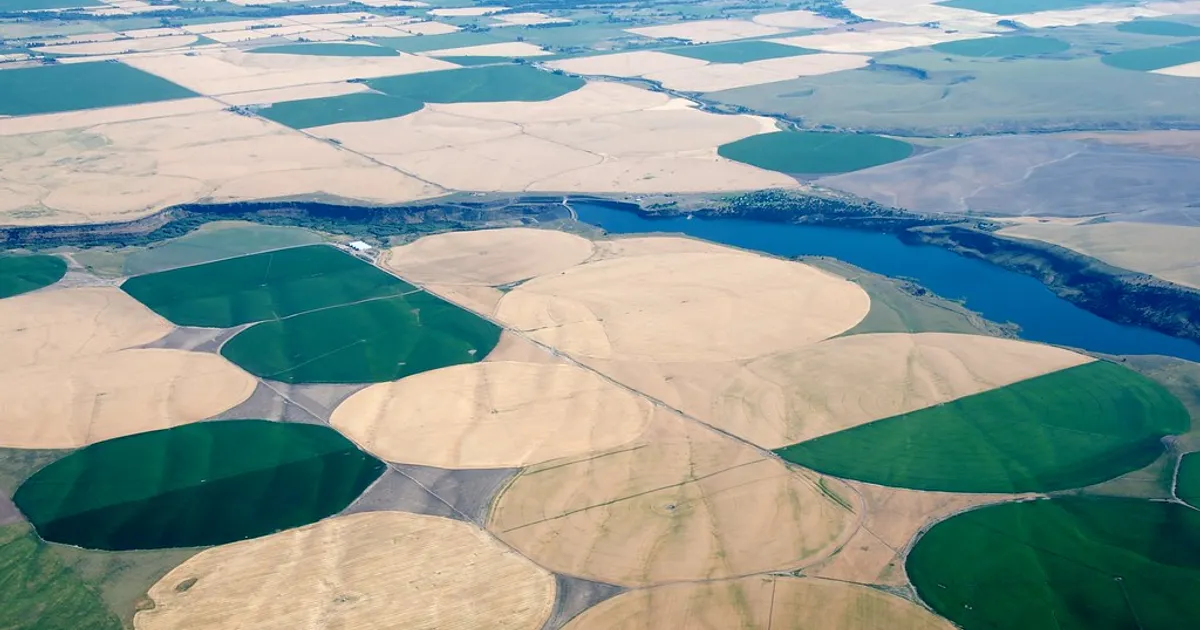
National has picked the right problem and brought a cheque that is too small to solve it. The party’s $300 million low-cost loan scheme for farm water storage, unveiled at Feilding’s Rural Day, is aimed at the bottleneck that has killed past schemes. But measured against the size of the opportunity, it looks more like an election signal than a step-change in export capacity.
Agriculture spokesperson Todd McClay framed the problem well. New Zealand “receives more rainfall per person than almost any developed nation on earth, yet too many of our regions still face real water insecurity”, he said, because it arrives in the wrong places and seasons. National’s own policy document says the country captures and uses only about 2% of its available water.
The design is better than the dollar figure
The loans are concessional, repayable within ten years, and pitched at the risky pre-construction phase rather than building dams outright. The expected cost to the Crown is a $16.3 million annual write-down, and National says the lending sits outside its capital allowance. Northland, Tairāwhiti, Hawke’s Bay, Wairarapa and Canterbury get first call, alongside a promised national storage register and a rural water-use strategy in 2027.
That is fiscally sensible. Planning, consenting and investor confidence are where storage projects stall, and a cheap loan that gets a scheme to a bankable business case is a better use of taxpayer money than a grant. Federated Farmers water storage spokesperson Richard Dawkins welcomed it on that basis, but made clear farmers want more, saying “just to get those projects off the ground some increased seed funding from the government as well would be really well received” for construction itself.
A week earlier, Federated Farmers had set its bar higher, arguing that “projects of this scale eventually need the Government to get alongside them and help get them built”. National cleared the first hurdle and stopped.
One dam can eat most of the pool
The Tukituki Water Security Project in Central Hawke’s Bay, which would be the biggest dam since Clyde, needed an $18 million government loan in April just to test viability. A smaller, previously preferred Ngāruroro option was costed at $225 million. On those numbers, one regional scheme’s build cost equals three-quarters of a national fund spread across five regions.
The broader scale check is starker. Banks hold $64.7 billion in agriculture loans, so National’s pool is under 0.5% of existing farm lending. The sector is worth the effort: MPI forecast in December 2025 that food and fibre exports would reach $64.3 billion for the year to June 2026, before easing about 3% as prices soften. Softer margins make resilience more urgent and make farmers less able to fund construction alone.
The prize is large. About 800,000 hectares are irrigated now, with room for another 400,000. Horticulture shows what water does to value. In 2025, HortNZ told officials its $7.48 billion sector farmed less than 0.1% of the country’s land, with over 90% of crops grown under irrigation. It also conceded storage carries trade-offs for water quality and fish passage, which is exactly why consenting, not cash, often decides whether a dam gets built.
The consenting promise still hasn’t landed
That is the real test. National’s Primary Sector Growth Plan promised to make water storage a permitted activity under a National Environmental Standard, with 30-year permits. In June, Farmers Weekly noted that “implementing this policy has been delayed” as attention shifted to replacing the RMA.
Cheap planning money is wasted if schemes then spend years in consenting. Doubling primary export value by 2034 needs both a regulatory path that lets storage happen and capital to build it. The $300m loan pool addresses neither at full scale.
What would make it count
This is good policy that deserves support. It is fiscally disciplined, aimed at the right stage, and focused on regions where water scarcity already blocks investment. But a de-risking tool is not a building programme. If National wins, the measure is not how quickly the $300m is lent. It is whether the consenting standard arrives, whether the 2027 strategy commits construction capital, and whether any of the five priority regions has a dam half-built by the following election. Until then, farmers have a useful feasibility fund, and the 98% of rainfall the country doesn’t capture keeps running out to sea.
Sources
- NZ Herald: Election 2026: National to negotiate fertiliser security agreements, offer $300m in loans for water storage if elected (2026-10-08)
- RNZ: National woos farmer vote with $300m low-cost loans for water storage (2026-10-09)
- National Party: Securing water and fertiliser to back NZ farmers (Water Security Policy) (2026-10)
- RNZ: Federated Farmers welcomes National’s water storage scheme, says it should go further (2026-10-10)
- Farmers Weekly: Enough climate talk, time to build resilience (2026-10-02)
- NZ Herald: Central Hawke’s Bay water storage – biggest NZ dam since Clyde gets $18m Govt loan to test its viability (2026-04-06)
- MPI: Situation and Outlook for Primary Industries (2025-12)
- HortNZ: Freshwater national direction, Water Storage submission (2025-07-25)
- Farmers Weekly: What happened to the dam water promises? (2026-06-12)
Join the discussion
Add useful context, ask a good question, or challenge an idea — keep it specific and respectful.