

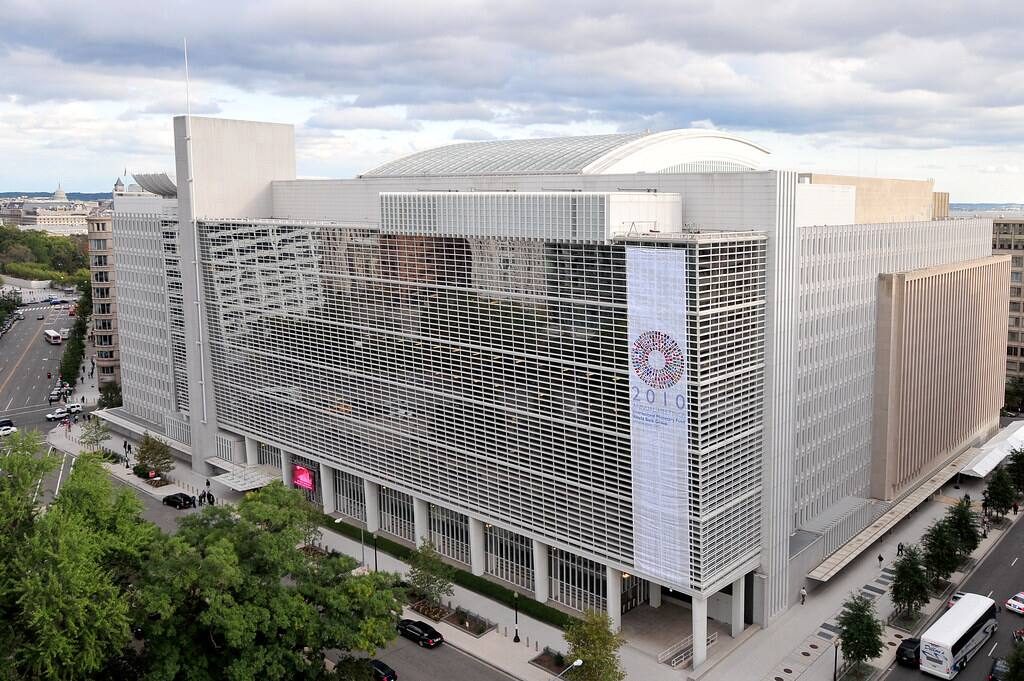
The World Bank has lowered its forecast for global economic growth in 2025, attributing the revision primarily to mounting trade tensions and policy uncertainties. The institution now predicts that the world economy will expand by just 2.3% this year, down from an earlier estimate of 2.7%. This slowdown marks the weakest global growth since the 2008 financial crisis, excluding periods of outright recession.
Trade disputes, particularly those involving the United States, have played a central role in dampening economic prospects worldwide. Since the start of the year, the U.S. has imposed steep tariffs on numerous countries, prompting retaliatory measures from key partners such as China and the European Union. These escalating trade barriers have unsettled markets, disrupted supply chains, and reduced business confidence, all of which have contributed to a more cautious economic environment.
“International discord—about trade, in particular—has upended many of the policy certainties that helped shrink extreme poverty and expand prosperity after the end of World War II,” said Indermit Gill, the World Bank’s senior vice president and chief economist.
He also warned that without swift policy adjustments, the adverse effects on living standards could be severe, with the current decade poised to record the slowest average growth since the 1960s.
The Bank also revised down growth forecasts for major economies. The United States’ GDP growth projection for 2025 was reduced by 0.9 percentage points to 1.4%, while the eurozone’s forecast was trimmed by 0.3 percentage points to 0.7%. Emerging markets and developing economies are expected to slow to an average growth rate of 3.8%, a marked deceleration compared to previous decades. Low-income countries face similar challenges, with growth projected to ease to 5.3% this year.
Global trade volumes are anticipated to increase by only 1.8% in 2025, a sharp decline from 3.4% in 2024 and far below the robust growth rates seen in the early 2000s. This slowdown shows the cumulative impact of tariffs and the uncertainty they generate, which also contribute to persistent inflationary pressures. The World Bank forecasts global inflation to remain elevated at 2.9% in 2025, above pre-pandemic levels, driven by tariff-related cost increases and tight labour markets.
Should tariffs rise by an additional 10 percentage points and provoke more retaliatory actions, global growth could be further reduced by 0.5 percentage points. Such a scenario would likely cause a sharp contraction in trade, erode business confidence, and increase volatility in financial markets.
Nonetheless, the World Bank points to a potential upside if trade disputes are resolved. “Our analysis suggests that if today’s trade disputes were resolved with agreements that halve tariffs relative to their levels in late May, 2025, global growth could be stronger by about 0.2 percentage point on average over the course of 2025 and 2026,” Gill added.
This improvement would help restore some lost momentum and reduce uncertainty, benefiting investment and trade flows.
These developments coincide with ongoing negotiations between the United States, China, and the European Union that aim to ease tariff tensions. Recent discussions have led to temporary tariff reductions, but the risk remains that unresolved disputes could cause further economic disruption.
The institution warns that prolonged tensions could undermine efforts to reduce poverty and improve living standards worldwide, making the resolution of trade issues a critical priority for global economic stability.