

A fund worth stopping a fight over
Bay of Plenty Regional Council has paused plans to restructure its $3 billion-plus investment portfolio after Local Government Minister Simon Watts wrote to it on 2 July directing it to defer any decisions. The climbdown ends an extraordinary sequence in which the council pushed ahead against the united opposition of the region’s six mayors, and had to be pulled up by central government.
That is not how good stewardship of public capital is meant to work. And the asset in question is not a minor line item.
The compounding engine councils rarely admit they have
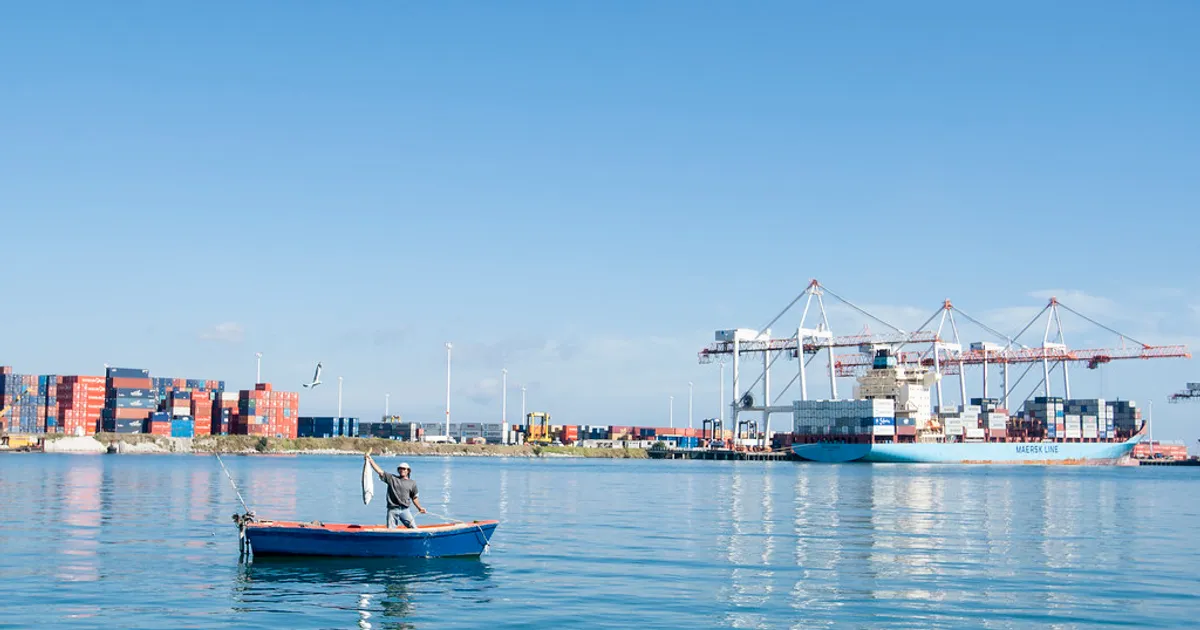
Quayside Holdings is the regional council’s investment arm, a council-controlled organisation whose primary asset is a 54.14% majority stake in the Port of Tauranga worth $2.5 billion, New Zealand’s largest port by cargo volume. The total portfolio was worth $3.14 billion in gross assets as of 30 June 2025, including $470 million in diversified non-port assets and $161 million in special purpose assets such as the Rangiuru Business Park.
The track record is the kind most fund managers can only dream of. Quayside was established in 1991 with a $53 million majority shareholding in the port. That stake is now worth $2.5 billion, a roughly 47-fold increase over 34 years. The dividend it throws off is the financial spine of the council’s finances and a direct rates subsidy for households across the region.
This is the point ratepayers should sit with. When a council owns an asset this productive, the only question that matters is whether it is being managed for returns or for institutional convenience.
What the council actually voted for
On 25 June the remaining 10 councillors adopted amendments to the Long-term Plan enabling a future restructure of the portfolio. The amendment did not immediately move assets, but it authorised splitting the portfolio into separately managed entities and exploring partnerships with, or the creation of, a charitable community trust. The consultation document flagged implementation would take up to 18 months.
The council framed this as preserving options. The problem is timing.
Half the board walking out the door
The restructure landed as Quayside’s governance was thinning out. Three of Quayside’s seven directors are set to leave on 30 September 2026, with a fourth, council chief executive Fiona McTavish, having resigned effective 25 June. Four of seven directors departing at once.
Watts flagged exactly this in his 2 July letter, calling the loss of independent expertise “concerning” and warning that independent directors play a critical role in the prudent management of financial assets. A $3 billion fund with half its board leaving is in no position to absorb a structural redesign.
The mayors were right about sequencing
The mayors’ objection was not turf. Their argument was about order of operations. The Long-term Plan consultation was completed before the Government announced its ‘Head Start Pathway’ local government reform programme in May 2026, which could force council amalgamations across the region.
If councils merge, ownership and governance of Quayside will have to be renegotiated anyway. In their joint letter, the six mayors said they were concerned the decisions were “being progressed ahead of clarity on the Government’s local government reform programme”. Making irreversible decisions about a fund before you know who will own it is not prudence.
Break it apart and you lose what built it
The councillor vote was split, and the business community was not on the side that won. The core commercial risk is simple. The $3.14 billion is a product of scale, patience and independence. Splitting the fund into separate entities introduces complexity, dilutes flexibility and weakens the compounding that produced 34 years of growth. Once a structure like that is locked in, it is difficult to unlock.
Tauranga MP Sam Uffindell said the council had “pulled their heads in” but added he remained “concerned that they walked down this path to begin with”, describing Quayside as a highly successful entity that needs to stay free from political interference.
What happens next
Chairwoman Matemoana McDonald has tied the restraint directly to the reform process, writing that the council will “exercise restraint” and not make further decisions “until there is greater clarity”. She wants the pause formally adopted at the next full council meeting so it is clearly the council’s own decision, a formulation that preserves face while conceding the substance.
The harder question is coming. How a $3 billion fund fits into any merged council, who owns it and who banks the dividend, will be among the most consequential decisions the reform throws up. The fact that the regional council tried to get ahead of that conversation, and had to be stopped by a minister, tells you plenty about the politics ahead.
Sources
- Bay of Plenty Regional Council to pause restructure of $3b-plus investment portfolio (2026-07-18)
- Local Government Minister Simon Watts weighs in on Bay of Plenty investment fund shake-up (2026-07-10)
- Bay of Plenty Regional Council: Half of Quayside Holdings board to leave (2026-07-08)
- Bay of Plenty Regional Council backs plan despite mayors’ warning (2026-06-26)
- Bay of Plenty councillors split on $3b asset move (2026-06-25)
- Participate BOPRC – Long Term Plan Amendment Consultation 2026 (2026)