

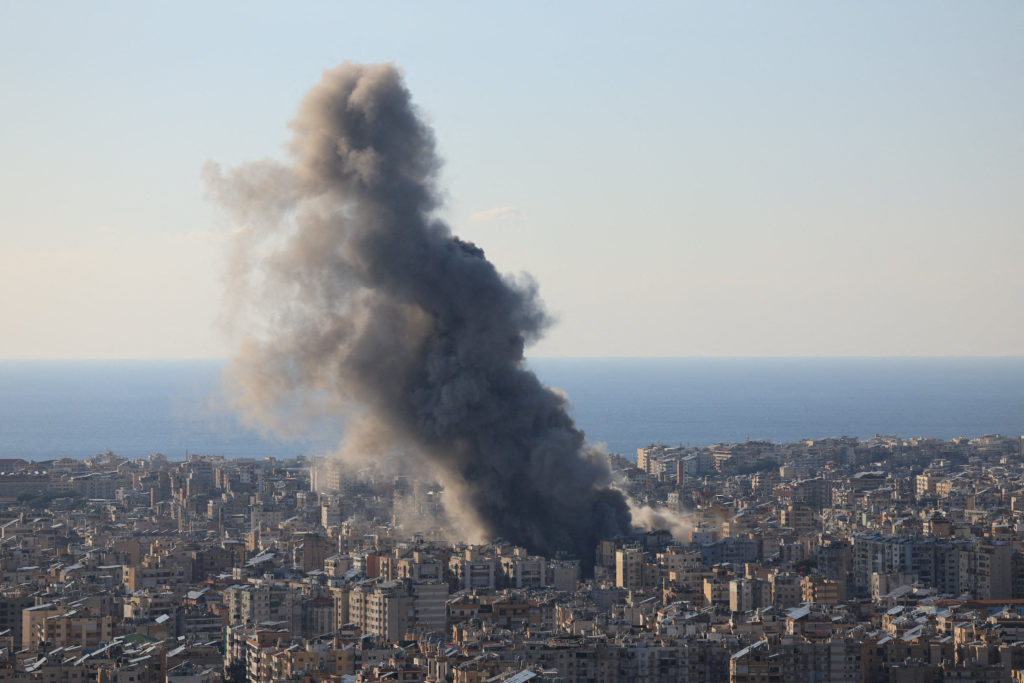
The U.S.-led airstrikes on Iran are making swift headway less than a month after launch, delivering substantial setbacks to Tehran’s military might despite internal challenges in Washington.
Senior Pentagon officials report that relentless precision bombing has gutted key elements of Iran’s arsenal. Ballistic missile output has tumbled by 90 per cent, while drone operations have nosedived 95 per cent, as strikes pulverise production hubs and air defence arrays.
President Donald Trump has cast the campaign as a vital strike against enduring threats, declaring that Iran’s military stands “decimated” with “practically nothing left to target” in high-value areas.
Coalition forces have systematically dismantled Iran’s capacity to dominate the Gulf and imperil vital shipping. U.S. Central Command confirms over 100 naval vessels sunk, eroding Tehran’s leverage in the Strait of Hormuz—a chokepoint funnelling 21 per cent of global oil daily, according to U.S. Energy Information Administration data. This has eased fears of prolonged blockades that could cripple energy markets.

The operation’s pace endures unaltered by domestic friction, notably the resignation of top counter-terrorism figure Joseph Kent. Experts at the Council on Foreign Relations emphasise that leadership contingencies have kept decision-making and execution on track.
Fuel markets remain jittery, with Brent crude lingering around $95 a barrel. Administration voices argue that neutralising proxies like Yemen’s Houthis and Lebanon’s Hezbollah—long backed by Tehran—will ultimately soothe supply lines. Trump presses for wider alliance involvement, from Britain to Saudi Arabia, to patrol and reopen lanes.
Early signs show alignment with goals: missile programmes reined in, sea power clipped, and militia support severed. Eschewing major ground forces, the effort exemplifies focused, short-duration conflict, as outlined in RAND Corporation assessments.
While Iran’s long-term stability hangs in doubt, battlefield dominance is clear. With talk of conclusion imminent, efforts pivot to post-strike recovery, demilitarising Hormuz and bolstering trader faith amid $2 billion weekly logistics hits.
For global energy and freight players, the true measure lies in converting these wins into steady commerce.