

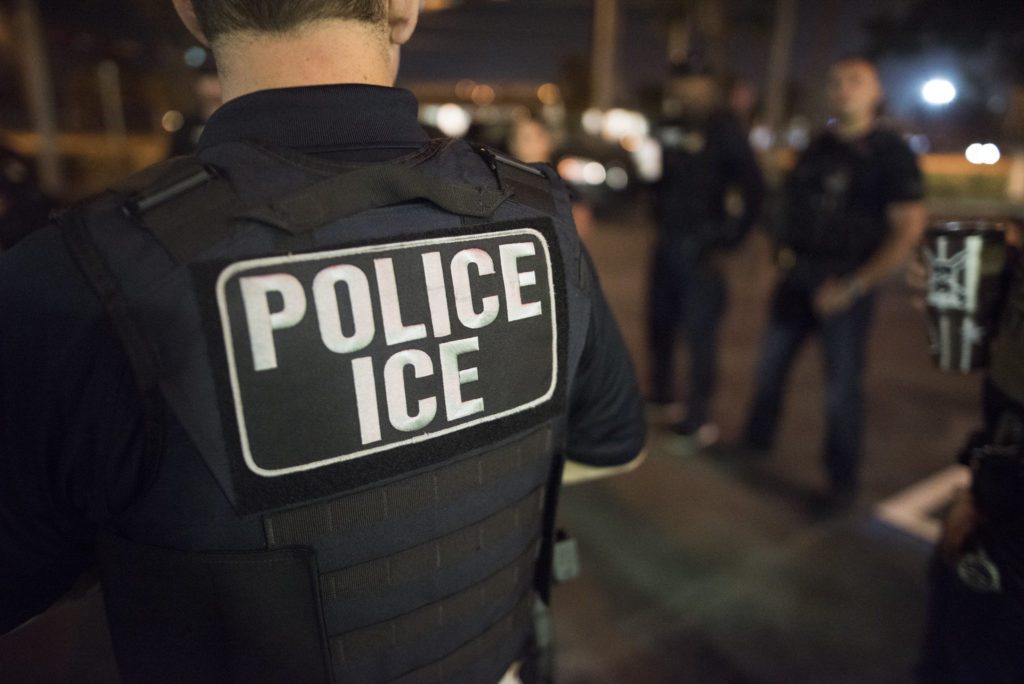
A federal appellate court recently upheld a temporary injunction blocking the Trump administration from carrying out immigration raids in Southern California without specific justification. This decision preserves a lower court’s order aimed at preventing enforcement tactics alleged to involve unconstitutional racial profiling.
The Ninth U.S. Circuit Court of Appeals reviewed the government’s challenge to a temporary restraining order issued on July 12 by Judge Maame E. Frimpong. The administration argued the injunction hindered lawful immigration enforcement, while immigrant rights groups insisted it was necessary to stop discriminatory practices targeting Latino and brown-skinned people.
The lawsuit, filed by immigrant advocacy organisations, included three detained immigrants and two U.S. citizens as plaintiffs. Judge Frimpong found “a mountain of evidence” showing that factors such as perceived race, ethnicity, speaking Spanish or English with an accent, presence at locations like tow yards or car washes, and occupation were wrongly used as sole bases for detaining individuals.
The appeals panel agreed, noting, “If, as Defendants suggest, they are not conducting stops that lack reasonable suspicion, they can hardly claim to be irreparably harmed by an injunction.”
A hearing on a preliminary injunction, which could lead to a lasting court order, is scheduled for September.
Southern California, especially Los Angeles, has been a hotspot amid the Trump administration’s tough immigration measures, which sparked protests and led to the temporary deployment of National Guard and Marine units. Arrests occurred at places such as Home Depot, bus stops, farms and car washes, affecting many long-term residents.
One plaintiff, Los Angeles resident Brian Gavidia, was filmed in June protesting as federal agents detained him, shouting, “I was born here in the states, East LA bro!”
American Civil Liberties Union attorney Mohammad Tajsar warned the court. “They want to send us back to a world where a U.S. citizen can be grabbed, slammed against a fence and have his phone and ID taken from him just because he was working at a tow yard in a Latino neighbourhood.’”
The government contended the lawsuit was rushed due to timing near the July 4 holiday and disputed claims that an official policy of stopping people without reasonable suspicion existed.
Attorney Jacob Roth argued it was lawful to consider factors like race, language and location when forming reasonable suspicion, saying, “Legally, I think it’s appropriate to use the factors for reasonable suspicion.”
Judges were doubtful. Judge Jennifer Sung stated these factors could be considered but cautioned they only form a “broad profile” and are insufficient alone to justify a stop. She noted that in diverse Los Angeles, where Latinos make up about half the population, such profiling would unfairly target lawful residents and asked, “What is the harm to being told not to do something that you claim you’re already not doing?”
Los Angeles Mayor Karen Bass praised the ruling as “a victory for the rule of law,” promising to protect residents from “racial profiling and other illegal tactics” by federal agents.