

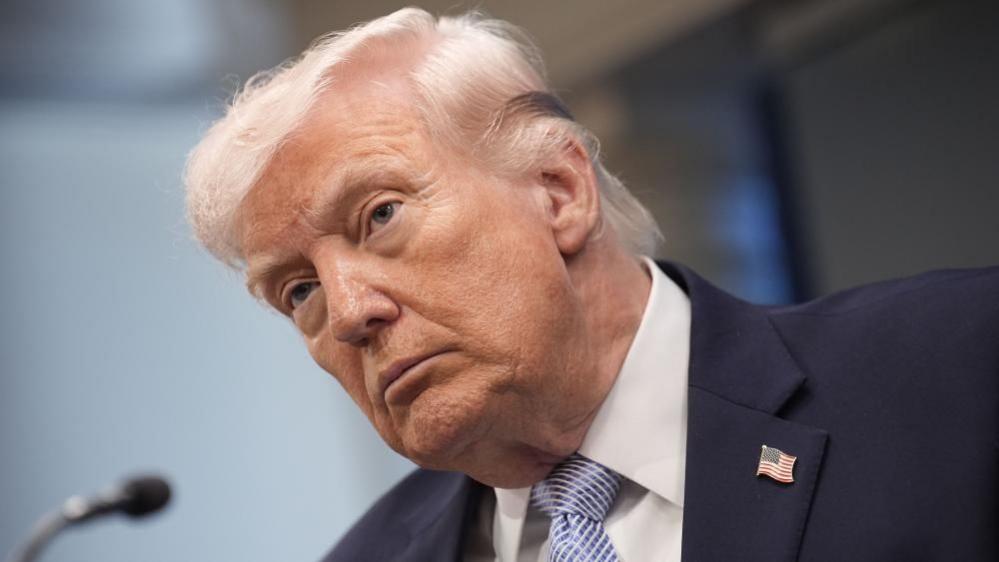
U.S. President Donald Trump announced a 14-day halt to planned airstrikes on Iranian facilities on Tuesday, pulling back from his own explosive deadline and opening a window for negotiations over the Strait of Hormuz.
In a Truth Social post, Trump conditioned the truce on Iran’s agreement to “the COMPLETE, IMMEDIATE, and SAFE OPENING of the Strait of Hormuz,” crediting discussions with Pakistan’s Prime Minister Shehbaz Sharif and Field Marshal Asim Munir. “This will be a double sided CEASEFIRE!” he declared.
The news sent shockwaves through financial markets. Brent crude prices plummeted more than 15 per cent to below $65 a barrel, shedding war-risk premiums accumulated over five weeks of U.S.-Israel operations. Meanwhile, U.S. stock futures climbed 2.5 percent, buoyed by gains in defence stocks.
Trump’s reversal came hours before an 8pm Eastern deadline he had set on Sunday, followed by a stark Tuesday warning: “A whole civilization will die tonight, never to be brought back again.” The rhetoric had fuelled worldwide anxiety over Iran’s economy, already battered by sanctions.
Pakistan’s Sharif played a pivotal role, requesting the extension and pressing Iran for a temporary strait opening as a goodwill gesture.
“We also urge all warring parties to observe a ceasefire everywhere for two weeks to allow diplomacy to achieve conclusive termination of war, in the interest of long-term peace and stability in the region,” he wrote on X.
Iran’s Foreign Minister Abbas Araghchi affirmed that ships could pass safely “via coordination with Iran’s Armed Forces and with due consideration of technical limitations” during the pause.
Both sides claimed vindication. Trump asserted the U.S. had “already met and exceeded all Military objectives, and are very far along with a definitive Agreement concerning Longterm PEACE with Iran, and PEACE in the Middle East,” praising Iran’s 10-point proposal as “a workable basis on which to negotiate” where “Almost all of the various points of past contention have been agreed to between the United States and Iran, but a two week period will allow the Agreement to be finalized and consummated.”
Iran’s Supreme National Security Council countered via Mehr News Agency that the U.S. “has accepted these principles as the basis for negotiations and has surrendered to the will of the Iranian people.”
“If the surrender of the enemy in the field becomes a decisive political achievement in the negotiations, we will celebrate this great historical victory together, otherwise we will fight side by side in the field until all the demands of the Iranian nation are achieved.”
Talks are set to start soon in Islamabad, with Iran’s demands covering U.S. troop withdrawals, sanction lifts, asset releases, reparations, and Hormuz protocols—proposals Trump deemed “not good enough” just a day prior. The strait, 33km wide at its narrowest and scarred by 1980s tanker wars, saw shipping insurance soar 300 per cent last week amid closure fears.