


Trade talks between the United States and China ended in Madrid on Monday after two days of discussions focused on tariffs, export controls, and the urgent deadline affecting TikTok’s U.S. operations. The talks were largely overshadowed by the announcement of a “framework” deal regarding TikTok’s ownership.
Treasury Secretary Scott Bessent confirmed from Madrid that commercial terms had been agreed between the private parties involved. Presidents Donald Trump and Xi Jinping are set to discuss the deal on Friday, ahead of a Wednesday deadline requiring TikTok to divest its U.S. business or cease operations in the country.
The U.S. team was led by Bessent and Trade Representative Jamieson Greer, with China represented by Vice Premier He Lifeng and chief trade negotiator Li Chenggang. Despite progress on TikTok, wider trade discussions were postponed, with Greer stating talks on other issues had been “deferred.”
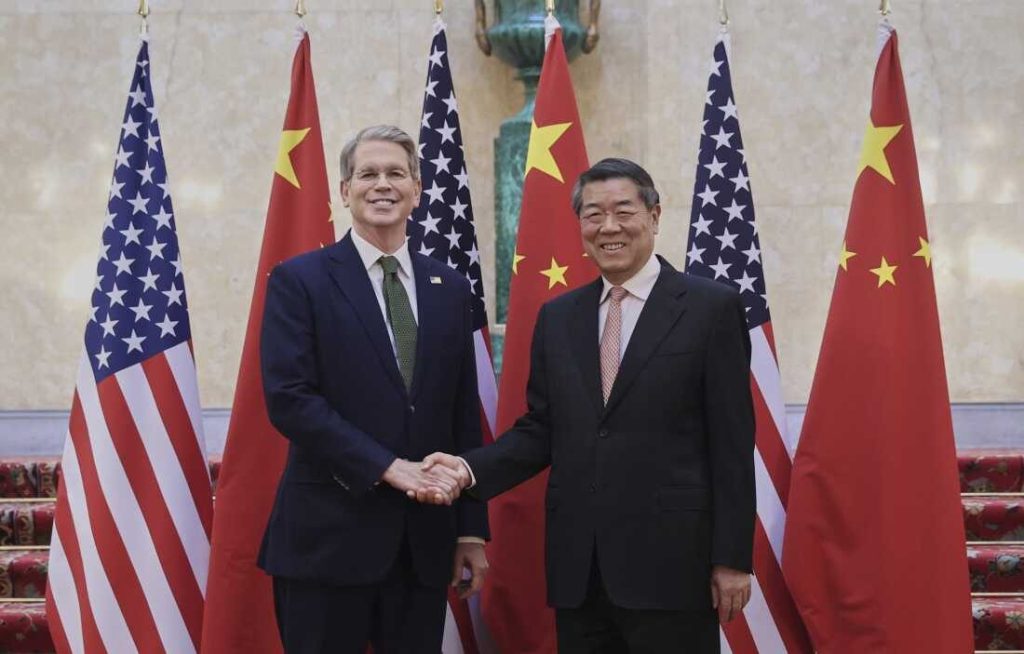
This round was the fourth in four months, following a May agreement to pause most tariffs and relax some trade restrictions. A recent visit to Washington by Li yielded little advancement.
Tensions remain high, as China launched weekend investigations into U.S. semiconductor firms, including an anti-dumping probe on American analogue chip imports and an anti-discrimination inquiry into U.S. actions against Chinese chipmakers. This followed the U.S. adding 23 Chinese companies to its export control list last Friday.
China also announced a preliminary anti-competition finding against Nvidia, with further investigation planned. Bessent called the timing “poor,” while George Chen of The Asia Group described Nvidia as “leverage for both sides,” suggesting Beijing is using the probe as a negotiation tactic.
Wendy Cutler, former U.S. trade representative, described the current climate as “not encouraging,” warning China will push hard under Trump’s second term and seek concessions. She observed little progress and characterised the situation as “running to [a] stand-still.”
China’s Ministry of Commerce criticised Trump’s request for the EU to impose secondary tariffs of up to 100% on Chinese imports over Russian oil purchases, calling it “unilateral bullying and economic coercion” and a breach of earlier agreements between the leaders.
Officials also reportedly discussed a potential in-person meeting between Trump and Xi later this year. Reports suggest Beijing has sought to arrange Trump’s first state visit to China since 2017 to ease ongoing tensions.