

A regulator finally shows up
On 12 August 2026 the Commerce Commission released its final decision imposing strengthened oversight on Wellington’s new water entity, Tiaki Wai. The requirements go beyond the standard information disclosure regime that applies to every water provider: regular reporting on network fault attendance and resolution times, maintenance spending, independent expert assessment of key spending plans, and an assessment of asset management capability.
The Commission only became the sector’s economic regulator in August 2025, and Tiaki Wai came under full economic regulation from 1 July 2026. Commission Chair John Small put the rationale plainly: “Consumers want confidence that investment is being directed to the right priorities and that promised improvements are being delivered.”
That is a polite way of saying nobody has had that confidence for years. And they were right not to.
The number that explains everything
Here is the fact a business audience should sit with. Wellington Water’s own Annual Report for the year ended 30 June 2025 shows its unconstrained advice was that the region needed $10 billion of capital investment over 10 years. It recommended $7.6 billion as more deliverable. The five shareholding councils agreed to fund just $3.6 billion, a gap of more than $4 billion against even the reduced number, and the money that was agreed went mostly to keeping existing infrastructure limping along.
That deferral did not make the problem cheaper. It made it enormous. Tiaki Wai now estimates it will cost $25 billion over three decades to fix the city’s failing water network. The entity inherited roughly $9 billion of water assets and $1.6 to $1.7 billion of debt from those same councils on 1 July. The regulator with teeth is the inevitable consequence of a decade of political avoidance.
What it costs to occupy Wellington
The repricing has already begun. Under Tiaki Wai’s Water Services Strategy 2026/27, the average household water charge rises 13.3% this year, about $290 or $5.60 a week on top of the current $2,100. Bills are projected to reach $6,208 a year within a decade. Council rates on water assets have more than doubled from 2024/25 to 2026/27, topping $57 million.
That trajectory would have been worse. Back in April 2026, earlier projections signalled bills of up to $6,800 within a decade, a 14.7% jump this year and potentially 28% in 2027/28. The Commission stepped in after those numbers alarmed both the minister and the mayor. For high-water-use businesses, hospitality, food manufacturing, commercial laundries, this is a structural cost line, not a one-off. Water management just became an operational priority.
A construction pipeline, and a capacity problem
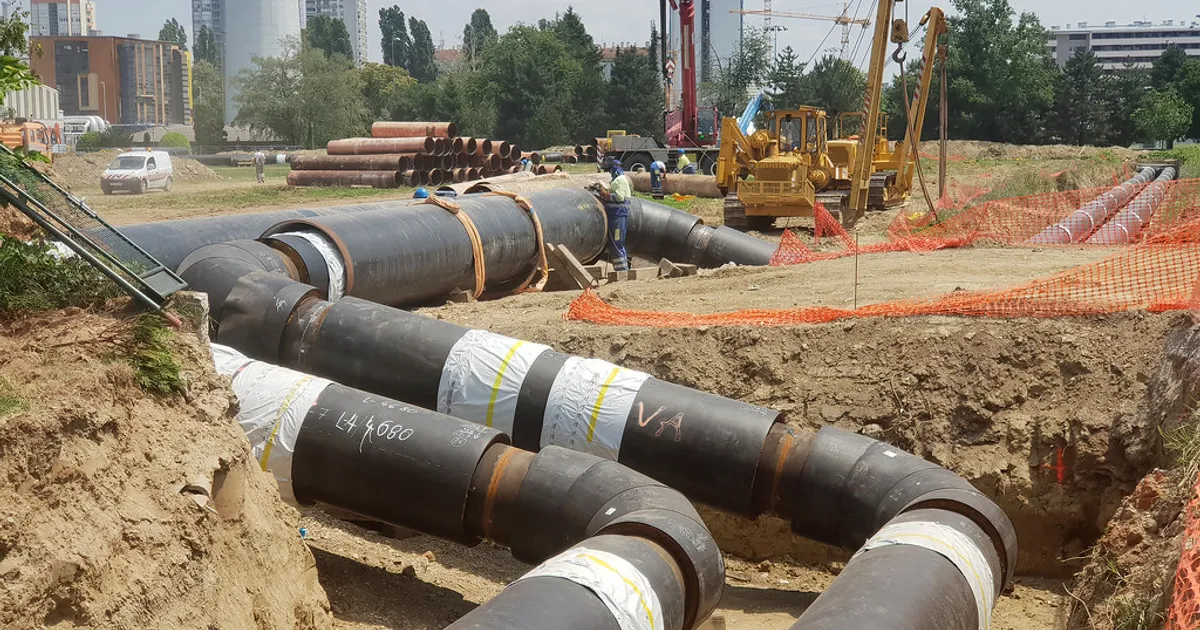
The flip side of a repricing is a spending programme. The 2026/27 capital programme alone is $329.2 million, and capital investment over 10 years is forecast at $5.7 billion to $8.2 billion. That is a sustained demand signal for civil contractors, pipe manufacturers, engineering consultants and equipment suppliers, and a real capacity test for Wellington’s construction sector.
Delivering it is the hard part. Industry body Water NZ, in its May 2026 submission, acknowledged the elevated risks Tiaki Wai inherited but warned that “cumulative compliance demands of concurrent obligations risk diverting organisational capability away from establishment, planning, and delivery activities.” In plain terms, too much reporting too soon could slow the pipe-fixing. It is a legitimate tension. The Commission’s answer is equally legitimate: you cannot manage what you have not measured, and the reporting requirements exist precisely to catch underdelivery early.
The ratchet only moves one way
What is notable is that Tiaki Wai welcomed the decision, unusual for a regulated entity, signalling either institutional maturity or a shrewd calculation that accepting oversight now heads off harsher intervention later. Because harsher intervention is on the table. The August decision stopped short of full price quality regulation. Minister Cameron Brewer is weighing performance requirement regulation, the next rung up, and Mayor Andrew Little wants the Commission handed direct control of prices.
Every indicator points the same direction: more oversight, higher bills, a bigger construction programme. Wellington businesses should plan on all three. The uncomfortable truth is that none of this is the regulator’s doing. It is the delayed invoice for a decision to spend a third of what the engineers said was needed, and it is now due.
Sources
- Commerce Commission tightens scrutiny over Tiaki Wai (2026-08-12)
- Commerce Commission Tightens Oversight Of Wellington Water Provider Tiaki Wai (2026-08-12)
- Tiaki Wai welcomes Commerce Commission decision that stops short of price controls (2026-08-12)
- Wellington’s new water entity facing scrutiny from Commerce Commission over proposed bills (2026-04-11)
- Tiaki Wai Water Services Strategy 2026/27 (2026-06)
- Wellington Water Annual Report for Year Ended 30 June 2025 (2025-06-30)
- Economic regulation for Tiaki Wai – Consultation on recommending performance requirement regulation (2026-05-07)
- Water NZ Submission on Additional ID for Tiaki Wai (2026-05-28)
Join the discussion
Add useful context, ask a good question, or challenge an idea — keep it specific and respectful.