

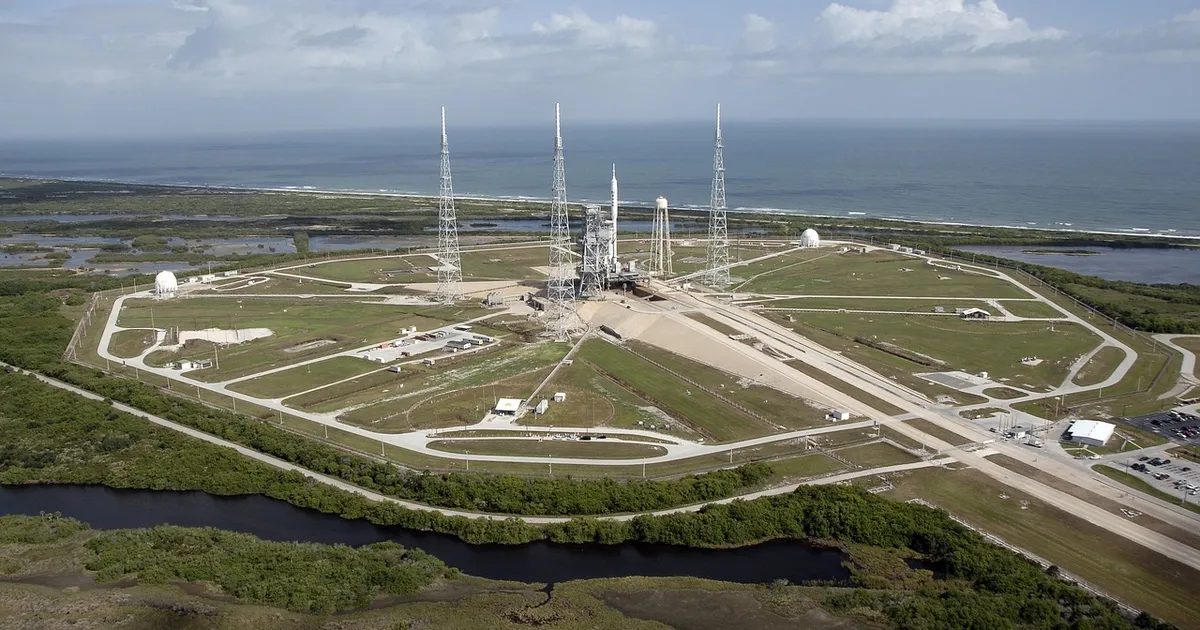
Canterbury could host up to 12 launches a year of rockets weighing up to 100 tonnes under a plan from Tāwhaki National Aerospace Centre and French firm SpaceDreamS. It is being reported as a novelty, rockets beside Lake Ellesmere. It is really a test of whether New Zealand can turn launch permissions into jobs, procurement and export revenue. As things stand, the regulatory runway is clear. The funding runway is not.
A feasibility study is not a spaceport
The two partners have completed a joint feasibility study finding Kaitorete Spit technically and operationally suitable for vertical launch. The same reporting is blunt about what is missing. No cost, no construction timetable, no first launch date. Commercial arrangements, investment and regulatory approvals all still need to be secured. Tāwhaki, an iwi-Crown joint venture, intends to provide the infrastructure rather than build or fly rockets. It is a landlord model.
The proposed asset is modest in footprint, a 30m by 30m pad built to NASA standards about 10km from State Highway 75, using only gas-based fuels. The pitch to European customers is diversification, a southern site to spread weather, technical and geopolitical risk. SpaceDreamS chief executive Christian Canart said the deal gives his company “a credible long-term framework” for building launch capability outside Europe.
Wellington will cut red tape but not cheques
The government has ruled out further capital investment in the near term, citing fiscal constraints, and an official briefing described the absence of launch-pad subsidies as a key challenge. Acting chief executive John Holt says the plans “just need commercial ignition” and expects a test pad could be built within two years if overseas investment arrives.
Meanwhile, the regulatory side has moved fast. The national launch cap is rising tenfold, from 100 to 1000, and payload clearance times have been cut from 11 weeks to 5.5. The Crown has put $35 million into Tāwhaki since 2021, but that went into runway, hangar and airspace infrastructure, not the vertical pad. Fewer than five European companies have shown firm interest, and Tāwhaki will not name them.
Keeping the taxpayer off the hook for a speculative launch pad is the right call. Faster consenting is genuinely useful. But deregulation is not a business model, and the project now stands or falls on whether a handful of unnamed foreign firms put real money down.
Even Rocket Lab is building its big rocket elsewhere
The awkward comparison is closer to home. Rocket Lab’s Electron, launched from Mahia, weighs 13 tonnes. Its heavier Neutron, at more than 100 tonnes, is being built to launch from the US. New Zealand’s flagship launch company is not choosing home soil for heavy lift.
That does not kill Kaitorete, but it frames the risk. In 2024, MBIE noted New Zealand had gone from no orbital capability to third-largest launcher globally by annual count. That track record is in small rockets. Selling heavy-launch reliability to Europe, before a single pad exists, is a harder pitch.
The money is in the supply chain, not the pad
The bigger prize is everything around the launch. A Deloitte Access Economics report for MBIE, published in 2025, found the space sector earned $2.68 billion in revenue in FY24, up 53% since 2019 against global growth of 40.6%, supporting 7,000 direct and 17,000 total jobs. New Zealand launches rose from 3 in 2019 to 16 in 2024, while launch costs fell from US$85,200 per kilogram in 1981 to about US$1,500. Cheaper launch means more satellites, and more demand for every component, test and service around them.
Launch fees on a dozen flights a year are a rounding error next to that. The value for Canterbury sits in precision manufacturing, testing, specialist engineering and maintenance work. The region already has a head start. In June 2025, then-Space Minister Judith Collins granted Tāwhaki permanent test flight airspace and launched a strategy to make Canterbury a global aerospace leader by 2035. A passive landlord collecting foreign launch fees would squander that.
Clean fuel could be a selling point
Fuel choice is the environmental variable that matters. In February 2026, University of Canterbury professor Laura Revell argued that oversight of fuel types could help the industry grow sustainably. A gas-only pad sidesteps the solid-fuel debate, and for European customers with emissions obligations, that could be a commercial advantage rather than a constraint.
What to watch
Three things will tell business whether this is real. A named anchor customer with capital committed. A consent application with a cost and a date. And a procurement plan that puts Canterbury engineering firms inside the supply chain, not watching from the fence line. Until then, Kaitorete is a well-permitted paddock with an excellent view of the sky.
Sources
- ODT: Up to a dozen rockets a year could be launched under Canterbury spaceport plan (2026-10-07)
- RNZ: Big rockets could launch a dozen times a year in initial Canterbury plan (2026-10-08)
- The Press: Next stop, space – Canterbury site cleared for rocket launches (2026-09-29)
- ODT: French company backs Canterbury rocket launchpad (2026-09-30)
- RNZ: Hunt on for private overseas investment in NZ’s second rocket launch pad (2026-08-05)
- Science Media Centre: NZ space launch limit to increase tenfold – expert reaction (2026-02-12)
- Scoop: Canterbury granted permanent test flight airspace (2025-06)
Join the discussion
Add useful context, ask a good question, or challenge an idea — keep it specific and respectful.