

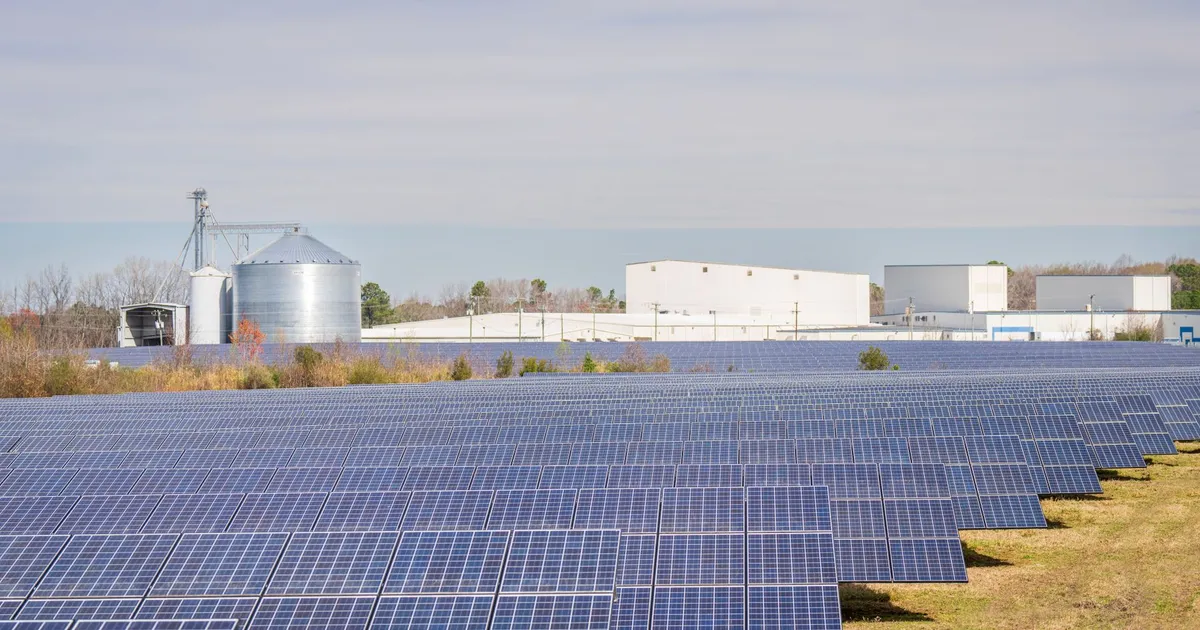
Sunergise has bought Infratec NZ from Hamilton lines company WEL Networks, and the most telling line from the deal is what it is not. “There’s no kind of like cost out. This is giving us capability and capacity that we need,” chief executive Paul Makumbe told RNZ. In a sector where consolidation usually means redundancies, this one is about adding engineering depth to a company that has run out of room to grow on its own.
The price is undisclosed. What is disclosed is the shape of the combined business: about 100 staff offering development, engineering, construction, financing and operations across commercial, industrial and utility-scale customers in New Zealand and the Pacific. Sunergise paid from its own resources and plans to seek private capital for the next leg.
A fourteen-year partnership made formal
This is not a merger of strangers. The two firms have worked together for 14 years and have jointly delivered five renewable plants across Nauru, the Federated States of Micronesia, the Marshall Islands and Palau since 2020, according to BusinessDesk. That reporting also puts Sunergise’s installed base at more than 50MW, including a 5.3MW rooftop at Fisher & Paykel Healthcare and more than 200 commercial installations overall.
Integration risk kills more acquisitions than bad pricing does. When the teams have already built island grids together, most of that risk has been retired before the paperwork is signed. Makumbe has been clear the driver is Pacific demand, with grid operators across the region wanting more than Sunergise could previously deliver.
Two halves of a complete solar business
Sunergise’s core model is commercial power purchase agreements. It designs, builds and operates systems for clients who then pay Sunergise for electricity instead of a retailer, with no upfront capital outlay, a model RNZ profiled in July through its Snowplanet project. It is a sound, recurring-revenue business, but it is a rooftop and mid-scale business.
Infratec brings the heavy end. WEL’s 2025 annual report credited it with design and development work on more than 250MW of projects over six years, naming the 33MW Kohirā farm in Kaitaia, the 32MW Rangitaiki farm in Edgecumbe and the 42MW Te Herenga o Te Rā project near Waiotahe. Back in 2021, Lodestone Energy picked Infratec as EPC contractor for five solar farms expected to produce 400GWh a year. Infratec also built assets behind WEL’s 64MW generation and storage exemption granted in 2024, including the 22.4MW Taiohi farm in Huntly and a 32.5MW battery.
Put together, the buyer has customers and a financing model, while the seller has utility-scale build experience. That is vertical integration a lender can understand.
Why scale is the real constraint
Independent analysis keeps landing on the same diagnosis. Legal commentary on renewable M&A points out that smaller developers struggle to secure bankable offtake contracts and to carry land and grid connection costs through early stages, making consolidation the natural market response. EY’s analysis describes a stalemate where new generation waits for demand certainty while large users wait for affordable supply, with PPAs gaining little traction locally. Engineers quoted by Engineering New Zealand point to a shortage of power engineers and favour portfolios of mid-sized sites over single giant farms.
A 2023 RCP industry analysis found solar supplied less than 0.5% of New Zealand’s energy, and identified EPC delivery as the dominant model for utility-scale projects. Infratec is an EPC specialist. Sunergise now owns one.
The business case writes itself. Pipelines are full of projects that never reach financial close because the developer is too small to absorb risk or hire the engineers. A firm that can originate, finance, build and maintain in-house is a firm that can actually convert pipeline into megawatts, and offer commercial customers a single counterparty for the lot.
WEL’s quiet exit
WEL has not explained why it sold, and it was not under pressure. Its FY25 results showed revenue of $196 million and equity of $814 million. The likeliest reading is that a regulated lines business has little reason to run a contracting arm chasing Pacific island work, and Infratec’s capability is worth more inside a company whose whole strategy is growth. That is capital finding its proper home, which is how markets are meant to work.
What to watch next
The test now is execution. There is no combined order book or pipeline figure yet, and Sunergise will need outside capital to fund larger projects. Watch for who comes in on that raise and whether the first post-deal announcements are utility-scale builds rather than more rooftops. If they are, New Zealand will have one more domestic player with the balance sheet and engineers to turn solar ambition into built capacity, without a subsidy or a government programme in sight.
Sources
- RNZ: Solar energy company Sunergise expanding to take on larger projects (2026-10-27)
- BusinessDesk: Sunergise to acquire Infratec New Zealand from WEL Networks (2026-10-26)
- RNZ: The growing business of making snow from the sun (2026-07-31)
- WEL Networks: Annual Report 2025 (2025-07-11)
- RNZ: Infratec selected as contractor to build solar power stations (2021-09-15)
- Electricity Authority: Exemption No. 346 – WEL Networks and NewPower Energy Limited Exemption Notice 2024 (2024-10)
- EY: New Zealand’s Renewable Energy Market – Addressing Supply-Demand Challenges
- Engineering New Zealand: Sunlight’s time to shine
- RCP: Delivering utility-scale solar in Aotearoa (2023-10)
Join the discussion
Add useful context, ask a good question, or challenge an idea — keep it specific and respectful.