

Proponents of a proposed goldmine beside the Clutha River south of Luggate have hit back at a planning report recommending their application be declined, setting up a contested hearing in Alexandra on October 29 and 30. On paper it is a small-town noise dispute. For anyone who allocates capital to extraction, quarrying or land development, it is a live demonstration of how consent risk, not geology, sets the value of a project.
A short mine with a big footprint
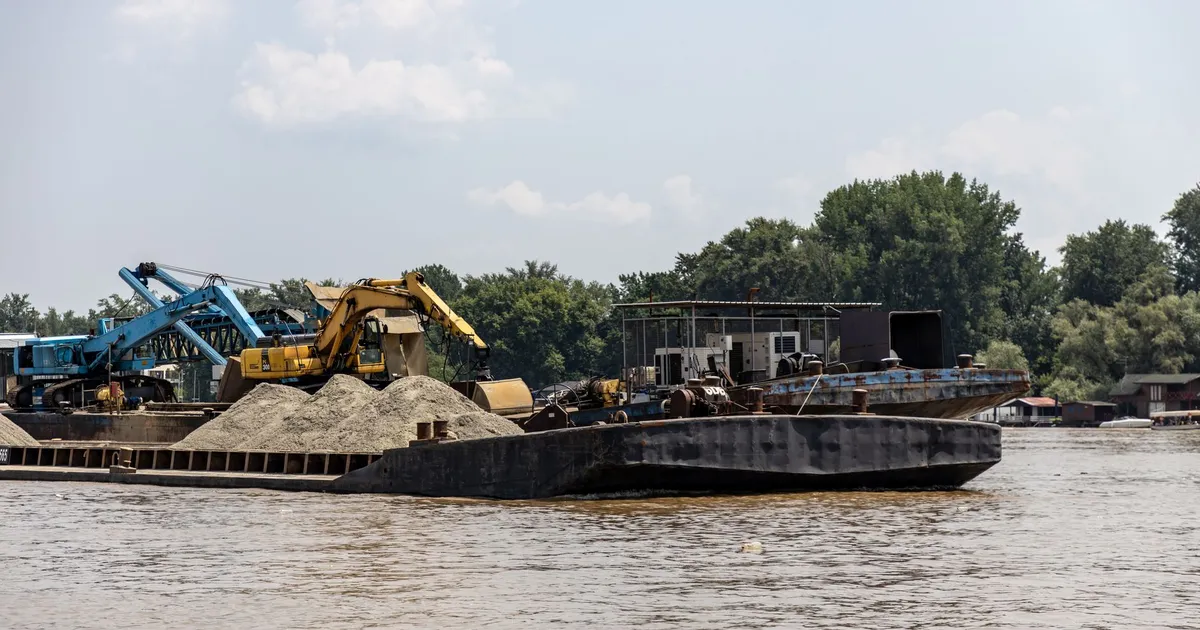
The applicant, Awa Koura Mining, wants a three-year consent to recover gold from riverbank land. It expects 1,890 ounces worth nearly $10 million at current prices. The kit list is substantial for a three-year job: five excavators, two dump trucks, a bulldozer, a floating screen plant and a water take of up to 2,520 cubic metres a day.
Independent planning consultant Emma Spalding has recommended the application be declined, finding noise effects “would exceed acceptable thresholds and are unreasonable in the existing rural environment context.” The application drew 23 submissions, many opposed. If commissioners approve it anyway, she suggests no mining on weekends, public holidays or after 5pm on weekdays, conditions that would stretch the operating window and squeeze the economics of a fixed-term dig.
There is also a detail investors should not skip. The mine is paired with a proposed eight-lot residential subdivision on the same land once mining ends. In a district where residential land is scarce and expensive, it is fair to ask whether the gold is the main event or the opening act for a property play. Either way, the whole value chain now sits behind one hearing panel.
Round two on the same river
This is not the operators’ first attempt. Directors Peter Hall and Daniel Walker also run a dredge on the lower Clutha through Cold Gold Clutha. In January 2024, a joint panel for three councils declined consents for that company to dredge about 23km of the river between Luggate bridge and Lake Dunstan, concluding “the potential adverse effects of the proposal are not outweighed by its positive effects.” The operators had argued at the time that their dredge had worked the river for years without complaint and that councils misunderstood the method.
So the same team, on roughly the same stretch of water, has shifted from river dredging to land-based mining and is again facing a recommendation to decline. That is several years of consultants, peer reviews and hearing costs with no ounces recovered.
Central Otago has form on slow consents
Luggate’s corridor is crowded with long-running fights. A 2019 Otago Regional Council memo described water permit applications from Criffel Water, filed in 2016, and Luggate Irrigation, filed in 2018, still being processed years later. In 2021, a hearing over the nearby Amisfield Quarry expansion on Luggate-Cromwell Road was wrestling with retrospective consents, disputed stockpiles and cumulative dust. Gold, water, gravel, the pattern is the same.
The national price of uncertainty
None of this is unique to Otago. In 2024, the Aggregate and Quarry Association’s then-chief executive Wayne Scott said “there’s almost been an industry created around resource consenting in this country” and that Auckland hadn’t had a new quarry in 15 years. Quarrying landed on the critical minerals list that year not because New Zealand was running out of rock but because regulation was choking supply. A 2022 review of 509 aggregate consent applications found effects and demand were mostly not properly evaluated, a system that is slow without being rigorous.
The association’s 2023 briefing put it bluntly: “Even a favourable decision can take three to five years” before first production, and processes are “frequently disproportionate to the decision being sought.”
That is the point for investors. A project’s net present value is not the gold price multiplied by ounces. It is that figure discounted by years of delay, legal spend and a meaningful chance of losing outright. A $10 million resource can be uninvestable if the consent pathway is unpredictable, and lenders price that accordingly.
What the hearing will actually decide
To be clear, Luggate’s neighbours have legitimate concerns, and a planner flagging noise from five excavators near homes is doing her job. The problem is not that consents get declined. It is that applicants cannot know in advance what a yes looks like, so they spend years and serial applications finding out.
The Alexandra commissioners will rule on one mine. The bigger question, which the government’s resource management overhaul is meant to answer, is whether New Zealand can offer clear, proportionate rules that let a project fail fast or proceed with confidence. Until it does, every quarry, mine and subdivision carries a regulatory risk premium, and that premium ends up in the price of every road, building and section in the country.
Sources
- ODT: Luggate mining proponents hit back at report (2026-10-25)
- ODT: Planner says gold mine near Luggate should be declined (2026-10-05)
- Crux: Gold miners delivered a ‘no’ on dredging Clutha from Luggate (2024-01-18)
- Crux: Gold mining company seeks to dredge the Clutha downstream of Wānaka
- Otago Regional Council: Memorandum – Section 42A Officers (2019-09-26)
- Otago Regional Council: Cromwell Certified Concrete Hearing – Second Minute (2021-11-18)
- Newsroom: Red tape earns quarrying spot on Jones’ critical minerals list (2024-09-17)
- Springer: A Review of Aggregates for Land Transport Infrastructure in New Zealand (2022-10-07)
- Aggregate and Quarry Association: Quarry sector and aggregate supply (2023)
Join the discussion
Add useful context, ask a good question, or challenge an idea — keep it specific and respectful.