

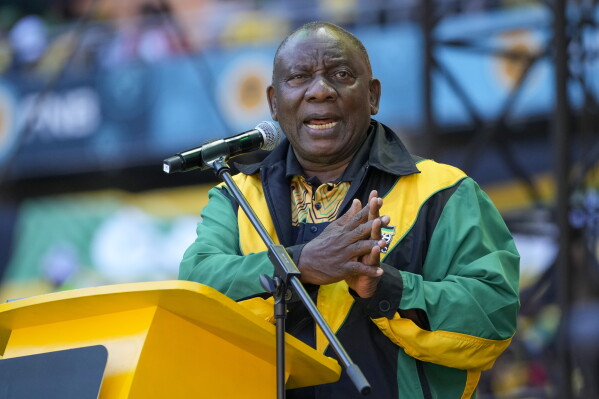
South African President Cyril Ramaphosa has announced a series of measures aimed at curbing illegal migration as growing anti-foreigner sentiment raises concerns about further unrest in the country.
In a televised address, Ramaphosa said the government would strengthen border controls, step up action against immigration violations, and target corruption within the system. The plan also includes dedicated courts to speed up deportation cases and tougher penalties for employers who hire undocumented workers.
The announcement comes amid mounting anxiety in migrant communities. In parts of the Western Cape, hundreds of foreign nationals have fled their homes following reports of intimidation and violence. Some sought shelter in community halls, on beaches, and in nearby mountains, while others boarded buses bound for Malawi and Mozambique.
Anti-migrant groups have demanded that undocumented foreigners leave South Africa by 30 June. Ramaphosa acknowledged public concern over pressure on jobs and public services but warned that immigration enforcement remained the responsibility of the state.
“I must make it clear that only the authorised government officials may act against violations of the law, including violation of our immigration laws,” he said. “No other person is allowed, for example, to confront someone in the street to demand proof of nationality.”
South Africa’s unemployment rate remains among the highest in the world, with young people particularly affected. Frustration has also grown over the role of foreign nationals in sectors such as informal retail, including township grocery stores known as spaza shops.
Ramaphosa said the government would recruit 10,000 labour inspectors to identify businesses exploiting undocumented migrants. Employers found guilty of breaking the law could face imprisonment rather than simply paying a fine.
The government also plans to phase out green identity books and move towards a digital identification system supported by biometric records. Refugee reception centres will gradually be relocated closer to border posts.
Ramaphosa said more than 450,000 people had been prevented from entering the country illegally over the past year. He also warned against attempts to exploit the issue for political or criminal purposes, stressing that there was “no space for xenophobia, racism, sexism, Afrophobia or any other forms of intolerance in South Africa.”