

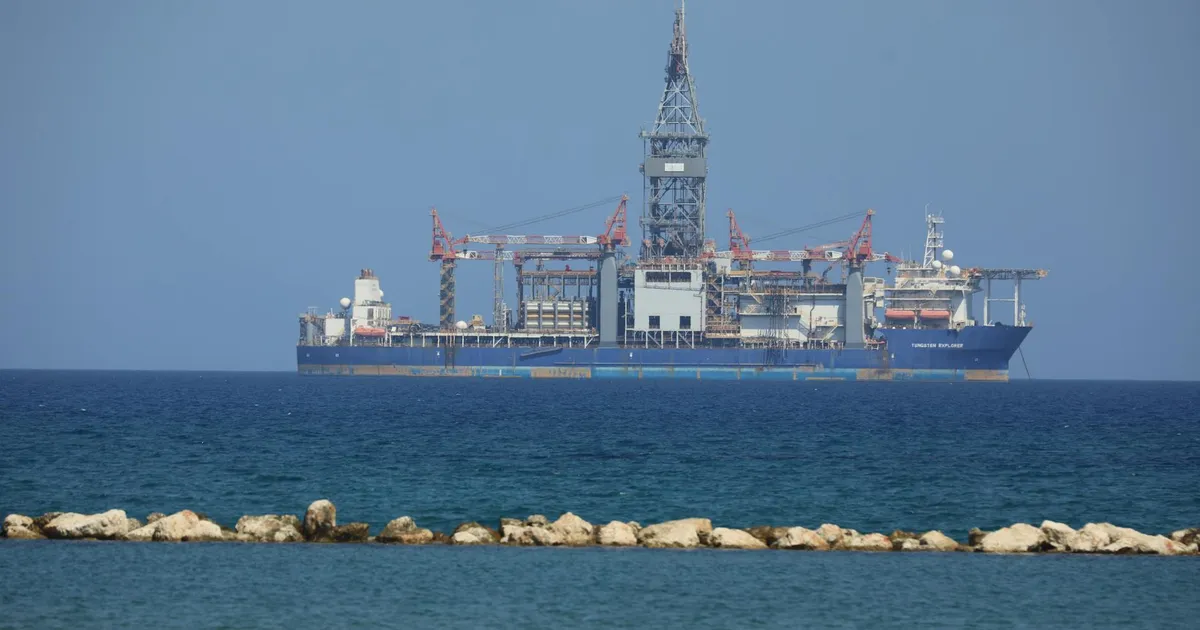
The door reopens
Eleven expressions of interest in the government’s gas exploration fund tell you something straightforward: the market wanted to invest in New Zealand gas all along. What held it back was not geology, not economics, but policy. The previous Labour government’s 2018 ban on new offshore exploration permits sent a signal that was heard clearly across the sector. Capital left. Skills followed. Taranaki, the country’s gas heartland, watched its exploration pipeline dry up.
Resources Minister Shane Jones has made reversing that damage the centrepiece of his energy agenda. The $200 million fund is designed to draw private investment back into domestic gas exploration, with the bulk of activity expected to focus on Taranaki, where existing infrastructure, processing plants, and a skilled workforce lower the cost of converting a discovery into production.
Energy Resources Aotearoa, the sector’s peak body, has framed the response as a vote of confidence in the gas sector. Industry bodies have consistently argued that the investment case for New Zealand gas was never absent, just actively undermined by government settings.
For a centre-right government that promised to be pro-business and pro-development, 11 EOIs is a tidy headline. But headlines do not heat boilers or keep the lights on during a dry winter.
The timing problem nobody wants to talk about
Here is the uncomfortable arithmetic. From initial exploration commitment to first commercial gas production, the typical timeline is five to ten years. That assumes successful drilling, favourable geology, smooth consenting, and adequate capital. In New Zealand’s regulatory environment, where resource consent challenges can add years, the optimistic end of that range is exactly that: optimistic.
Meanwhile, domestic gas production has been declining steadily as existing Taranaki fields mature. No new major exploration has proceeded since the 2018 ban, meaning the country has burned through nearly a decade of potential development runway. The supply curve is heading in one direction and the demand curve, particularly from gas-fired electricity generation that backstops the hydro-dependent grid in dry years, is not falling to match.
For an industrial user, a food processor, a fertiliser manufacturer, or a methanol producer, the relevant question is not whether exploration is happening. It is whether there will be enough gas at tolerable prices for the next three to seven years while any new production comes online. Eleven expressions of interest do not answer that question. They are a bet on the 2030s, not a solution for 2027.
Taranaki carries the weight again
The regional dimension matters. Taranaki holds the infrastructure, the pipeline networks, the processing capacity, and the people who know how to get gas out of the ground. That concentration of capability means any new development will almost certainly centre on the region, which is both a strength and a vulnerability.
The 2018 ban hit Taranaki disproportionately. Direct employment in exploration and production fell, and the downstream services sector that supports it contracted. Regional economic development bodies see the fund as a chance to rebuild. But the region also carries the memory of being treated as expendable when the political winds shifted. If the next government reverses course again, the damage will be worse the second time because the remaining workforce and institutional knowledge are thinner.
What businesses actually need
The fund is good policy in the long run. Encouraging domestic gas exploration reduces import dependence, supports grid reliability, and provides process energy for sectors that have no viable short-term alternative. New Zealand cannot electrify every industrial heat application overnight, and pretending otherwise is the kind of fantasy that raises energy costs and drives manufacturers offshore.
But good long-run policy does not help a business making capital investment decisions today. What energy-intensive firms need right now is price certainty and supply security for the transitional period. That means managing the decline curve of existing fields, ensuring gas storage and contracting arrangements are robust, and being honest that the supply gap between now and any new production is real.
Shane Jones deserves credit for reopening the door. Eleven companies walking through it is a genuine market signal. But the minister and the industry need to stop pretending the fund solves a problem that is already here. The gap between policy announcement and first gas is measured in years, and businesses are paying the price for that gap right now.
Sources
- Government’s $200m gas exploration fund attracts industry interest
- Gas exploration fund signals new energy policy direction
- Business backs government gas exploration fund
- Energy sector welcomes gas fund as confidence vote
- New Zealand Energy Resources Aotearoa – Gas Exploration Fund Response
- Taranaki Energy Sector – Regional Economic Impact Analysis