

From mine sites to the world’s testing labs
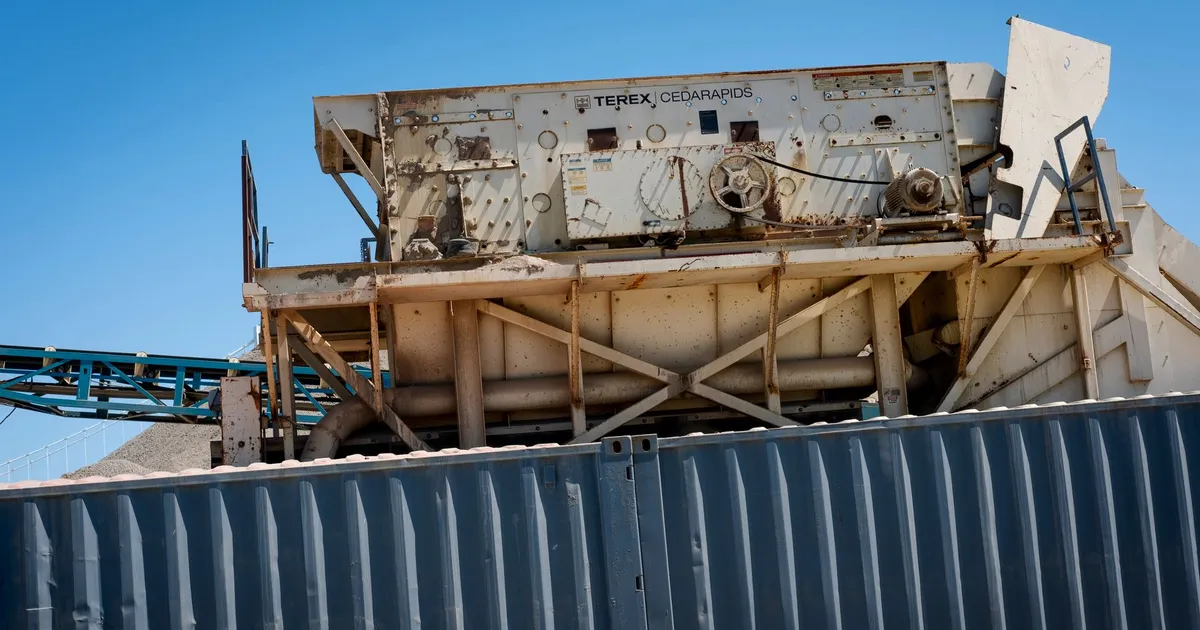
Scott Technology has spent decades building crushers and pulverisers in Dunedin for the global mining industry. It is steady, unsexy work, and it rarely makes headlines outside the Otago Daily Times. That changed this month when the company announced nearly $50 million in new contracts spanning Australia, Europe and the United States, alongside a strategically significant deal that signals a step-change in its mining automation business.
The contract that matters most is not the biggest. Scott’s Rocklabs division has landed its first deployment of the Automated Modular Solution crush cell into a large commercial minerals laboratory, supplied to one of the world’s largest testing, inspection and certification providers. Until now, Rocklabs sold automation systems to individual mine operators. This deal moves the technology into commercial labs that process samples from dozens of mines and clients simultaneously. One customer, many mines’ worth of throughput, and the potential for repeat orders as the provider scales across its network.
It is the difference between selling a machine and selling a platform.
The financial trajectory is hard to argue with
Scott’s numbers tell a story of disciplined compounding. Half-year revenue for FY26 hit $128 million, up 5%, with EBITDA of $13 million and mining segment margins improving from 35% to 37%. Service revenue, the stickiest part of the business, grew 14% to $43 million and now represents a third of total revenue.
The full-year FY25 result was stronger still: record EBITDA of $31.5 million, up 19%, net profit up 84% to $14.2 million, and net debt down 39%. Forward work sits at $177 million before the latest contract wins are added, and the company is targeting $530 million in revenue by 2030, roughly double its current run rate.
This is not a company riding a commodity cycle. It is a company building recurring revenue on top of an installed base, with margins heading in the right direction.
Why the commercial lab market changes the equation
The AMS platform was designed as a lower-cost, modular alternative to full-scale lab automation, delivering comparable throughput at roughly one-third the cost. In January 2025, Scott demonstrated the technology’s maturity with a Rio Tinto contract at West Angelas, where a semi-automated system processes up to 700 samples per day. Rio Tinto’s minerals president Casey Jenkins said at the time that automating hands-on lab processes was “improving worker safety while ensuring the delivery of more accurate, reliable data.”
But selling to individual mines is a lumpy, project-by-project business. Commercial testing labs are structurally different. They operate continuously, serve multiple clients, and have strong incentives to standardise on a single automation platform. A testing, inspection and certification provider that deploys AMS in one lab has every reason to roll it out across its entire network. Scott has gone from selling picks and shovels to selling the infrastructure behind the assay office.
The export story New Zealand ignores
New Zealand’s annual goods exports reached $81 billion for the year ended March 2026, dominated by dairy, meat and fruit. High-value manufactured goods and technology exports remain a rounding error. Scott is a rare exception: a locally owned manufacturer with defensible IP, global market position, and operations across four continents. Its intellectual property stays in Dunedin. Its revenue comes from Rio Tinto, Boeing, Gallo and PepsiCo.
CEO Mike Christman has been direct about the breadth of recent wins. “We’ve seen some great wins over the last couple of weeks in MHL, the Leap system for an Australian company, another great win with Gallo and Boeing and Essity,” he said this month. He noted that global volatility, including supply chain disruptions, has increased automation demand from major manufacturers, a counterintuitive but logical response when labour costs rise and reliability matters more.
The policy gap nobody wants to discuss
Resources Minister Shane Jones wants to double minerals exports within a decade. The NZ Minerals Council’s chief executive Josie Vidal warned last month that the industry has “been concerned for some time about the lack of, or reduction in, investment in disciplines such as geology and materials science.”
Scott’s position exposes the blind spot in that strategy. It exports automation systems, not minerals. It does not need New Zealand geology graduates to grow. It needs engineers and software developers. Its fortunes are tied to the global mining investment cycle, not to whether New Zealand can get its own mines permitted and staffed. That is a more durable, higher-margin position than raw extraction, and it is one the government’s critical minerals strategy has largely overlooked.
If Scott can build a globally competitive automation business from Dunedin without targeted government support, the question is not whether New Zealand can do advanced manufacturing. It clearly can. The question is why there is no deliberate policy framework to create more companies like it.
Sources
- ScottTech secures contracts for $50 million (2026-06-16)
- Scott to deliver its first Rocklabs AMS crush cell (2026-06-16)
- Scott Technology lands new Rio Tinto contract (2025-01-22)
- Overseas merchandise trade: March 2026 (2026)
- Mining industry to govt: Want critical minerals? Fund geology courses (2026-05-28)