

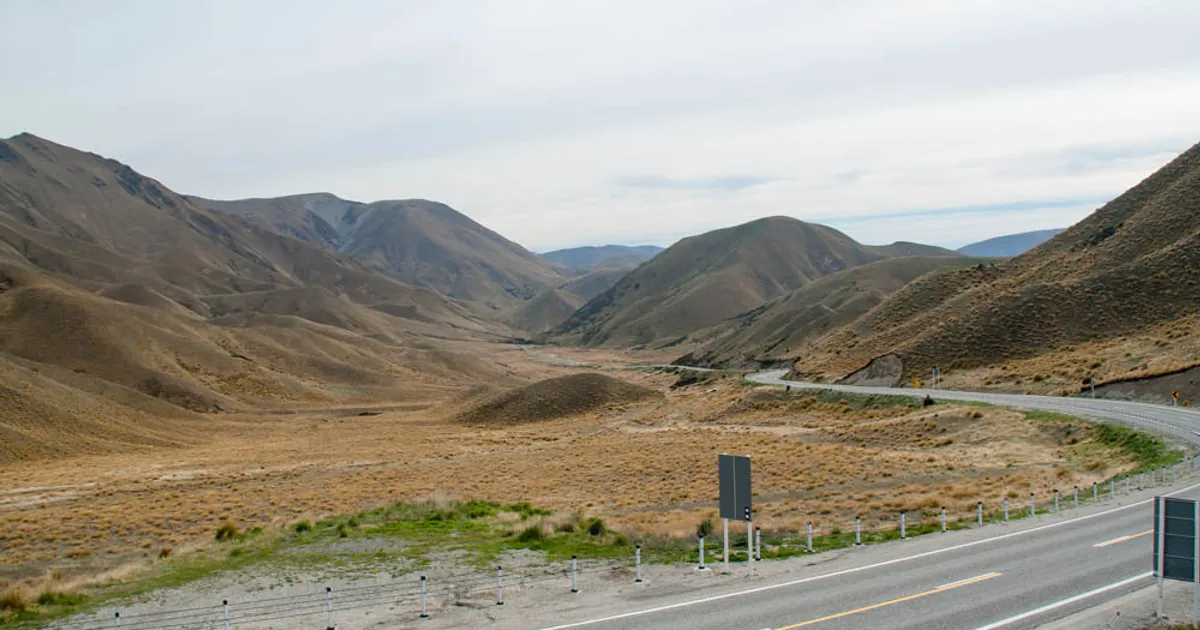
Santana Minerals has done something most resource companies avoid. It has put a hard number on nature. Its subsidiary Matakanui Gold has offered $10 million to protect lizards as part of its bid to consent the Bendigo-Ophir gold mine near Tarras.
This is the clearest test yet of whether serious money spent on biodiversity offsets can buy a credible path through consenting in New Zealand, or whether it just buys time. The answer matters far beyond Central Otago.
Six billion dollars of gold sits on top of the lizards
The project would extract an estimated $6 billion of gold over 15 years from 610 hectares of arid mountainside. Santana’s projections point to 351 direct jobs, 463 indirect jobs, $448 million in royalties and $1.07 billion in corporate tax. For a regional economy leaning on tourism and horticulture, that is a substantial new base.
The problem lives under the schist. Expert evidence put the population in the directly disturbed area at 500,000 to 750,000 lizards, including the Kawarau gecko, found only in Central Otago’s drylands. Santana’s original answer was to relocate about 20% of them at a cost of tens of millions of dollars, which would be the largest lizard relocation ever attempted in the country. Earlier this year DOC warned that as many as 600,000 native lizards could be killed and described the mine as an unprecedented threat to wildlife.
The panel chair has already voiced his doubts
Here is the part that should worry Santana’s shareholders. Panel chair Matthew Muir KC has questioned why so much attention was going on relocation given the scientific uncertainty, suggesting it might be “a balm for the conscience” rather than a real conservation outcome.
The panel is not being soft on the economics either. In June it issued a 30-point request for information, asking whether Santana would indemnify the public against catastrophic failure and demanding eight separate economic calculations, including best and worst case net present value. Santana paused processing to respond. The panel had been expected to decide in October, so the $10 million offer lands right up against the wire.
The rules were rewritten for exactly this case
The government has already tried to build a workable pathway. The National Policy Statement for Indigenous Biodiversity was amended in December 2025 with specific provisions for quarrying and mining. Under it, an offset must deliver a measurable net gain in the type, amount and condition of biodiversity lost, and applicants must supply quantified loss and gain calculations and an assessment of the likely success of achieving that gain.
That is the real test. The panel will not be weighing whether $10 million is a big number. It is. It will be weighing whether Santana can show, with data, that the money produces more lizards and better habitat than the mine destroys. Cash is not a proxy for outcomes, and a relocation never tried at this scale or with these species makes net gain genuinely hard to prove.
That is not a reason to dismiss the offer. It is a reason for Santana to evidence it properly. A weak offset rubber-stamped by a fast-track panel would invite legal challenge and political backlash that could discredit the entire regime. Robust offsets are in the mining sector’s own interest.
A hundred applications are waiting on the answer
The stakes extend well past one company. Santana’s bid has triggered nearly 100 new mining-related applications and permits nationwide this year, including 18 prospecting and exploration applications and 10 mining permit applications in Otago, and 32 prospecting applications on the West Coast. Every one of those investors is watching to learn what evidentiary bar and what price the consenting system will actually accept.
What a yes or a no would signal
If the panel accepts a well-evidenced package, New Zealand gets something it has lacked for decades, a replicable playbook. Avoid what you can, mitigate the rest, fund measurable offsets, get consented. That is the kind of predictability that draws capital.
If it rejects the offer despite the spend and despite rules drafted with mining in mind, investors will draw a harsher conclusion. No dollar figure will clear the bar, and the fast-track regime is a faster route to the same no. Exploration money would drift back across the Tasman, where regulators are generally seen as quicker and clearer.
The lizards deserve a genuine answer, not a cosmetic one. So does the capital queued behind Santana. The panel’s decision in the coming weeks will tell both whether New Zealand can price the trade-off, or whether it simply refuses to make one.
Sources
- Otago Daily Times: Santana makes $10 million offer to protect lizards (2026-09-24)
- Newsroom: What’s a native lizard worth? The $6b question over Central Otago gold mine (2026-06-22)
- Newsroom: Santana gold mine bid excites logjam of 100 applications and permits (2026-05-26)
- The Post: Ecological effects of Santana gold mine uncertain and unknown, experts say (2026-06-12)
- RNZ: Wildlife deaths, intergenerational harm flagged in gold mine assessments (2026-04-16)
- RNZ: Santana Minerals asked if it will cover cost of catastrophic failure at proposed Otago mine (2026-06-26)
- Ministry for the Environment: National Policy Statement for Indigenous Biodiversity 2023 (amended December 2025) (2025-12-18)
Join the discussion
Add useful context, ask a good question, or challenge an idea — keep it specific and respectful.