

The peg
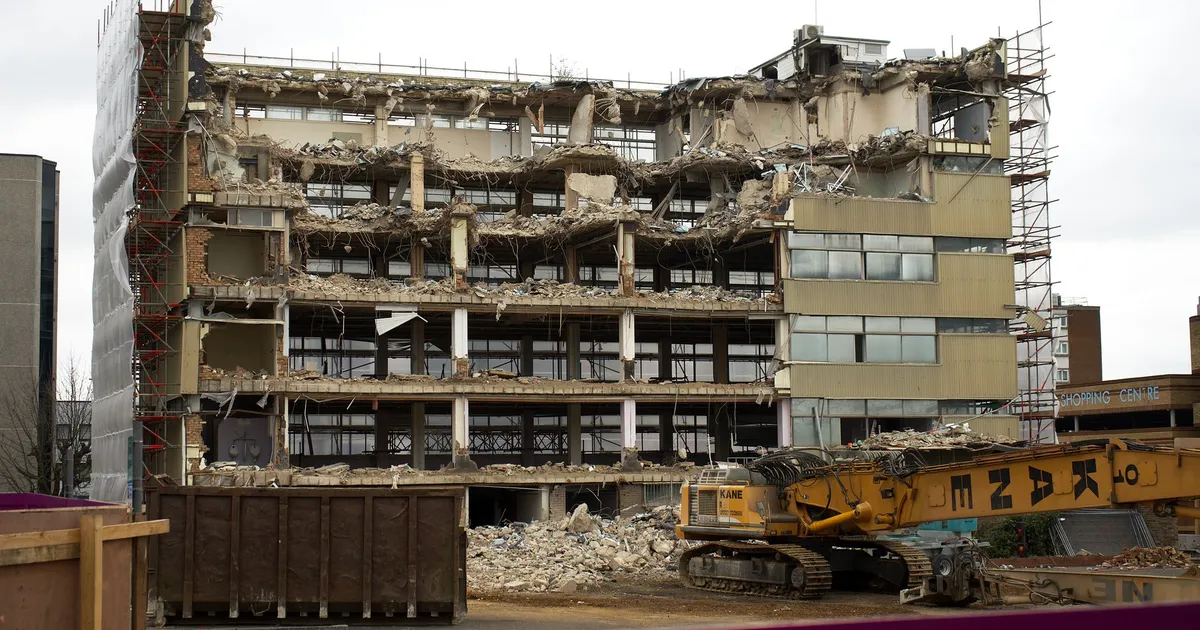
The Friedlander family’s Samson Corporation, a $2 billion-plus Auckland property business, has been forced to replace Vivian Construction with NZ Strong on a retail and commercial upgrade at 172 Jervois Rd, Herne Bay. Vivian Construction’s website and Facebook page have gone dark, and on 5 September 2026 liquidators Derek Ah Sam and Paul Vlasic of Rodgers Reidy were appointed.
Samson development manager Callum Scott called it “a deeply upsetting situation”, with the company particularly concerned about subcontractor obligations. Jeff Vivian, of Vivian Construction, acknowledged the trouble: “There’s some money owing. I’m sorting it out. I have done everything right to make it good.”
The detail worth sitting with is not that a builder failed. It’s who was on the other side of the contract. Samson is one of Auckland’s most substantial, deep-pocketed property owners. Capital was not the problem. The builder simply didn’t make it to the finish line, and Samson had to absorb the disruption anyway.
This is not a one-off
The Samson case is a single data point in a sector-wide pattern that has hardened into a baseline. In the year to June 2026, 755 construction companies were liquidated, the highest rate the sector has recorded. The HUD housing market update put the figure at 769 firms over the year to March 2026, roughly 0.9% of the entire construction sector wiped off the map in twelve months.
The more telling number is how widely the pain is spreading. The BDO Construction Sector Report 2026, based on a survey of 180 owners and leaders, found a quarter of construction businesses had watched a counterparty go into liquidation over the past year, with a further 15% seeing more than one. Close to two-thirds had projects cancelled or put on hold, and nearly two-thirds had booked losses of up to $100,000. When counterparty failure touches one in four firms, it is no longer a risk you can price out with a good balance sheet. It’s the weather.
The market is smaller and shrinking
The backdrop is a sector in genuine contraction. Total construction activity was $55.7 billion in 2025, down from $58.1 billion in 2024 and $63 billion in 2023 – about $7.3 billion of annual activity gone in two years. Building work value fell 8.2% to $31.2 billion in 2025, and in the March 2026 quarter seasonally adjusted building volume dropped another 3.5% on the prior quarter.
Centrix managing director Keith McLaughlin explained the mechanism in July 2026: “When houses are sitting on the market for some period of time, and when the prices are weaker, then quite clearly builders and construction firms are pulling out of that sector.” Weak demand plus rising input costs is a margin squeeze that eventually shows up as insolvency.
It’s not just the cycle
What should worry anyone with capital deployed is that market conditions are only half the story. A Newsroom investigation published three days before the Samson news found liquidators repeatedly identifying poor financial management, tax debt accumulation and inappropriate personal spending inside failed firms. In other words, a builder can look like it’s operating normally right up until it isn’t. Governance failure, not just the cycle, is embedded in the risk.
And builder collapse isn’t the only threat to an active site. In a case reported by NBR, an Auckland developer’s 12-unit Kingsland project was halted for nine months over a 30-centimetre encroachment, with the developer saying the compliance dispute added $623,000 and turned the build into a loss.
What developers should actually do about it
The industry knows the system is straining. In August 2026 the Combined Building Supplies Cooperative called for reform, with chief executive Carl Taylor saying members “are carrying risk the system was never designed to allocate properly.” The Building Officials Institute noted an inspection failure rate of 45% to 55%, which tells you how much rework and delay is baked in.
Relief is not around the corner. The MBIE construction pipeline forecasts recovery to only $65.4 billion by 2030, a mere 3.8% above the 2023 peak. That’s a slow crawl, not a rebound.
For developers, lenders and commercial property owners, the practical takeaway is uncomfortable but clear. Builder due diligence now has to extend past the headline company to the subcontractor chain, tax position and director spending. Retentions, performance bonds, staged payments and genuine contingency planning are no longer belt-and-braces. If a $2 billion operator can get caught, the assumption has to be that your builder might not reach practical completion, and your contracts should be written as if that is the base case.
Sources
- Property Insider: $2b Samson Corp’s problems with failed builder Vivian Construction (2026-09-07)
- Construction costs jump as two-thirds of firms report cancelled projects (2026-08-11)
- Inside New Zealand’s shrinking building and construction industry (2026-07-12)
- Tax debt and new BMWs: Liquidators lift lid on why construction firms fail (2026-09-04)
- Value Of Building Work Put In Place: March 2026 Quarter (2026-06-04)
- Housing market update – HUD March Quarter 2026 (2026-03-01)
- Building resilience through uncertainty – BDO Construction Sector Report 2026 (2026-06-01)
- Builders’ co-op calls for major reform as industry struggles (2026-08-21)