

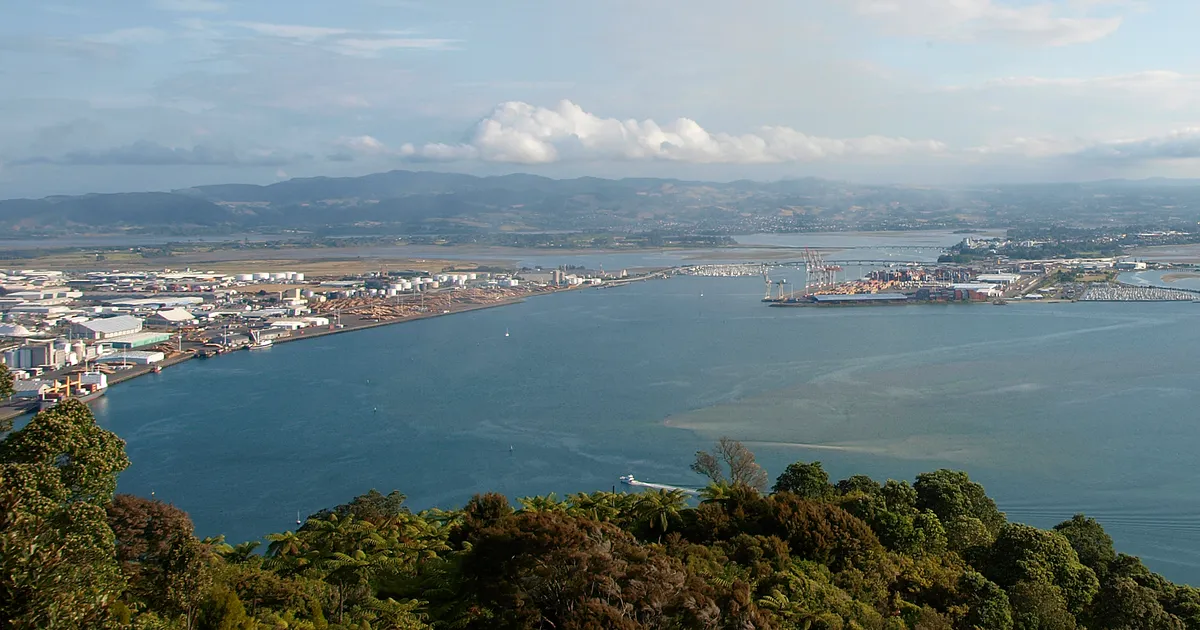
The ceiling that was strangling exporters
For years, New Zealand’s most important freight hub had a problem money could not fix. Port of Tauranga was operating at maximum capacity, unable to take on more freight or international ships because it had run out of berths. When the port that handles roughly a third of all New Zealand cargo by volume hits a hard ceiling, that ceiling becomes every exporter’s problem.
That constraint is now gone. The Stella Passage development has received fast-track approval and will near-double the port’s container handling capacity, lifting it from around 1.2 million TEUs to roughly 2 million. This is the single most consequential piece of trade infrastructure to clear the system in years, and it is a genuine win worth writing straight.
What actually gets built
The project is not speculative land-grabbing. It stays largely within the port’s existing footprint. The plan extends the Sulphur Point container berth by 385 metres in two stages and the Mount Maunganui wharves by 315 metres, converting existing cargo storage land rather than annexing new territory. It reclaims land behind the new wharves and dredges Stella Passage so larger vessels can berth, with four additional cranes going up on the new extensions.
The deeper channel matters as much as the extra berth space. Larger vessels being able to berth improves unit economics for shipping lines, and those savings eventually work their way into freight rates that importers and exporters pay.
Seven years versus five months
Here is where the story stops being about one port and starts being about how New Zealand builds anything. The project has been in development since 2019. Infrastructure Minister Chris Bishop noted it had spent roughly seven years navigating standard RMA processes and Environment Court hearings that produced no resolution.
The port lodged under the Fast-track Approvals Act 2024 in January 2026. An independent expert panel was appointed and approval came in about five months. Same project, same evidence, same environmental questions. Seven years of gridlock, then five months to a decision. This is the 34th project approved through the fast-track process.
Mike Hosking put it plainly in his Mike’s Minute column: “Fast-track in and of itself is working. The Tauranga Port has the green light after literally years of regulatory BS that had it tied up in court, going nowhere. If you put RMA v fast-track, then fast-track wins hands down.”
Why this is a resilience story, not just a capacity story
Port chief financial officer Simon Kebbell framed the payoff in the NZX announcement: “The Stella Passage development is vital strategic infrastructure to support future freight growth for New Zealand. It will improve the resilience and efficiency of the international supply chain and lower costs for importers and exporters.”
Resilience is the underrated word there. A port running flat out has no slack to absorb weather delays, vessel scheduling disruptions or demand spikes. More berth capacity buys flexibility, and flexibility is what keeps export supply chains reliable when things go wrong, which they invariably do.
The build clock and the real cost
Nobody should expect doubled throughput next quarter. Kebbell told Heather du Plessis-Allan on Newstalk ZB it will “probably take six months to stand up for construction” to meet consent conditions and line up contracts, “and then it’s a two-year building time”. Call it two and a half years to first new capacity. But the binding constraint was never the concrete. It was the consent, and that barrier is now cleared.
Getting there carried a price. Local iwi and hapu opposed the development, arguing the fast-track process cut community feedback, and the approval conditions include a $6 million cultural mitigation package funding harbour restoration work. That is not a scandal, it is a concrete data point on what pushing critical infrastructure through the current system costs. The decision also remains subject to appeal rights under the Fast-track Approvals Act, a standard caveat worth noting given the process objections.
For exporters routing freight through Tauranga, and for the shipping and logistics firms that serve them, the message is simple. The country’s dominant freight gateway just had its growth ceiling removed. The bigger lesson sits above the port itself. When the same project takes seven years under one regime and five months under another, the case for fast-track stops being ideological and starts being arithmetic.
Sources
- 1News: Port of Tauranga expansion approved, will near double capacity (2026-09-07)
- BusinessDesk: Port of Tauranga gets Stella Passage expansion fast-track approval (2026-09-07)
- BusinessDesk NZX: Port of Tauranga wins approval for Stella Passage (2026-09-07)
- The Post: Port of Tauranga’s Stella Passage gets fast-track green-light (2026-09-06)
- Newstalk ZB: Simon Kebbell, Port of Tauranga CFO on fast-track approval (Heather du Plessis-Allan Drive) (2026-09-07)
- Newstalk ZB: Mike’s Minute – Fast-track needs to get back to infrastructure, not housing (2026-09-01)