

A rational merger that nearly didn’t survive the process
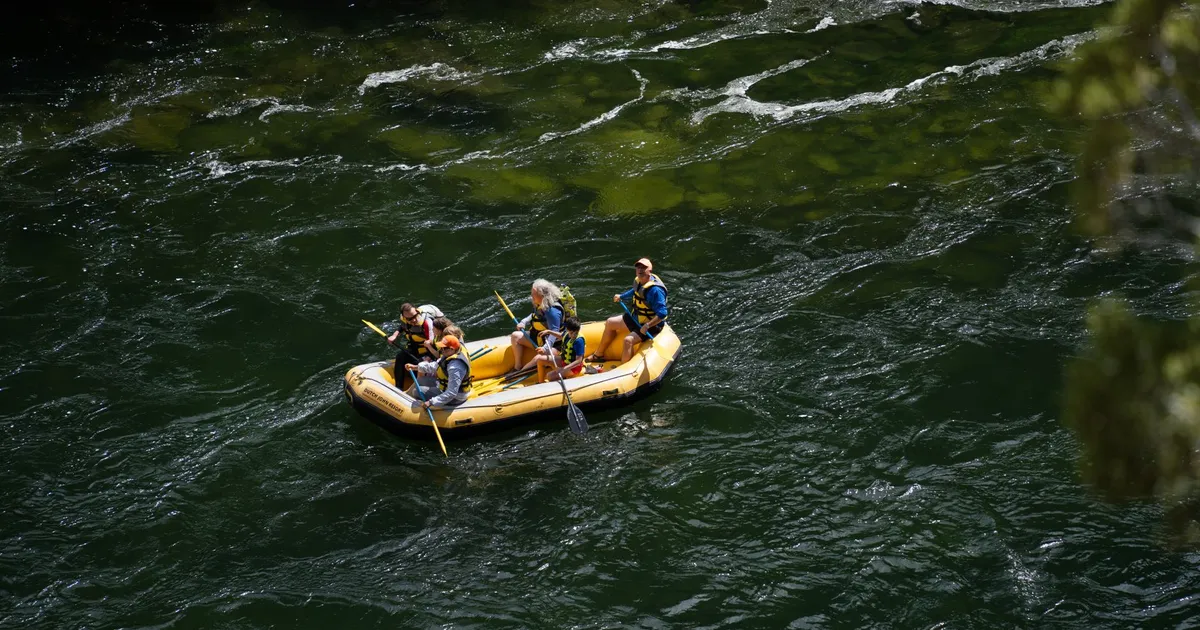
Three small Rotorua rafting operators wanted to combine. Rotorua Rafting, Kaitiaki Adventures and Kaituna Cascades faced a wall of cost and climate pressure that made three separate businesses on one river look unsustainable. Consolidation was the obvious commercial answer.
The Commerce Commission did not treat it as obvious. It granted clearance on 19 June 2026, but only on a split 2-1 decision, with Deputy Chair Anne Callinan and Commissioner Bryan Chapple in favour and Associate Commissioner Rakihia Tau dissenting. The process ran from November 2025 to June 2026 – seven months, two decision extensions, a Statement of Issues and a Statement of Unresolved Issues. Along the way, Rotorua Rafting director Sam Sutton came close to abandoning the bid entirely.
This is the detail business owners should sit with. The regulator applied full merger-control machinery to three financially stressed regional operators whose entire activity accounts for roughly 1% of Rotorua’s visitor days and 1% of point-of-sale spending, with about 60,000 of over 3 million annual visitors choosing rafting.
The cost shock that started it
The structural villain is a government fee. The clearance application filed on 12 November 2025 documented DOC concession fees jumping from $1.50 per passenger to 7.5% of gross revenue, a 200 to 500% increase depending on the operator, compressing margins directly.
Climate added the second squeeze. Kaituna rafting operations were closed 329 days over four years due to high water in Lake Rotoiti, with FY2023/24 alone losing 150 days to high water and 48 to toxic algal blooms. Tourism spending in Rotorua was still stuck at 84% of pre-pandemic levels when the application went in.
A cost shock imposed by one arm of government pushed the operators toward a merger, which then triggered scrutiny by another. That is the sequence worth noticing.
The fight over what market this really was
The battleground was market definition. The applicants argued the relevant market was broad Rotorua adventure tourism. The commission leaned toward the narrower “supply of guided rafting trips”, which made the merged entity look close to a monopoly on the Kaituna, the world’s highest commercially rated waterfall.
Sutton put the applicants’ case bluntly in March 2026: “Rafting isn’t a necessity. If it becomes too expensive, people just won’t come, they’ll do something else.” The commission’s February 2026 Statement of Issues flagged high barriers to entry, noting Kaituna concessions are limited and the river is at capacity. Then on 30 April 2026 it issued a Statement of Unresolved Issues, still not satisfied the merger would not substantially lessen competition. Sutton told RNZ in May 2026 the regulator’s mind seemed made up.
Industry made the argument that swung it
What turned the decision was the industry’s insistence that blocking the merger would itself kill competition. The Tourism Export Council of New Zealand warned in May 2026 that one or more operators faced “material risk of insolvency or closure within the next 12-24 months”, an outcome that would reduce competition anyway, “producing precisely the harm the Commission seeks to prevent.”
The Backpacker Youth Adventure Tourism Association argued in February 2026 that visitor budgets impose natural price ceilings, and that “even modest price increases of 5-10% would likely be unprofitable due to demand diversion.” The three parties’ June 2026 joint submission conceded there was no direct empirical evidence on substitution, but noted such data simply does not exist in a market this small.
Callinan called the final call “finely balanced”, satisfied the loss of competition would be “mitigated by a range of competitive constraints in aggregate.” Tau was not, remaining unconvinced other tourism experiences would constrain a single operator controlling all commercial rafting on the Kaituna.
The lesson isn’t the ruling, it’s the ordeal
The applicants won, but at a price. The merger won’t be finalised for this peak season, meaning another summer as separate, stressed businesses before any benefits arrive. Sutton’s post-approval line captured the exhaustion: “So it’s cool that they came through in the end.”
For any business owner in a sector facing regulatory cost shocks – DOC fees, compliance loads, resource consents – the takeaway is stark. Consolidation may be the correct answer, and regulators will still test it hard, slowly, and at a cost small operators are least able to absorb. Competition law kept its teeth. The question is whether a seven-month, two-decision-extension process is proportionate when applied to three regional firms fighting for survival on 1% of a city’s tourist spend.
Sources
- Rotorua rafting merger wins approval through split Commerce Commission decision (2026-08-29)
- ‘Frustrating’: Proposed rafting merger in jeopardy (2026-05-06)
- Rotorua rafting merger proposal: Market position key as Commerce Commission narrows focus (2026-03-24)
- Commission grants clearance to Rafting JV Co to acquire rafting and sledging assets of three rafting companies (2026-06-19)
- Statement of Unresolved Issues – Rafting JV Co (2026-04-30)
- Clearance application – Rafting JV Co (2025-11-12)
- Statement of Issues – Rafting JV Co (2026-02-05)
- Rotorua Rafting, Kaitiaki Adventures and Kaituna Cascades joint submission (2026-06-10)
- Tourism Export Council of New Zealand submission (2026-05-29)
Join the discussion
Add useful context, ask a good question, or challenge an idea — keep it specific and respectful.