

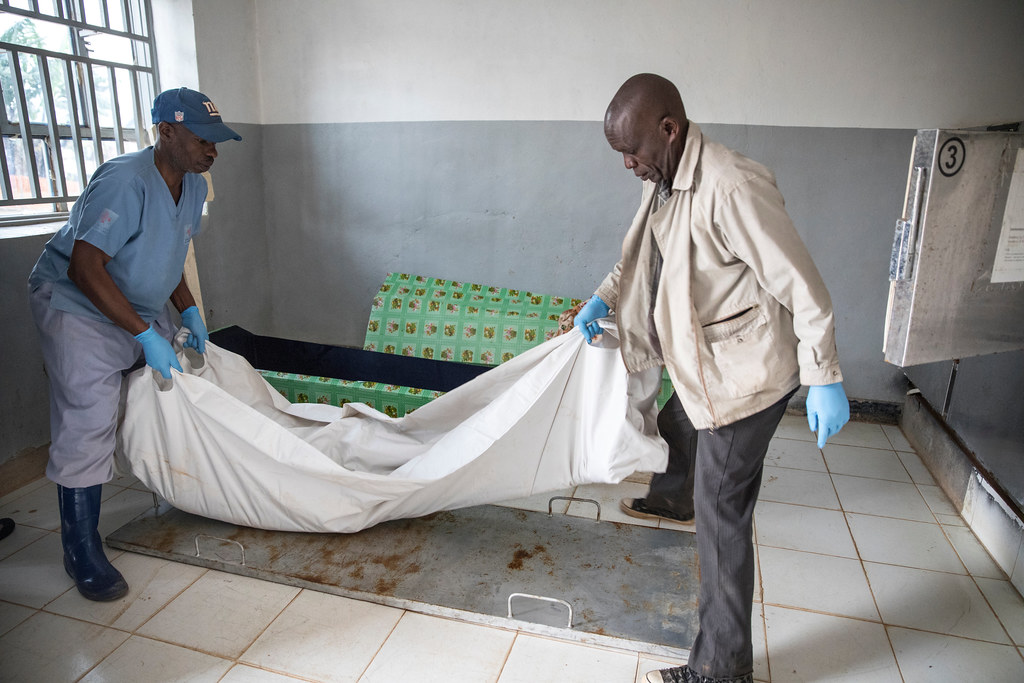
Three Red Cross volunteers have died in the Democratic Republic of Congo after they were believed to have contracted Ebola while helping manage bodies in Ituri province, where the country’s latest outbreak has intensified.
The International Federation of Red Cross and Red Crescent Societies identified the volunteers as Alikana Udumusi Augustin, Sezabo Katanabo, and Ajiko Chandiru Viviane. The group said they were likely exposed to the virus on 27 March while working in Mongwalu, a town in eastern DR Congo that has since become the centre of the outbreak. Their work at the time was not part of an Ebola response, as the outbreak had not yet been formally identified.
The volunteers died between 5 and 16 May. The IFRC said they had served their communities “with courage and humanity.”
Their deaths have drawn attention to the risks faced by local responders, particularly those involved in body management. Ebola spreads through contact with infected bodily fluids, which can remain highly contagious after death. Safe burial procedures are therefore considered vital in limiting transmission, although they can be difficult to enforce in communities where families follow traditional funeral rites.
The outbreak involves the Bundibugyo strain, a rare form of Ebola for which there is no proven vaccine. It is considered less common than other Ebola species but remains highly dangerous, with past outbreaks showing a significant fatality rate.
DR Congo has reported more than 750 suspected cases and over 170 suspected deaths. Ituri has been the worst affected province, while cases have also been detected in North Kivu and South Kivu.
The World Health Organization has raised its risk assessment for DR Congo from “high” to “very high.” WHO chief Dr Tedros Adhanom Ghebreyesus said the risk across the wider African region was high, although the global risk remained low.
Authorities have suspended commercial and private flights to and from Bunia, Ituri’s provincial capital, to help contain the outbreak.
“Humanitarian, medical or emergency flights will only be authorised after special approval from the aviation and health authorities,” the transport ministry said.
The response has also been disrupted by fear and unrest. Médecins Sans Frontières said a tent it provided in Mongwalu was burned, after a separate incident in which part of a hospital was set alight by people angry over burial restrictions.