

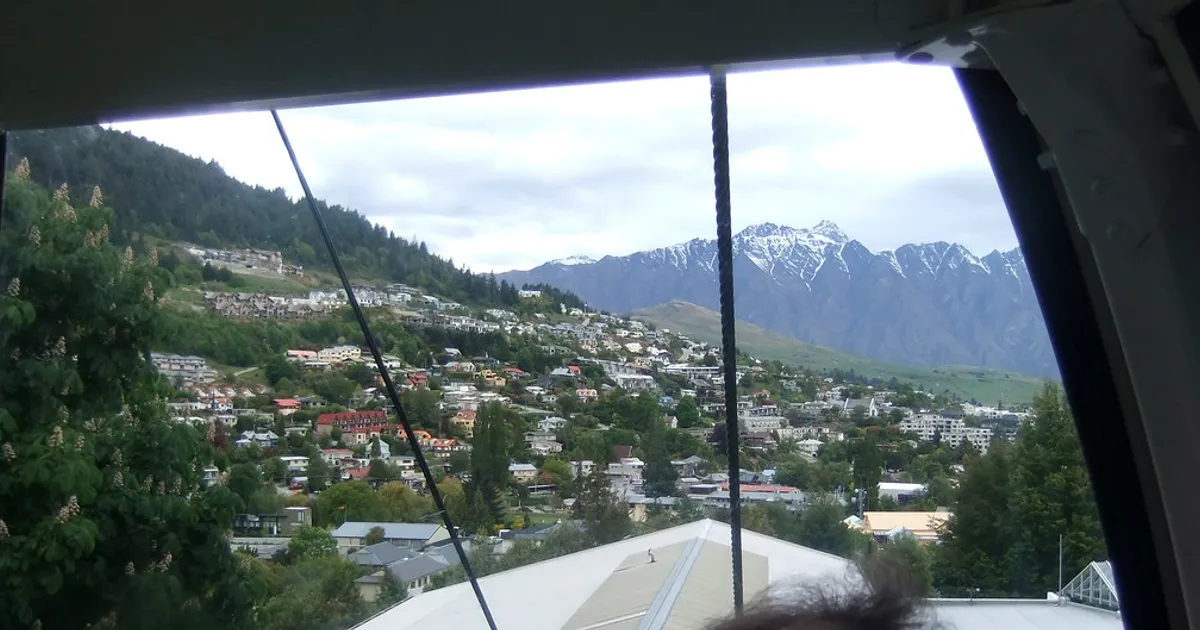
Queenstown’s Upper Village is the kind of asset investors love. It is fully leased, recently refitted and sits in a town where new supply is hard to build. That makes the sale a live test of how much capital will pay for scarcity. The council’s own capacity data shows that scarcity is being enforced less by demand than by missing infrastructure.
A de-risked asset in a constrained town
The Brecon Street precinct, 150 metres below the Skyline gondola, is going to market by international deadline sale closing October 28. Its owners are the Australian investors behind the Roki Collection hotel. The complex covers 4841 square metres across seven tenants, anchored by the Kingpin entertainment centre at 59% of the space. The other tenants are Roki staff accommodation, the new Prospects restaurant, Bathhouse Spa, Anito Gelato, Minus 5 ice bar and Roki’s offices.
The estimated net rent is $2,917,599 a year plus GST and outgoings. It grows through a mix of fixed, CPI and market reviews, and the September 2024 rateable value is $59.65 million. Colliers broker Mark Simpson says there is already interest from Australia and Asia. He argues the diversified tenancy “balances risk for investors”, says “there are no immediate capital expenditure requirements”, and says the deal will come in below replacement cost.
The last point matters most. When building new costs more than buying existing, anyone already holding a finished, income-producing asset has the advantage.
Demand is not the problem
The tailwinds are real. In the year to March 2025, national tourism spending reached $46.6 billion, up 3.3%. International visitor spend rose 7% to $18.1 billion that year.
Locally, Colliers’ Otago/Southland managing director John Scobie says “almost every sector we track is being pushed along by the same few things”. He names visitors arriving in record numbers, southern farmers on their best incomes in years, and more people choosing to live in the region. Colliers puts the rise in central Queenstown development site values at about 10% over the 12 months to mid-2026.
Upper Village is also one of several large parcels being offered at once. A consented four-townhouse site at Ryan Loop, Jack’s Point, goes under the hammer on 9 October via Bayleys. Colliers has also marketed a large mixed-use and marina site at Homestead Bay. Meanwhile the Lakeview Te Taumata precinct is changing the area around the former campground. Simpson pitches the Upper Village surrounds as “a developing area”.
Only 4% of zoned capacity is ready to build
This is where the story changes. In September 2025, the Queenstown Lakes District Council’s capacity assessment found plan-enabled room for 50,200 additional dwellings in the short term. Only 4%, about 1,700 homes, had the infrastructure to support them. The same assessment projected long-term demand for 781,100 square metres of extra business floorspace. Planned investment would lift infrastructure-ready capacity to 649,000 square metres, which still falls short.
The accompanying 2025 council report set out the scale. Resident population grew 140% in two decades, 4.5 times the national rate, and is forecast to reach 97,700 by 2055. Peak-day population is expected to exceed 220,000. The report also flagged a medium-term shortfall of 18 hectares of industrial land, rising to 36 hectares long term. That is the land for builders’ yards, depots and workshops that keep a tourist town running.
Scobie concedes the pipeline of new units could ease prices over time. He also cautions that “a number of these may take longer than expected due to supporting infrastructure requirements”. Industry commentary has long noted that tight land is already pushing commercial and industrial growth toward Cromwell and Alexandra.
Scarcity is a policy outcome
None of this is a reason to talk down the sale. Simpson’s pitch is sound. A fully let, low-capex asset with indexed rents in a supply-starved market is a rational buy, and offshore capital lining up for it is a vote of confidence in New Zealand tourism. The owners are reasonable to sell into strength.
Buyers should be clear about what they are paying for, though. Part of the premium on Queenstown commercial property is a bet that water, wastewater and transport upgrades will keep lagging growth. That bet has paid off for a decade. It rewards incumbents and penalises everyone trying to house workers or find industrial space.
For business owners outside the property game, the cost shows up as higher rents, longer commutes and staff living in Cromwell. Zoning is no longer the bottleneck, because the land is largely enabled. The bottleneck is delivering pipes and roads fast enough to make that zoning usable.
What the 28th will tell us
If Upper Village clears near or above its rateable value with offshore money behind it, capital is signalling it expects Queenstown’s constraints to persist. That would be good news for owners and a challenge to the council and the Government. A softer result would suggest investors are pricing in delivery risk instead. Either way, the bids will measure confidence in Queenstown’s growth and in the infrastructure needed to support it.
Sources
- ODT: Huge precinct on the block (2026-10-03)
- Mountain Scene: Q’town market defies headwinds (2026-09-24)
- Bayleys: Commercial Auction, Lot 200 Ryan Loop, Jack’s Point (2026-10-03)
- NZ Herald: Queenstown Lakeview Te Taumata, work starts on $2b hotel and apartment hub
- Stats NZ: Tourism satellite account, year ended March 2025 (2025-03-03)
- QLDC: Housing and Business Development Capacity Assessment 2025 (2025-09-23)
- QLDC: Council Report, Housing and Business Development Capacity 2025 Assessment (2025-09-17)
- OneRoof: New era for New Zealand’s alpine markets
Join the discussion
Add useful context, ask a good question, or challenge an idea — keep it specific and respectful.