

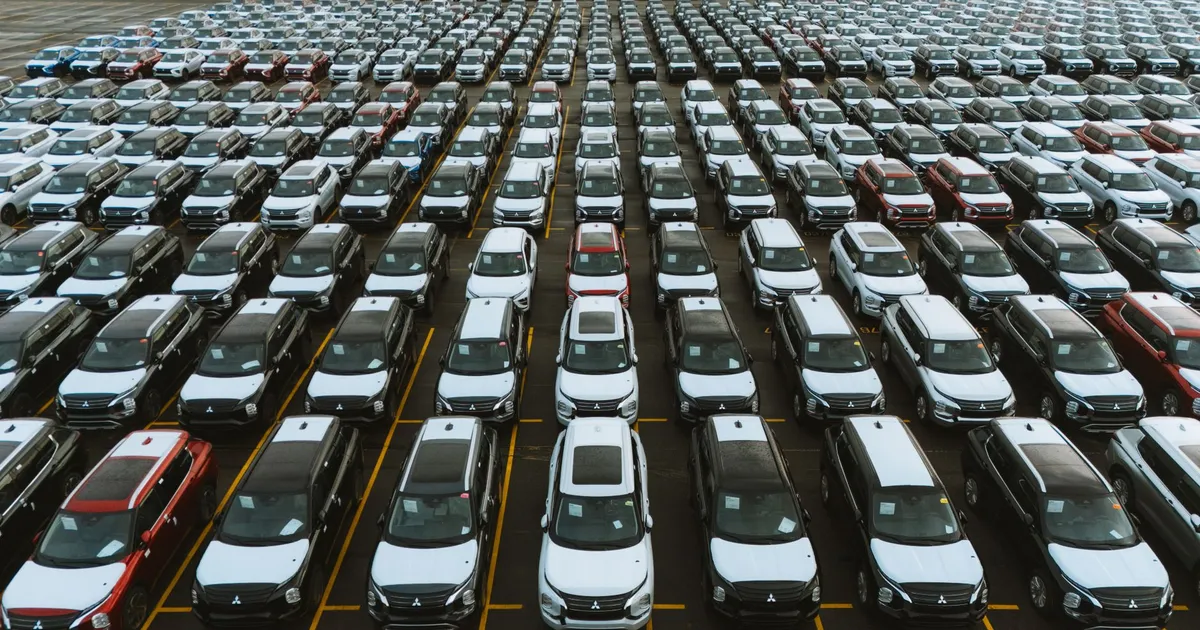
New Zealand’s car yards had their strongest month of the year in September. 13,244 new passenger vehicles were registered, up 27.8% on a year earlier and the highest September result in data going back to 2019. Look at who did the buying and a clearer picture emerges. This is a recovery being led by balance sheets, not by household mood.
Companies and rental businesses accounted for 68% of total registrations, according to the Motor Trade Association. Rental fleets alone took 4,736 passenger vehicles, or 35.8% of the market, up from 34.2% a year earlier. When the people who buy vehicles for a living start spending, it usually means they can see revenue coming.
The numbers are not a one-month fluke
Counting methods differ slightly between industry bodies, but every version points the same way. MTA puts September’s new-vehicle tally at 16,374, up 22%, with used imports up 14.5% to 8,407. Add the two together and the light vehicle market came close to 25,000 units for the month.
September’s total jumped 45.1% on August, and year-to-date sales sit at 82,451, up 16.9% on the same point in 2025. That is not a seasonal blip. It is the continuation of a run that began in mid-2025.
Back then, the industry was still nursing bruises. In October 2025, Motor Industry Association chief executive Aimee Wiley described “a tough 18 months through 2024 and into the middle of this year” and spoke only of “cautious hopes” among members. A month later she was pointing to the fourth consecutive month of year-on-year growth, with rental buyers especially active. The streak has held, and MTA’s own dashboard shows August 2026 new light vehicle registrations still up 5.5% on the prior year.
Tourists are paying for the rental restock
The rental surge has a straightforward driver. New Zealand welcomed 3.67 million overseas visitors in the year to June 2026, up 9%, with June arrivals reaching 95% of pre-Covid 2019 levels. Rental operators traditionally load up on stock ahead of the summer peak, and they are clearly betting on a busy one.
That matters well beyond the car trade. Rental companies do not buy thousands of new vehicles on a hunch. Their fleet orders are a hard-money forecast for accommodation, hospitality, regional retail and domestic aviation over the next six months. Operators in those sectors would be wise to staff and stock accordingly.
Some of this spending is defensive
Not every purchase is a vote of confidence. MTA chief executive Lee Marshall says “stubbornly high” fuel prices are still shaping decisions, with big savings available when a hybrid or EV replaces a vehicle costing $300 per 1,000km to run.
The model rankings bear that out. The hybrid Toyota Corolla Cross topped the market with 1,053 registrations, up from just 129 a year earlier. Tesla’s Model Y rose 209.5% to 588. For fleet managers, swapping thirsty utes and sedans for hybrids is cost control, not exuberance. It is still capital investment, though, and businesses rarely commit capital when they expect to be shrinking.
Chinese brands are eating the middle of the market
The structural shift underneath the headline is just as striking. BYD, MG, GWM, Chery, Geely and Jaecoo combined for 2,689 passenger registrations, up 145.1%, lifting their share from 10.6% to 20.3%. BYD went from 107 registrations to 871 in a year.
Toyota still leads comfortably with 3,003 units and a 22.7% share. The squeeze is falling on the legacy brands in between, which now face cheaper, well-equipped competitors pitching directly at the running-cost anxiety driving fleet decisions. For fleet buyers, more competition means better pricing leverage at renewal time. For dealers holding franchises with the wrong badges, it is an increasingly uncomfortable position.
Watch the fleets, not the speeches
Household sentiment has stayed subdued through much of this period, and political debate about the economy remains stuck on whether a recovery has arrived. The vehicle data offers a cleaner answer. Businesses that run fleets, from rental operators to tradies replacing worn-out vans, have been spending steadily for more than a year, and September was their biggest month yet.
Those buyers tend to move before consumers do because they see forward orders and bookings first. If tourism holds up through summer and fuel stays expensive, expect fleet renewal to keep running ahead of household spending into 2027. The October and November figures, historically big rental-buying months, will show whether this is a peak or a platform. On current evidence, it looks like a platform.
Sources
- Newstalk ZB: New car sales on the rise, driven by ‘stubbornly high’ fuel prices, rental companies (2026-10-02)
- Autotalk: Rental fleets drive 21.8% lift in September new vehicle market (2026-10-01)
- Autofile: New car sales surge 28% (2026-10-01)
- Autofile: Rentals boost registrations (2026-10-01)
- Autotalk: ‘Cautious hopes’ as September new car sales surge – MIA (2025-10-06)
- iHeart: Aimee Wiley, Motor Industry Association on the increase in new vehicle registrations (2025-11-04)
- MTA vstat: NZ Vehicle Market Overview August 2026 (2026-08)
Join the discussion
Add useful context, ask a good question, or challenge an idea — keep it specific and respectful.