

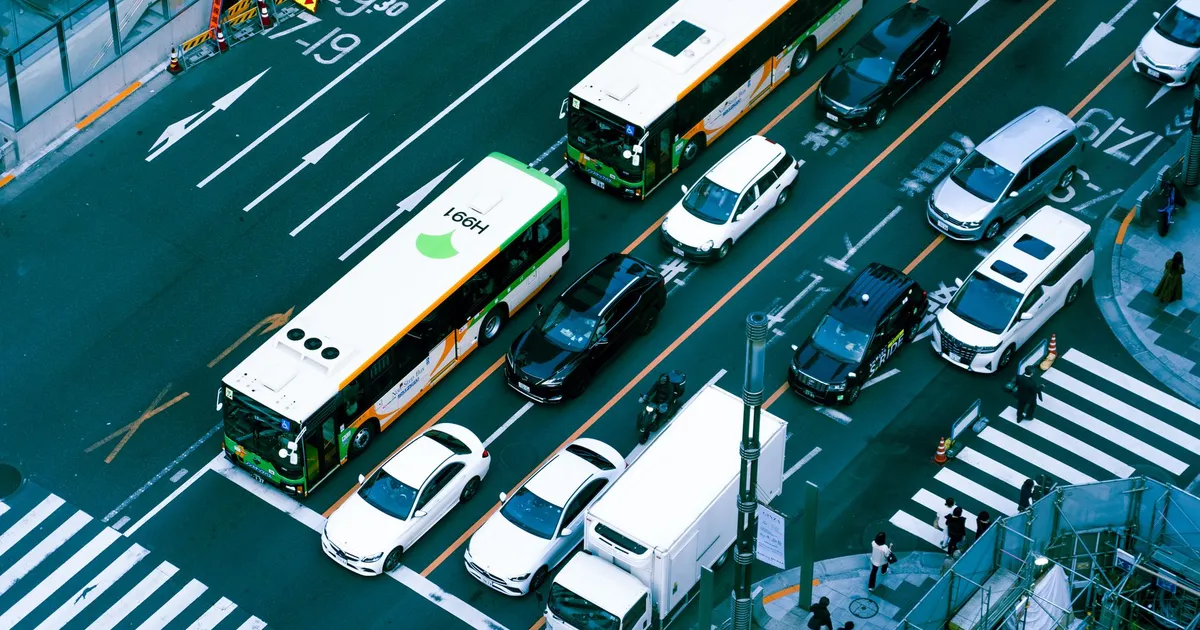
Auckland Transport’s Essential Vehicle Area on Queen Street has generated nearly $22 million in fines since live enforcement began in March 2023. That money comes from a 150-metre stretch between Wakefield and Wellesley Streets. At a flat $150 a ticket, that works out to roughly 146,000 infringements, or about $500,000 a month for more than three and a half years.
This stopped being traffic management a long time ago. A rule that is still catching people at this rate is not changing behaviour. It is confusing them, and charging them for it.
AT knew in 2022 the design was the problem
The zone went live on 3 July 2022, restricting the block to buses, bikes, motorbikes, emergency vehicles and registered goods vehicles. Private cars, taxis, car share and rideshare are all banned. By mid-September, AT’s own evaluation had recorded 51,000 warnings and recommended better signage and road design.
That is the key admission. Within ten weeks, AT’s internal review was pointing at its own street layout as a cause of the violations. In 2023, then-AT group manager for parking services and compliance John Strawbridge said non-compliance had been ‘significantly higher than first anticipated’, and the response was an escalated education campaign with radio ads and social media.
Live ticketing began on 20 March 2023 regardless. AT’s LGOIMA response shows 41,470 infringements between 23 March and 30 November 2023 alone, roughly $6.2 million in eight months. Stuff later reported that clearer warning signs arrived only after fines had already run into the millions, an acknowledgement that many drivers were making honest mistakes.
The sequence matters. Fix the design first, then enforce, and you get compliance. Enforce first, fix later, and you get revenue.
Nobody will say where the money went
In 2023, The Spinoff reported the camera had made $4.5 million in eight months, about $128,000 a week, and asked AT what the revenue was funding. It got no answer. Nothing in the reporting since suggests AT has offered one.
At the time, Strawbridge defended the lanes as ‘critical in reducing congestion and transport emissions’ and said that ‘in an ideal world’ AT would not need to issue any infringements. Three years on, the world is plainly not ideal, and AT has never shown what the $22 million bought in faster buses, lower emissions or safer streets.
The data itself is murky. A separate OIA response reports a lower infringement count for a longer window than the LGOIMA figures, a discrepancy AT has not explained. Requesters have also asked AT how many notices went to repeat offenders, the obvious test of whether the camera is deterring anyone or simply catching a fresh stream of out-of-towners.
The cost lands on people trying to do business in town
Registered goods vehicles are exempt, but plenty of people working in the CBD do not fit that box. Tradespeople in utes or cars, contractors visiting clients, small retailers making their own deliveries, and the customers they want to attract all face a $150 penalty for one wrong turn. Taxis and rideshare are excluded too, which matters for hospitality and evening trade around The Civic and Town Hall.
For a city centre still fighting to bring people back after the City Rail Link disruption, a reputation as the place where a five-second mistake costs $150 is not a minor irritant. It is a reason to shop, meet and dine somewhere else.
The quiet reversal says the most
Stuff has reported that AT now plans to let private vehicles back onto a section of the restricted street. If that goes ahead, it is a tacit admission that the original rules were wrong for at least part of the zone, and that a share of the $22 million was collected for a restriction AT itself no longer thinks is necessary.
That should not be the end of it. Auckland Council and incoming transport decision-makers should demand three things: a full account of where the fine revenue has gone, an independent assessment of whether the zone delivered measurable bus-time or emissions gains, and a review of whether infringements issued before the signage fixes were fair. Enforcement agencies that profit from their own design flaws invite exactly the cynicism about local government that business owners already carry. AT can either answer the question The Spinoff asked in 2023, or keep proving the critics right at $150 a time.
Sources
- Stuff: One stretch road generating nearly 22 million fines (2026-11-01)
- Stuff: Private vehicles set to be allowed back to section of Auckland street that brought in millions in fines
- Stuff: Queen St ‘Essential Vehicle Area’: Auckland Transport brings in clearer warning signs after $12 million in fines
- RNZ: The short stretch of road where $2.5m in traffic fines were issued in 6 months (2023-05-21)
- The Spinoff: This eight-month-old bus lane camera has already made $4.5m in fines (2023-05-22)
- Auckland Transport: Queen Street Essential Vehicles Area Evaluation (2022-10-04)
- Auckland Transport: LGOIMA response CAS-938151-P4Y3G0 (2024-07-24)
- Auckland Transport: OIA response CAS 984146 C5C1R4
- FYI: Number of repeated infringement notices for Queen St EVA (2024-03-12)
Join the discussion
Add useful context, ask a good question, or challenge an idea — keep it specific and respectful.