

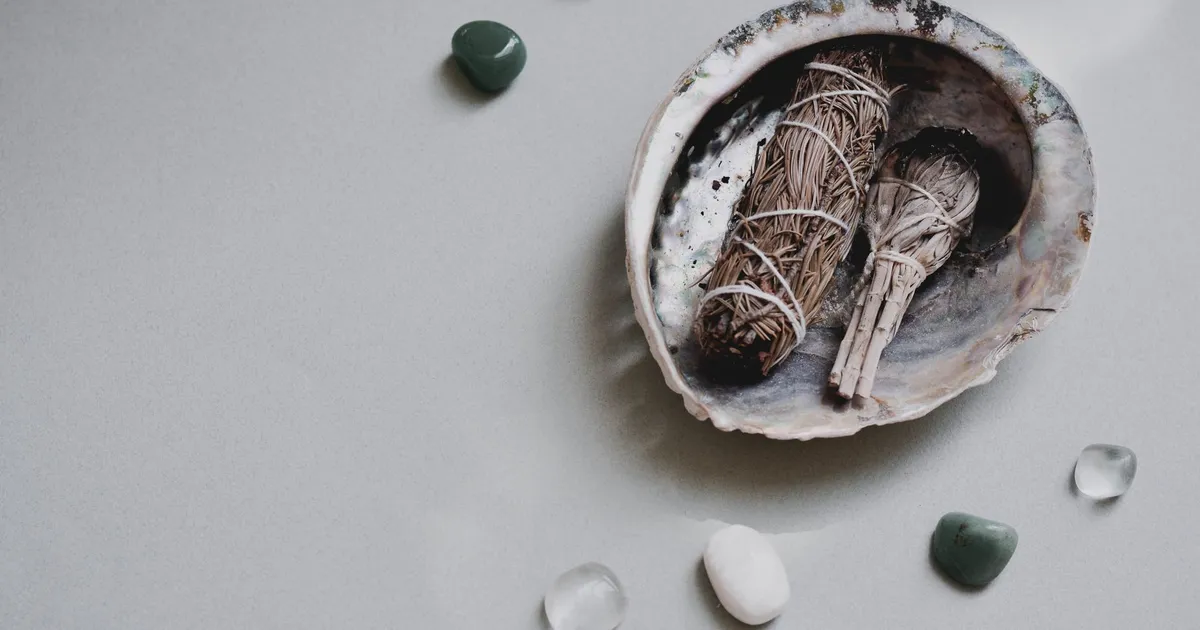
New Zealand’s commercial pāua fishery generates roughly $57 million a year in meat exports, mostly destined for Asian markets. But the iridescent shells left behind after processing, globally prized in luxury jewellery, decorative inlay and high-end homewares, pass through a cottage-industry supply chain of divers and small processors that barely registers on the national export ledger.
The shells are beautiful. They are also a symptom of a deeper commercial failure that stretches well beyond one species.
Iceland figured this out decades ago
In 2012, University of Auckland researchers presented analysis to the Ministry for Primary Industries that should have been a turning point. They found that 59,420 tonnes of fish had been dumped at sea in 2011 alone, waste that could have earned $173.7 million if dried and sold. Over the preceding decade, 1.67 million tonnes of discarded catch represented $1.87 billion in lost earnings.
The comparison with Iceland was damning. New Zealand’s fisheries averaged less than 10% EBITDA, versus Iceland’s 30%-plus. The difference was not better fish or better luck. Iceland simply used more of what it caught. By 2010, Iceland was utilising 96% of its catch and had grown by-product volumes from 1,667 tonnes in 1992 to 47,782 tonnes.
The researchers’ framing in 2012 was blunt: the real value of a limited resource is not the current price but the latent demand for value-added products. Fourteen years later, pāua shells still move through a handful of family-run operations, and the broader fisheries sector has not meaningfully closed the utilisation gap.
Volume is a dead end for pāua
In 2023, AUT professor of marine ecology Andrea Alfaro argued that New Zealand’s pāua exporters cannot compete on volume and must focus on quality, sustainability and provenance. She warned that competing on cost or volume would fail because “those bare metrics don’t account for important things, like leaving a functioning ecosystem and a liveable climate behind.”
Alfaro noted in 2023 that some pāua was being shipped to Asian markets where it was treated as just another type of abalone, competing against cheaper product. Markets like Japan, by contrast, paid top dollar for New Zealand pāua specifically. The implication was clear: the industry was leaving premium revenue on the table by not targeting the right buyers.
That argument extends naturally to the shell. Pāua shell is one of the most distinctive natural materials in the world. Its iridescence is difficult to replicate synthetically. Yet the commercial infrastructure around it remains thin, fragmented, and largely invisible to the export statistics.
The bioeconomy case is already proven
MBIE research on the circular economy and bioeconomy identifies thirty commercial opportunities in turning biological waste into higher-value products. Added-value bioeconomy exports grew from $1.5 billion in 2003 to $8.3 billion in 2023, a compound annual growth rate of 9% over two decades. The same research notes that New Zealand generates 700kg of waste per person sent to municipal landfills, among the highest rates in the OECD, with less than 1% of materials recovered through recycling.
The government’s own stated goal of doubling export value requires moving up the value chain, not increasing raw volume. Pāua shells are a microcosm of that challenge.
Poaching is hollowing out the resource before the value gets captured
None of this matters if the fishery collapses. Illegal harvesting is estimated at 400 to 1,000 tonnes annually, potentially matching or exceeding the entire legal commercial catch. In April 2025, 1News reported that 30% of people checked by fishery officers in Wellington were breaking the rules, triple the national average. More than 200 people were caught poaching in the region in just nine months. In June 2025, two men were seized at Titahi Bay with 1,863 shucked pāua worth an estimated $25,000.
Fisheries New Zealand regional manager Phil Tasker said in April 2025 that “sometimes extreme amounts of pāua have been taken for commercial gain as a saleable commodity.” Renee Randall of Te Ātiawa ki te Upoko o te Ika a Māui warned in 2025 that “with current poaching rates, the natural resource in Wellington and New Zealand won’t last long”.
Cost-of-living pressure, e-bikes opening up remote coastline, and suspected organised crime involvement are all compounding the problem. The industry is trying to build a premium brand on top of a resource that is being stripped from underneath it.
Commercial imagination is the bottleneck
The pāua shell story is small in dollar terms. But it is a perfect illustration of a much larger failure. New Zealand’s primary sector repeatedly demonstrates that it can produce world-class raw materials and then sell them at commodity prices, leaving the margin to processors and brands in other countries.
Iceland did not discover a new species. It simply decided to use what it already caught. The gap between New Zealand’s sub-10% fisheries margins and Iceland’s 30% is not a resource problem or a geography problem. It is a commercial imagination problem, and pāua shells sitting in bins behind processing sheds are the most photogenic evidence of it.
Sources
- Pāua Shell Trends: 2025 Jewelry & Decor Insights (2026-03-29)
- Almost 2000 pāua worth $25,000 seized in Wellington (2025-06-27)
- ‘Extreme amount’ of pāua poaching rife in the Wellington region (2025-04-21)
- Farming kaimoana: What pāua can teach us about sustainable exports (2023-06-22)
- Re-thinking the Aotearoa Fisheries Value Chain (2012-10)