

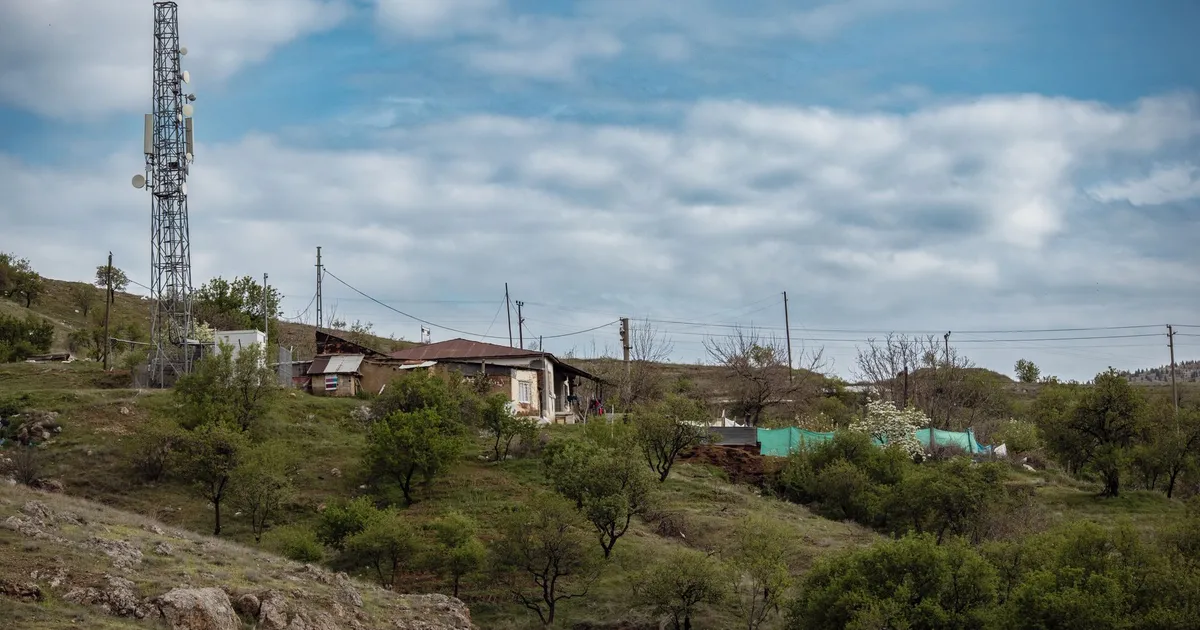
The south is being told its mobile gaps are getting fixed. The ODT reports that new towers are resolving identified network problems, and the official build numbers back that up. The farmers, carriers and operators who depend on the network tell a different story. For any business that runs on a signal, the gap between the scoreboard and the service is not a convenience problem. It is an operating risk.
The scoreboard says job done
By the end of 2025, Otago had 43 mobile towers built, 102% of target, along with 266km of road coverage (113% of target) and 23 tourist sites covered (135%). Southland sat at 32 towers, 94% of target, but had beaten its road target with 55km, 128% of plan. Nationally, 572 towers were live, a programme described as 97.3% complete on $2.3 billion of investment.
That is real progress. Back in mid-2021, Otago had just 23 towers, 59% of target, and only 7km of state highway coverage, 16% of what was promised. Credit where it is due, the build has largely happened.
The paddock says otherwise
The problem is that towers counted are not calls connected. A Federated Farmers survey of 641 farmers, published in October, found coverage and reliability getting worse, particularly since the 3G shutdown in March. Half of farms now have coverage on less than half their property. A third reported spots that worked on 3G no longer work. Nearly two in three cannot reliably reach 111 from most of their farm, and 8% said emergency services were unreachable anywhere on the property.
The roads are no better. Four in five farmers know regular stretches where service fails, and eight times as many said highway coverage had worsened over the past year as said it had improved. That sits awkwardly beside official highway targets that Otago and Southland have both exceeded on paper.
“For farmers, sub-par telecommunications is like trying to drive with half the cylinders misfiring,” Federated Farmers spokesperson Mark Hooper said. One Southland respondent put it more bluntly, saying a yard that once had perfect coverage now requires standing on one leg to make a call.
Money allocated is not a mast in the ground
The other trap is the announcement cycle. In July, the ODT reported confirmation of an extra 11km of coverage on State Highways 8 and 90 around Raes Junction and Tapanui, with rollout slated for next year. The same report flagged $105 million in future project funding that could address further areas identified by communities. That is a budget line, not a site.
Every new tower still needs site investigation, a mains power connection and fibre or microwave backhaul before it goes live, as the Rural Connectivity Group has explained. “Coverage confirmed” usually means funding confirmed. The signal arrives much later.
Who carries the risk
For agricultural employers, the 111 finding is a health and safety issue, not an annoyance. A business that sends staff to work alone on hill country it knows has no signal owns that risk. The same survey found one in seven farms had to replace 3G-reliant equipment at a cost of thousands of dollars, and two in three were paying for satellite broadband workarounds, with only 15% rating satellite-to-mobile as adequate. That is private capital plugging a public network gap.
Freight operators face the same arithmetic on rural routes, and tourism operators are sending visitors into areas where a breakdown or a crash may not be reportable.
None of this is new. In 2022, then-Telecommunications Forum chief executive Paul Brislen noted the network covered 99.8% of the population but nowhere near that share of land, and that new rural subdivisions often get water and power but no digital infrastructure. Urban New Zealand, by contrast, had over 99% of addresses within 4G fixed wireless coverage according to the Commerce Commission’s 2025 monitoring report. The divide is geographic, and it is where the export earnings come from.
Measure the signal, not the steel
The fix is not another round of tower announcements. It is honest measurement. Officials should report reliability and land-area coverage after the 3G switch-off, not just towers built against targets set years ago. A programme that is 97% complete while users report going backwards is measuring the wrong thing.
Until that changes, southern businesses should plan as though the blackspot map is worse than the official one. Audit where staff and vehicles actually lose signal, budget for satellite messaging on lone-worker and freight runs, and treat any “coverage confirmed” headline as a start date for a build, not proof the problem is solved.
Sources
- Otago Daily Times: New comms towers in South ‘resolving identified network problems’ (2026-11-08)
- National Infrastructure Funding and Financing: Connectivity Update, 1 July to 31 December 2025 (2025-12-31)
- Crown Infrastructure Partners: Quarterly Connectivity Update Q2 to 30 June 2021 (2021-06-30)
- Southland Tribune: Southland farmers among those struggling with mobile coverage (2026-10-11)
- Otago Daily Times: Better cellphone coverage for West Otago confirmed (2026-07-16)
- Rural Connectivity Group: Rural broadband to extend
- RNZ: Rural residents ropeable over lack of cellphone coverage (2022-08-15)
- Commerce Commission: 2025 Telecommunications Monitoring Report (2025-06-30)
Join the discussion
Add useful context, ask a good question, or challenge an idea — keep it specific and respectful.