

The Iran shock hits where it hurts
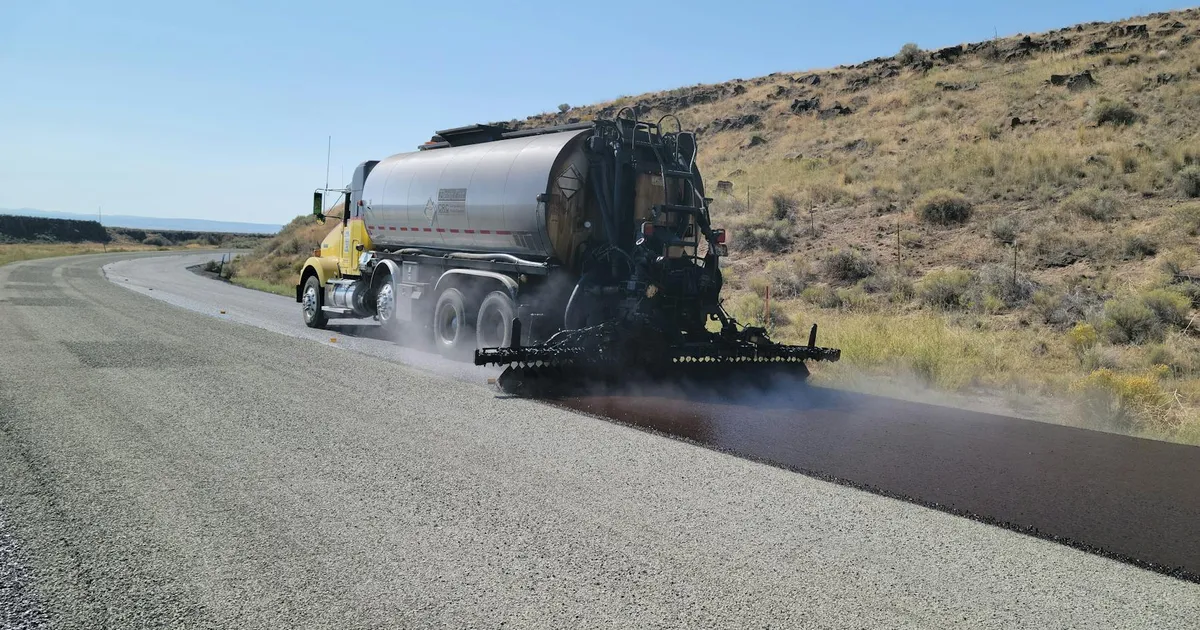
Bitumen prices have jumped nearly 75% in three weeks thanks to the Iran war, reaching their highest absolute level since 2001. For an industry where diesel alone makes up 7% of the construction cost index, the price signal is already working through project budgets with brutal efficiency.
NZTA’s own modelling shows a 5% rise in big project costs if oil sits at US$100 a barrel, climbing to 10% at US$150. Nationwide, fuel spending is up $4.3 million a day even as vehicle kilometres travelled have dropped 20% for cars and 5% for commercial vehicles. Less traffic, more cost, less revenue into the National Land Transport Fund. The maths is moving in one direction.
Bitumen stocks sit at 93 days or 51,000 tonnes, with another 41,000 due, so there is no supply crisis yet. But the price crisis is already here.
Contractors are absorbing the hit alone
The contractual structure is the quiet scandal. Contractors on projects less than a year old get no fuel price index compensation during that 12-month window. NZTA has said plainly that during this period, “contractors will be exposed to the cost risk.”
The agency is implementing pricing flexibility measures to ease pressure, but the industry has described the fuel crisis as “just another handbrake” on a sector already dealing with multiple headwinds. NZTA expects commercial tension including requests for contract variation, slowed delivery, or reprioritisation of work. No force majeure claims have been lodged yet, but the agency is already building a framework to identify which work gets deferred.
Deferral is the polite word for what happens next. The blunt word is cancellation.
A programme that was already unaffordable
The Iran shock lands on a structural funding crisis. The cost of all 17 Roads of National Significance has reached $56 billion. The Ministry of Transport has told ministers the National Land Transport Fund is “massively subscribed” with “limited opportunity” to reprioritise. If all proposed projects proceed, more than a quarter of a trillion dollars would be invested in land transport over 20 years, more than half of current GDP.
Transport Minister Chris Bishop has been unusually candid: “It’s politically extremely unpalatable to put up fuel tax by 12c a litre when petrol prices are $3.40 a litre. So yeah, it’s a bloody tough situation.” The government is now unlikely to proceed with a planned $1.4 billion fuel excise hike, meaning the taxpayer is picking up half the tab for road building and maintenance.
Roads take $8.6 billion of the $12.8 billion Vote Transport budget. Those numbers look large until you set them against a $56 billion pipeline with no credible funding path.
The cycle that makes everything more expensive
In September 2025, RNZ reported that eight Roads of National Significance had seen costs rise $5 billion in two years without construction beginning. Meanwhile, NZTA contractors fixed 41,688 potholes in 2025 across 11,000 kilometres of state highway, roughly one every 260 metres. The $3.9 billion dedicated to pothole prevention over three years is equivalent to three Transmission Gully projects.
Ia Ara Aotearoa Transporting New Zealand put it bluntly: “I would’ve thought that building a road so it doesn’t pothole would be part of the normal expectation and standard contract.”
The deeper structural problem is the procurement cycle itself. Government announces an ambitious programme. Firms invest in capacity. Fiscal reality forces deferrals. Firms with mobilised capacity and no pipeline certainty price the uncertainty into future bids, or exit the market entirely. Either outcome makes the next procurement round more expensive. It is New Zealand infrastructure’s defining pathology.
What this means for construction firms
For civil contractors, materials suppliers, plant hire companies, and engineering consultants, the near-term outlook is fiercer competition for a shrinking pool of work, with sovereign risk baked into every project timeline. Firms on contracts less than 12 months old are absorbing fuel cost risk directly on their balance sheets. Regional economies that were banking on Roads of National Significance construction face deferrals that could stretch years.
Bishop has ordered a cost-benefit review by the Infrastructure Commission. That review will almost certainly recommend cutting projects. The question for the sector is not whether the axe falls, but where, and whether the firms that tooled up for a $56 billion programme can survive the gap between promise and delivery.
Sources
- Tensions and price increases ahead for getting roads built (2026-05-07)
- Fuel crisis ‘just another handbrake’ for infrastructure sector, NZTA announces price flexibility (2026-05-01)
- ‘It keeps me awake at night’: Bishop orders cost-benefit review of promised roads (2026-04-23)
- More than ‘quarter of trillion dollars’ on land transport over next two decades, priority questions for Government (2026-03-27)
- Tens of billions: Why the bill for planned Roads of National Significance keeps going up (2025-09-19)
- The Estimates of Appropriations 2025/26 – Vote Transport (2025-05-07)