

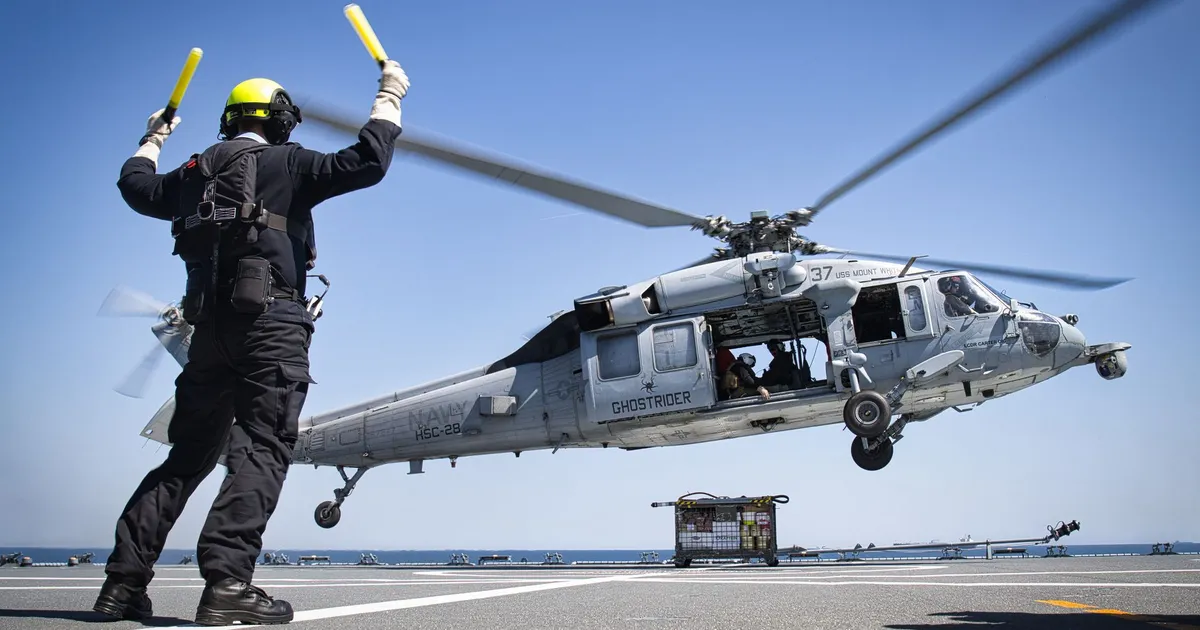
New Zealand’s decision to buy five MH-60R Seahawk helicopters for more than $2 billion is the kind of number that makes taxpayers choke on their coffee. But the price tag is a symptom, not the disease. After decades of underinvestment, the country is now paying a steep premium to rebuild military capability it allowed to rot, and the spending pipeline behind it is creating real opportunities for local firms willing to navigate the defence supply chain.
You pay more when you start from nothing
In August 2025, the Government confirmed the purchase of five Seahawks and two Airbus A321XLR aircraft in a combined $2.7 billion investment. The helicopter component alone exceeds $2 billion, putting the per-unit cost at roughly $400 million. Australia paid approximately $82 million each for its Seahawks, a comparison that has drawn predictable outrage.
But the comparison is misleading. Australia already had infrastructure, training systems, and maintenance facilities for the platform. New Zealand has none of it. Defence commentator Dr Mark Obren has argued that roughly 75 percent of the contract covers establishing the platform, with only 25 percent going to the actual airframes. He called it a smart buy despite the money, but added that buying eight helicopters instead of five would have significantly reduced per-unit costs and eased operational pressure.
That logic is hard to argue with. The Navy’s existing Seasprite fleet was operating at just 23 to 25 percent availability because the remaining aircraft were being cannibalised for parts. In May 2025, then-Defence Minister Judith Collins told Morning Report the Seasprites were “so old it’s not safe”. Victoria University’s Centre for Strategic Studies director David Capie said in 2025 the fleet had been “worked to the bone” after decades of chronic underinvestment.
The $12 billion plan that isn’t actually funded
The Seahawks are the headline act, but the broader story is the 2025 Defence Capability Plan, which commits $12 billion over four years with $9 billion classified as genuinely new spending. The April 2026 Briefing to the Incoming Minister of Defence confirms the Ministry is now managing 31 active acquisition projects with combined budgets of $6.4 billion.
Budget 2026 added $880 million in operating funding and $700 million in new capital, bringing total new Defence investment since the DCP launch to $5.8 billion. Defence spending sits at 1.16 percent of GDP, with a pathway mapped to 2 percent by 2032/33.
Here is the catch that matters for any business planning around this pipeline: none of the $12 billion is pre-funded. Each project must go to Cabinet individually for sign-off. Near-term commitments like the Seahawks are locked in, but anything further out depends entirely on the government of the day. A change in 2026 or beyond could slow or redirect spending dramatically.
Where local firms fit in
The DCP identifies around 800 suppliers in New Zealand’s defence industrial base. The NZDF already spends almost $1 billion annually on maintenance, repair, training support, and engineering services, with approximately two-thirds spent locally. That is roughly $650 million a year flowing to New Zealand firms before any new procurement spending arrives.
The Seahawk project itself will be delivered in three tranches: helicopter replacements, infrastructure and training systems at Base Auckland Whenuapai, and investment in vertical take-off and landing uncrewed systems. The second and third tranches, covering construction, engineering, and drone technology, are where local firms have the clearest path in.
Budget 2026 also introduced a Technology Accelerator programme funded at $16 million operating and $1.5 million capital, designed to connect New Zealand industry with Defence to solve specific military challenges. It is a pilot, not a revolution, but it represents the first formal mechanism for smaller firms to engage with defence procurement outside established tier-one contractors.
Equipment without people is expensive furniture
The most uncomfortable dimension of this spending surge is workforce. The NZDF remains approximately 1,000 people short of requirements despite active recruitment drives. Ships sit tied up for lack of crew. Light-armoured vehicles sit idle for lack of trained operators. Spending $2 billion on helicopters that cannot be fully crewed would be the most expensive version of the same neglect that let the Seasprites decay.
New Zealand is doing the right thing by finally recapitalising its defence force. The geopolitical environment demands it, and the Seahawk purchase aligns the country more closely with Australia and the United States at a moment when allied interoperability genuinely matters. But buying five helicopters when eight would have been smarter, funding a $12 billion plan one Cabinet paper at a time, and running a recruitment deficit that undermines the equipment you are purchasing – that is not a strategy. That is catch-up dressed in strategic language, and businesses banking on the pipeline should price in the risk accordingly.
Sources
- New planes, helicopters for Defence Force (2025-08-21)
- Govt confirms replacements for ageing Defence Force aircraft (2025-08-21)
- Navy helicopter upgrade needed after Seasprites ‘worked to the bone’ – experts (2025-05-20)
- Defence Capability Plan 2025: Public Release (2025-05)
- April 2026 Briefing to the Incoming Minister of Defence (2026-04)
- Budget 2026 – Summary of Initiatives (2026-05-28)
- Why NZ’s new Seahawk maritime helicopters cost $400 million each
- Maritime Helicopter Replacement