

A deal nobody noticed is suddenly the one that matters
In October 2025, Prime Minister Christopher Luxon and Singapore’s Lawrence Wong signed a legally binding Agreement on Trade in Essential Supplies (AOTES) committing both governments not to impose export restrictions on fuel, food, medical products, and construction materials during crises. It was Singapore’s first such binding bilateral agreement. Most business pages buried it below the fold.
Six months later, New Zealand is in a fuel crisis triggered by conflict in Iran. Petrol prices are up 20% and diesel has more than doubled that. Air New Zealand has cancelled flights over jet fuel costs. The government has published a national fuel plan with four alert levels. And the AOTES, which looked like diplomatic box-ticking in October, now looks like foresight.
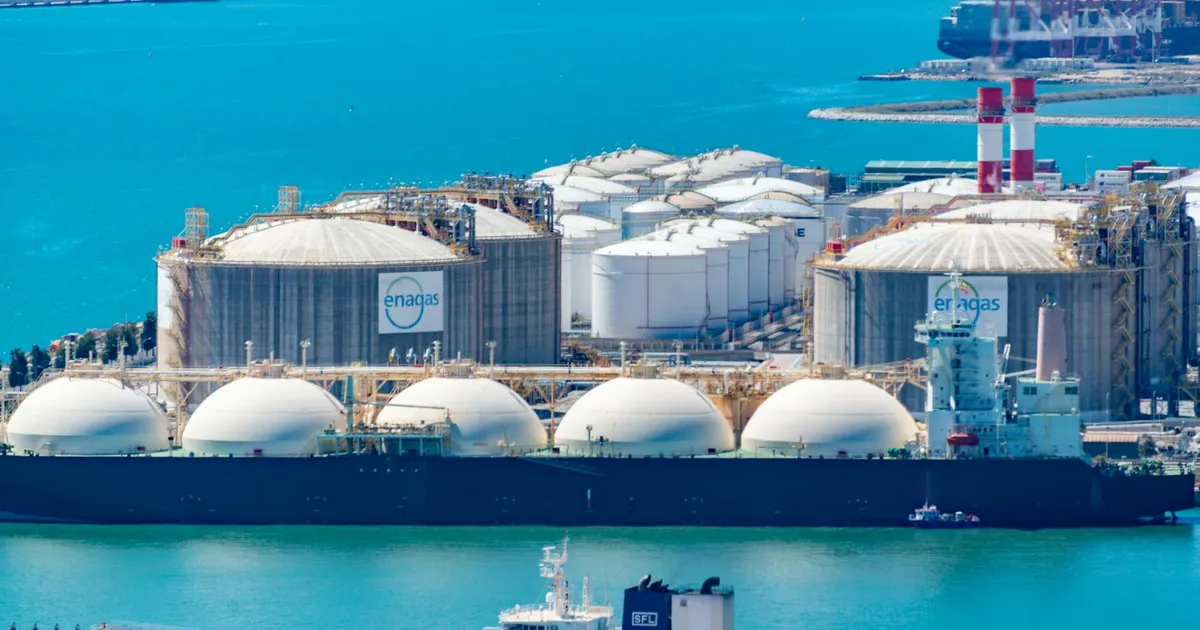
The reason is brutally simple. Since the Marsden Point Refinery closed in April 2022, New Zealand has zero domestic refining capacity. A facility that once supplied roughly 70% of domestic fuel demand was shuttered on commercial grounds, and nobody in government seriously interrogated the strategic risk.
Two countries, one problem each
Today, 70% of NZ’s fuel imports come from just two countries. South Korea supplies 48-51% and has already started imposing export restrictions in the current crisis. Singapore supplies 31-33% and is now legally bound not to do the same.
The AOTES is not a supply guarantee. It does not fix prices, ensure shipping lanes stay open, or compel Singapore to prioritise NZ shipments. What it does is remove one specific risk: the risk that Singapore’s government restricts fuel exports when things get bad. Given South Korea has done exactly that, the distinction matters.
The architecture is a straight swap. New Zealand provides around 14% of Singapore’s food imports. Singapore imports 90% of its food. NZ commits to not restricting food exports; Singapore commits to not restricting fuel exports. Both countries get a legal floor under their most critical import dependency. As PM Wong put it: “It’s the first of its kind, and it builds on the experiences we had during COVID.”
The inventory numbers that should worry every logistics operator
The underlying exposure remains severe. Government modelling of a 90-day complete supply cessation shows NZ could meet only 31% of normal petrol demand from existing stocks, 29% of jet fuel demand, and 27% of diesel demand. The Minimum Stockholding Obligation sits at 28 days for petrol, 21 days for diesel, and 24 days for jet fuel. The government plans to increase the diesel MSO to 28 days for major importers from July 2028, three years from now.
Five companies import all of NZ’s fuel: bp, Mobil, Z Energy, Gull, and Timaru Oil Services. The concentration risk is extraordinary.
Finance Minister Nicola Willis has acknowledged the pain directly: “This conflict is impacting just about every New Zealander. It has pushed up the price of petrol, diesel and jet fuel, and those increases are already hurting our people and our businesses.” She ruled out large-scale government borrowing to cushion the blow, citing the risk of further credit rating downgrades.
Small countries hedging against a bigger, uglier world
Both leaders were candid about the strategic logic. Wong told reporters: “We worry a lot, both of our countries, about how the global order is evolving, where it’s becoming one where it’s more about might is right.” He warned that “economic interdependencies being weaponised” were pushing both nations away from the multilateral system they had relied on for decades.
That concern is now being operationalised. On 31 March 2026, NZ and Singapore joined nine other countries in issuing a joint statement committing to maintain open supply chains and refrain from export restrictions. The coalition, including Costa Rica, Switzerland, the UAE, and Norway, is a bloc of small-to-mid trading nations signalling they will not follow the large-economy instinct toward trade weaponisation.
Alongside the AOTES, the two countries launched a Strategic Food Partnership to streamline agrifood trade, remove barriers, and encourage investment. Trade Minister Todd McClay called it a way to “speed up the movement of New Zealand’s high-quality, safe food across borders”.
One corridor secured, the rest still exposed
The AOTES is good policy, and it arrived just in time. But it covers roughly a third of NZ’s fuel supply. The other half comes from South Korea, where no equivalent agreement exists and export restrictions are already in play. The inventory buffer is thin. The concentration among five importers is extreme.
For transport operators, construction firms, agricultural businesses, and anyone whose margins depend on diesel prices, the honest assessment is this: Wellington has finally started treating supply chains as a strategic vulnerability rather than a procurement detail. The question is whether one corridor and 28 days of stockholding is enough when the next shock hits harder than this one.
Sources
- Politik: Little known trade agreement could save our fuel supplies
- Newsroom: Luxon reaches for silver linings in looming fuel crisis (2026-03-20)
- RNZ: Singapore and New Zealand sign strategic partnership
- Scoop: NZ and Singapore launch Strategic Food Partnership and AOTES conclusion
- MFAT: Joint Statement on Maintaining Open and Resilient Supply Chains
- MFAT: Agreement on Trade in Essential Supplies with Singapore
- Channel NewsAsia: First of its kind deal on essential supplies