

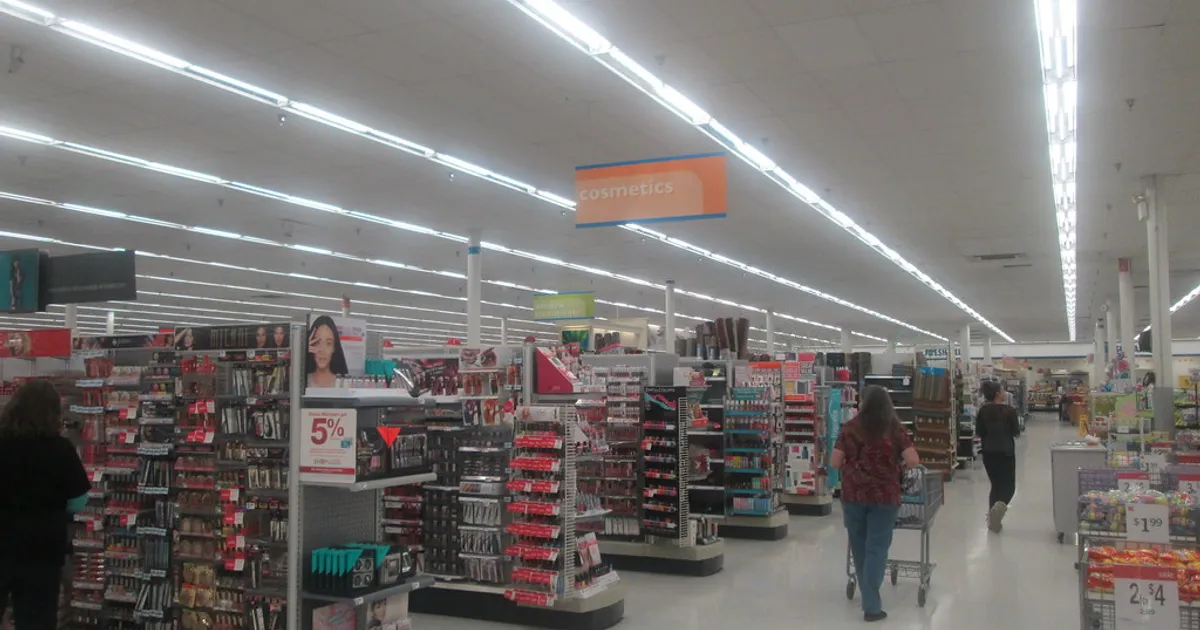
A ban that is easy to write and hard to obey
Banning “forever chemicals” is the kind of policy that writes its own press release. Nobody defends carcinogens in mascara. But between the announcement and the shelf sits a supply chain problem that is far messier than the politics, and it lands first on importers and retailers.
New Zealand was among the first countries globally to move on PFAS in cosmetics. The Environmental Protection Authority formalised the ban in January 2024. The clock is now close to running out. Importers and manufacturers have until 31 December 2026 to stop bringing non-compliant products in. Retailers can sell existing stock until 31 December 2027, and anything unsold must be disposed of by 30 June 2028.
Since most cosmetics sold here are imported, that deadline is a live compliance issue for a large slice of the retail sector right now.
Why “PFAS-free” is harder to prove than it sounds
PFAS are not one chemical. They are a family of at least 15,000 distinct substances used to make products waterproof, grease-proof and stain-resistant. Their bonds are so stable nothing in nature breaks them down, which is where the “forever” comes from. They accumulate in water, food and human tissue, and University of Auckland associate professor Erin Leitao says they have been “correlated to causing cancers, health defects in babies”.
The scale is the first problem. A US study of 200 cosmetic products found more than half contained PFAS. Leitao is blunt about tracking the source: “I can’t even tell you. It’s hard to say where the various types of PFAS are coming from.”
The second problem is that presence does not equal intent, and a supplier declaration is not proof. As Leitao puts it, “There’s a difference between PFAS-free and unintentionally added PFAS. So, manufacturers can say, ‘We didn’t add it,’ and that’s great. But they used water or they recycled an ingredient that was high in PFAS.” A certificate saying “we didn’t add PFAS” is worthless if the inputs were already contaminated.
The third problem is labelling. Companies are not always required to declare ingredients present at low concentrations, so standard product documentation will not necessarily reveal what is in the bottle.
The compliance gap between big brands and small importers
The industry’s reassurance is that multinationals are already reformulating for Europe, and NZ compliance will come along for the ride. New Zealand deliberately aligned its deadline with the EU, which is pursuing a total ban of the entire PFAS family by 2030. In February 2024, then-Cosmetics NZ technical executive director Garth Wyllie said the sector was “happy with the ban” and that “there are very few products made in New Zealand that would contain PFAS,” so domestic brands would be unaffected.
That is true for large players. It is far less reassuring for smaller importers sourcing directly from Asian manufacturers who have no reason to meet EU rules. The regulatory personnel a multinational takes for granted are exactly what a small operator lacks.
Enforcement is also an open question. University of Auckland PhD researcher Shailja Data, who studies PFAS contamination, said she is “looking forward to seeing how the Environmental Protection Authority plans to monitor the ban”, a diplomatic way of noting the monitoring plan is not yet clear.
The reporting regime that already arrived
Cosmetics are only the leading edge. A separate annual reporting requirement for hazardous substance importers and manufacturers took effect on 1 January 2026. In July 2024, EPA general manager Erica Gregory said it would “enable us to monitor trends and developments in chemical use” and bring the country into line with international practice. Industry submitters pushed back on the EPA’s estimated compliance cost of $1,500 to $2,000 per business as understated. The wider point is that the existing system for tracking chemicals in imports was described as “disjointed and patchy”, which is precisely why the gaps are being closed now.
Build the capability, not the panic
PFAS are turning up in places nobody expected, including sports equipment, alongside textiles, furniture, packaging and food contact materials. The compliance model being built around cosmetics, supplier verification, formulation checks and stock management, is the template regulators will reach for when they move to the next category.
For cosmetics importers, the practical reality is that products ordered today which land after 31 December 2026 cannot legally be imported, so ordering decisions made now set the exposure. Retailers have until the end of 2027 to clear shelves. The businesses that treat this as a one-off scramble will be back here at every future ban. The ones that build traceability into their sourcing now will find the next deadline is administrative rather than existential.
Sources
- Newsroom: The ‘forever chemicals’ hiding in your home – and why they’re so hard to ban (2026-07-19)
- Newsroom: Hazardous chemical reporting requirement aims to fill major gaps (2024-07-26)
- 1News: NZ to ban ‘forever chemicals’ in cosmetics from end of 2026 (2024-01-31)
- EPA: Cosmetic Products Group Standard (Amendment) Notice 2024 – Final Decision (2024-01-25)
- EPA: Hazardous Substances Importers and Manufacturers Notice 2015 (consolidated, effective 1 January 2026) (2026-01-01)