

Four days in an Auckland industrial park
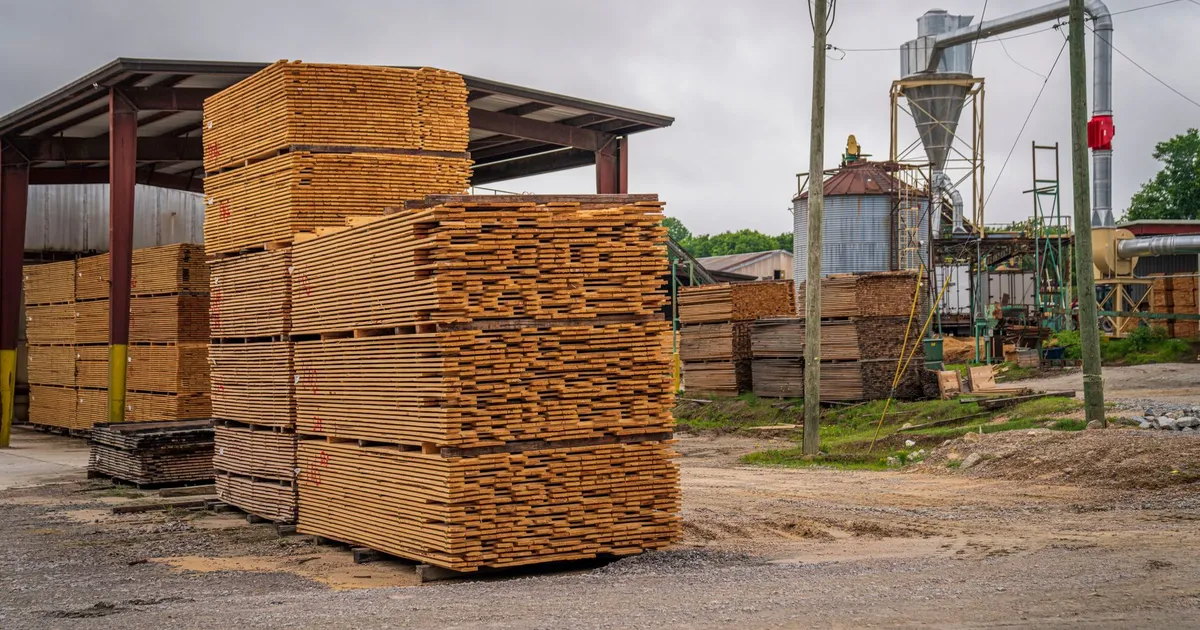
US Customs and Border Protection agents spent four days investigating Auckland timber processor Hermpac after a complaint from the US Lumber Coalition. The finding was uncomfortable. A wholesaler on America’s east coast had been routing Canadian-origin wood through New Zealand for processing before shipping it into the US, a manoeuvre that carried timber roughly 27,000km across the Pacific and back. The purpose, according to the investigation, was to dodge the punishing duties the US imposes on Canadian softwood lumber.
This is the first confirmed case of a New Zealand processor being directly investigated by US Customs in connection with the Trump-era tariff regime. It is a meaningful escalation from the macro-level tariff debate that has run since April 2025. The fight is no longer just about headline rates. It is now about who inspects your paperwork, and whether the value you add in New Zealand counts for anything.
Two trade wars collided in New Zealand
The US-Canada softwood lumber dispute is decades old. Washington argues Canadian provinces subsidise their forestry sector and has repeatedly slapped countervailing and anti-dumping duties on Canadian wood. Those duties create a financial incentive to route Canadian timber through a third country, process it, and re-export it as something else. The practice is called transshipment, and the US Lumber Coalition monitors for it aggressively.
Running parallel is the Trump tariff regime on New Zealand itself, which began with a 10% base tariff from April 2025 and rose to 15% from 7 August 2025. Timber was initially exempt from the base rate but sat under a separate Section 232 investigation that produced a 10% tariff on foreign softwood lumber in September 2025. Hermpac ended up caught where those two fights overlap.
The substantial transformation trap
The legal mechanism at the heart of the case is the US ‘substantial transformation’ test. In April 2025, commercial lawyer Richard Hoare of Sharp Tudhope explained that origin turns on whether a good undergoes a fundamental change in name, character, or use in the country claiming origin, and that the change must add meaningful economic value.
Kiln-drying Canadian cedar in Auckland sits squarely in the grey zone. It adds value and changes the product’s condition, but US Customs concluded it did not fundamentally change the wood’s character or use. Origin stayed Canadian, and the duties applied. Hoare’s warning at the time now reads as prophecy. “Merely assembling components in New Zealand may not be enough,” he wrote, adding that exporters should be ready to justify origin claims based on processing steps and value added.
A sector with no margin to absorb this
New Zealand exports $380 million in timber products to the US annually, its third-largest timber market, and the 10% tariff already adds roughly $40 million in yearly costs. The sector has almost no room to absorb more. In August 2025, the Wood Processors and Manufacturers Association released survey findings showing anything over a 5% tariff would cause 50% of exporters to rethink the value of selling to the US.
It is worth noting what New Zealand actually sells there. In October 2025, WPMA chief executive Mark Ross stressed the timber is not the structural framing lumber Canada was hit for, but high-grade clear wood for mouldings that only a handful of countries can produce because New Zealand prunes its trees. That premium segment had grown 30% over the five years to 2025. A compliance scare is the last thing it needs on top of mill closures already stressing the industry.
The lesson is bigger than timber
New Zealand sells around $9 billion of goods into the US every year, and the export data already shows tariff pain, with sales to the US falling 4.3% in May and 8.9% in June 2025. Trade Minister Todd McClay has argued the uncertainty and changing nature of the tariffs is harder to manage than the rate itself. The Hermpac case adds a third dimension he has not addressed publicly – enforcement risk.
Any New Zealand manufacturer sourcing inputs from a high-tariff country like Canada or China, then finishing goods for the US market, faces the same question. If US Customs decides the local processing does not amount to substantial transformation, the product keeps its origin-country classification and someone pays those duties. The complaint mechanism is open to any US industry group that suspects origin laundering.
The practical takeaway is unglamorous but urgent. Review and document your origin classifications now, before a competitor files a complaint, not after Customs agents turn up. Hermpac learned that the hard way, over four days.
Sources
- How shipping timber 27,000km to and fro across Pacific got Akld firm tangled in Trump’s trade war (2026-09-21)
- Timber industry welcomes 10% tariff as a ‘bit of relief’ (2025-09-22)
- ‘Uncertainty and changing nature’ of US tariffs making it hard for NZ exporters (2025-09-30)
- NZ hit with 15% Trump trade tariff, Trade Minister says he will push back (2025-08-01)
- US Tariffs & NZ Trade | A Commercial Law Perspective (2025-04-10)
- Tariff outcome for timber and lumber products exported to the U.S. still in limbo (2025-08-25)
- Trump tariffs could drive stake through timber sector (2025-10-10)
Join the discussion
Add useful context, ask a good question, or challenge an idea — keep it specific and respectful.