

The terminal wobbles, the regulation doesn’t
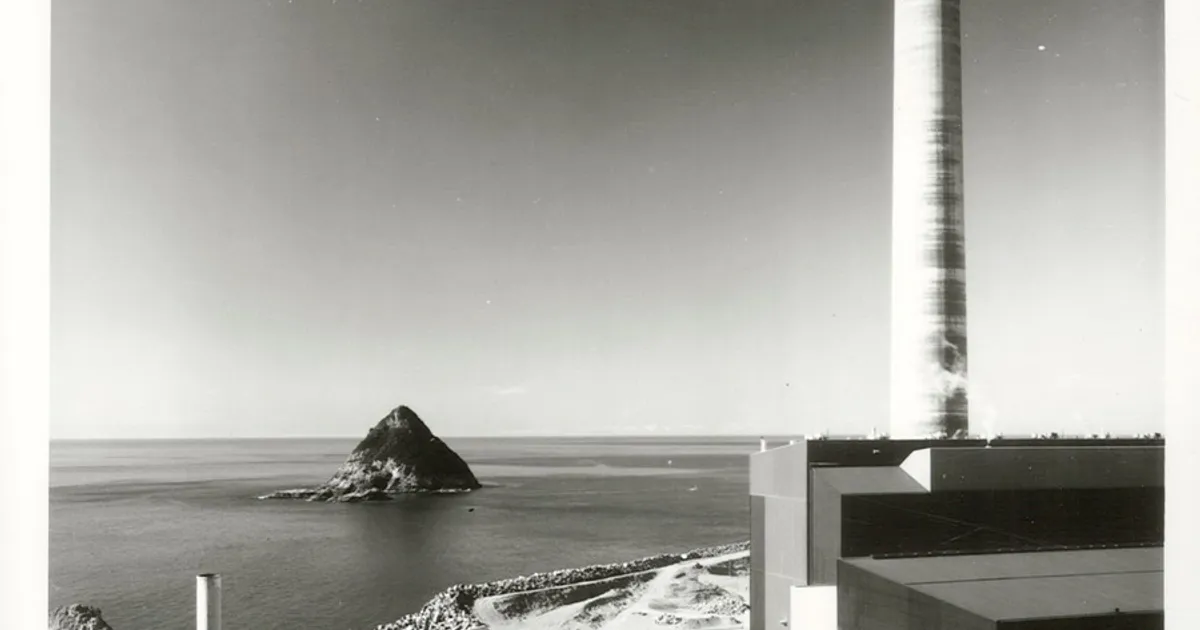
New Zealand’s plan to build an LNG import terminal in Taranaki is looking increasingly doubtful. Multiple Beehive sources tell the NZ Herald that ministers are using the mid-year budget decision point to reconsider, with Qatar’s Ras Laffan facility badly damaged and potentially offline for three to five years. Goldman Sachs is forecasting LNG price rises of 130% if the disruption continues. A terminal designed to lower electricity prices cannot do that when the fuel it imports costs twice what was modelled.
But while ministers quietly shelve the headline project, the regulatory machinery that accompanied it rolls on. The enforcement package pushed through in February takes effect from July 2026 regardless. For the electricity sector, the cost has not disappeared. It has changed shape.
What the levy was meant to do
The original plan, detailed in a December 2025 Cabinet paper, proposed a charter fee of $90-$180 million per annum recovered via a levy of $2-$4/MWh on electricity. The government claimed a net benefit of $265 million per year, or $50 per household, arguing cheaper LNG would more than offset the charge.
Officials were sceptical from the start. Treasury initially told ministers there was “not a strong case for significant government intervention.” Officials warned the levy would likely be passed on to consumers, adding $15-$30 to average annual household bills, and that savings were “open to market dynamics.”
The political handling made it worse. The levy didn’t appear in the government’s press release but surfaced in a fact sheet. Winston Peters called a levy a tax. David Seymour disagreed. Energy Minister Simon Watts suggested it was neither. The semantic confusion was fatal.
Now the Middle East has done what the political embarrassment could not. Infometrics CEO Brad Olsen put it bluntly: “Very quickly, the risks outlined around LNG access have come true. Current events make it harder to immediately buy into why this LNG facility is likely the best option.”
Fines that actually bite
The enforcement changes taking effect in July represent the most significant tightening of electricity market regulation in years. Maximum fines for Code breaches jump from $2 million to $10 million, or three times commercial gain, or 10% of annual turnover, whichever is greatest. Daily penalties for ongoing non-compliance rise from $10,000 to $50,000. A new criminal offence targets anyone who knowingly misleads the Electricity Authority.
For the big four gentailers, who generate roughly 80% of New Zealand’s electricity and sell to about 75% of households, a fine of 10% of annual turnover is not symbolic. For a company turning over $2-3 billion, that is $200-300 million.
Critically, the big four must now offer identical hedge contract terms to independent retailers unless they can demonstrate objectively justifiable reasons for differences. Combined with six-monthly reporting on whether retail prices reflect actual costs, this creates a transparency regime the sector has never faced. The government may have dropped the explicit levy, but it has imposed a compliance burden that will cost real money to manage.
The dry-year gap hasn’t closed
The underlying problem remains untouched. Wholesale electricity prices more than doubled since 2017, and higher energy prices have reduced New Zealand’s GDP by an estimated $5.2 billion. Despite renewables making up 85% of generation in 2024, gas set the wholesale electricity price 90% of the time because it is the marginal fuel.
The Frontier Economics review commissioned in 2025 estimated New Zealand needs around 3 TWh over three months for adequate dry-year insurance, with the Huntly arrangement providing up to 1.5 TWh. The LNG terminal was meant to fill the remaining gap. If it is abandoned, the gap stays open.
Forward markets had already priced in the benefit. Forsyth Barr director Andrew Harvey-Green noted that 2028 and 2029 forward electricity prices fell $22 (14%) on the ASX after the LNG announcement. If the terminal dies, that pricing benefit reverses. Businesses making investment decisions on forward price curves should be watching closely.
A Sapere report released on 4 June argues alternatives exist, including accelerated renewables investment and diesel bridging. Rewiring Aotearoa CEO Mike Casey says the analysis “clearly shows we should not be rushing into this LNG decision.”
Regulation is not a substitute for supply
The government has swapped one form of intervention for another. The explicit levy was politically toxic, so it died. The tougher penalties, mandatory hedge access, and price transparency survive because they are easier to sell as pro-competition reform rather than a new cost.
But making generators compete harder does not produce a single additional megawatt-hour of firm capacity. Three hundred industrial sites, 16,000 commercial sites, and 290,000 households still depend on gas, and domestic production is falling fast. The 1.5 TWh dry-year gap that the terminal was meant to fill remains open, and nobody in government has said what fills it instead. Tighter regulation may sharpen competition at the retail end. It does nothing about the supply problem that caused the intervention in the first place.
Sources
- LNG binned? New terminal looks doubtful, ministers consider options amid skyrocketing gas costs (2026-06-08)
- Conflict in Iran shows ‘risk’ of government’s plan to import LNG as back-up to Taranaki facility (2026-06-08)
- LNG levy: Gas charges ‘likely be passed on to’ consumers, extent of power bill reduction open to ‘market dynamics’, officials warned (2026-02-10)
- Treasury revises advice after initial scepticism of $1 billion LNG terminal (2026-06-08)
- LNG levy: Government under pressure over gas plan as Labour says Kiwis will feel sting of ‘gas tax’ (2026-02-10)
- Simeon Brown forces big four power companies to give independent retailers fair hedge deals from July (2026-05-27)
- Why the new LNG terminal could raise, not lower, your power bill – Newsroom (2026-02-10)
- LNG imports: are we being gaslighted? – Newsroom (2026-03-11)
- New Sapere report shows LNG import terminal is a short-term reaction with long-term consequences (2026-06-04)