

When the fixed costs are already paid
Skyline Enterprises has posted a 112% jump in net profit to $86.1m for the year ended 31 March 2026, up from $40.5m the year before. Total revenue reached $239.3m, up 15% from $207.9m.
Hold those two numbers next to each other. Revenue grew 15%. Net profit grew 112%. That is not a rounding quirk, it is the single most instructive fact in this year’s tourism results, and it is a lesson in operating leverage.
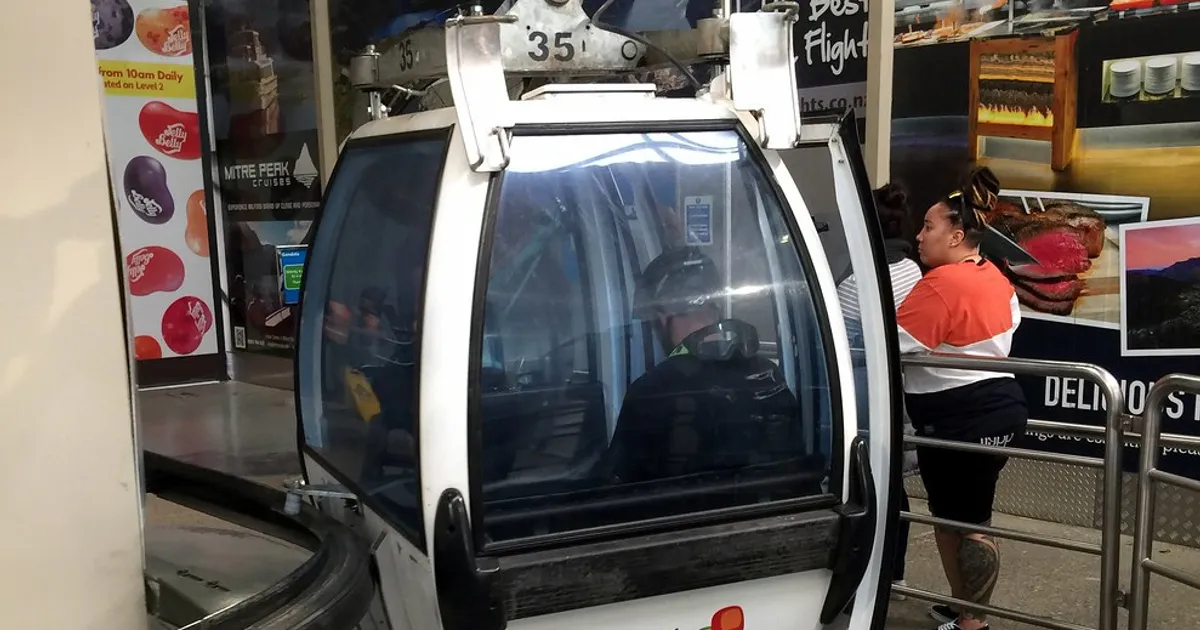
Skyline’s core assets are the gondola, the luge, the restaurants and the buildings that house them. Those are high fixed-cost pieces of infrastructure. The gondola cable costs the same to run whether it carries 500 people a day or 5,000. Once throughput clears the break-even line, nearly every extra dollar of revenue falls straight to the bottom line. FY2026 is what that looks like in practice.
Not a recovery story, a yield story
The easy read is “Queenstown tourism is back”. The more useful read is that Skyline is now well past recovery. In July 2025, NBR reported that Skyline’s pre-tax profit had already doubled to $61m for FY2025, despite a casino write-down. This year’s profit before tax hit $101.7m, up 53.4%. This is acceleration on top of an already strong base, not a bounce off a Covid trough.
Skyline Enterprises CEO Geoff McDonald said the company’s sites had recovered at different paces, and that operating multiple sites had helped smooth the result. New Zealand operations revenue rose 14% to $133.5m while international operations climbed 19% to $89.4m. Shareholders get a record final dividend of 85c per share, totalling $29m, payable 29 September 2026.
Spend is climbing faster than the crowds
What makes Skyline’s number more than a single-company anecdote is what the national data shows underneath it. Overseas visitor arrivals to New Zealand totalled 3.51 million in the December 2025 year, up 6%, the first annual period above 3.5 million since March 2020. Yet visitor numbers were still only at 90% of 2019 levels.
So volume has not fully recovered. Spend, though, has raced ahead. International tourism contributed $12.5 billion to the economy in the year to December 2025, with median daily spend up 8% to $309 and median spend per visitor up 3% to $2,248. Australian visitors spent $3.0 billion, now at 111% of their 2019 level, spending more than before Covid even though headcount has not fully returned.
That is the yield story. Fewer bodies, more dollars each. For an operator with premium experiences and pricing power, that combination is far more valuable than raw arrival numbers, because it lands on higher margins.
The currency tailwind doing quiet work
A weak New Zealand dollar is a big part of why. ASB senior economist Mark Smith said in February 2026 that the 3.5 million arrivals figure was “an extremely positive signal for the economy”, noting record Australian visitor numbers and that the low kiwi was encouraging more spending. A cheaper dollar makes a gondola ride, a luge run and a restaurant meal feel like better value to someone paying in Australian or US dollars. That lifts both the number who come and how freely they spend once here.
January 2026 kept the momentum, with overseas arrivals of 385,400, up 15,200 on January 2025. Tourism is now New Zealand’s second-largest export earner, and results like Skyline’s are why.
What it means for anyone with fixed assets
The read-across is clear. Any tourism business sitting on significant fixed infrastructure in a high-demand location, hotel groups, adventure operators, scenic rail, is potentially in the same sweet spot Skyline just demonstrated. The operators best placed are those who held their nerve through the lean years, kept their assets, and are now capturing rising per-visitor spend against a cost base that was largely already paid for.
The risk sits with the currency. The tailwind lasts only as long as the dollar stays suppressed. If the kiwi strengthens, the value proposition softens and the yield gains ease. For now, the maths is running strongly in favour of premium operators, and Skyline’s 112% profit jump on 15% more revenue is the cleanest proof of it in the current cycle.
Sources
- Skyline Enterprises posts 112% profit jump in 2026 (2026-07-26)
- Visitor Arrivals Pass 3.5 Million (2026-02)
- New Zealand Tourism Continuing To Boom (2026-03)
- International Travel: January 2026 (2026-03)
- An economist says new tourism and migration figures show the economy is starting to hum (2026-02-14)