

The front door is already locked
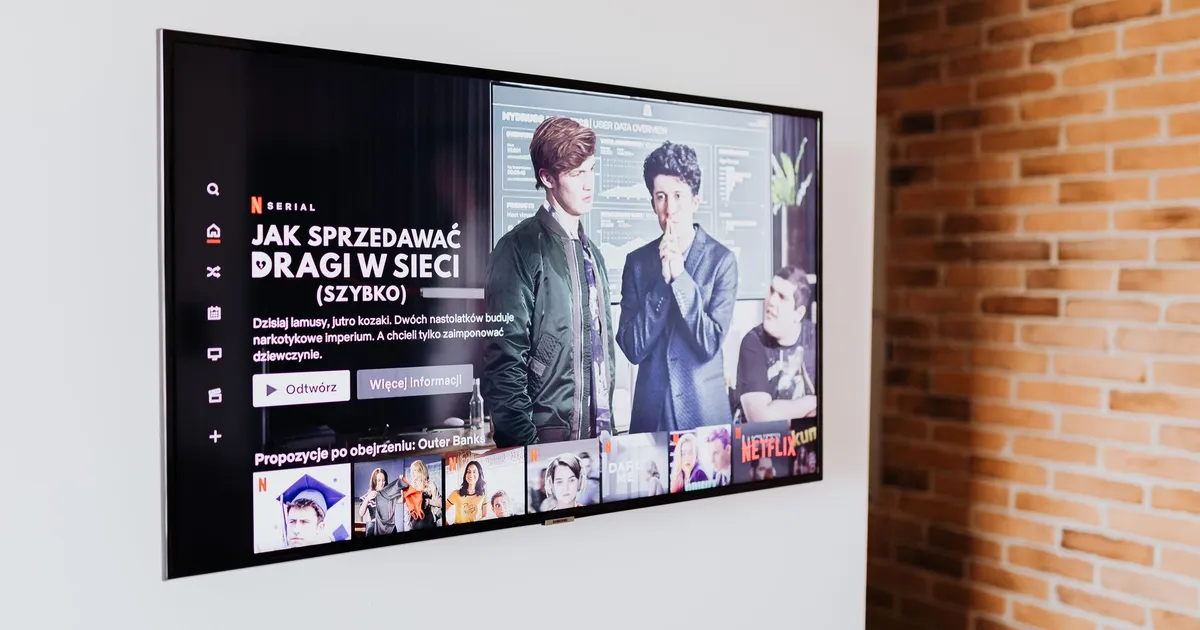
The home screen of a smart TV is the most valuable real estate in modern broadcasting. Whoever controls it controls what people watch. And right now, that real estate belongs entirely to global platforms.
The Ministry for Culture and Heritage’s 2025 discussion document found that about one-third of smart TV owners do not know how to download apps, and over half cannot customise the order of their home screen. When MCH tested the newest LG and Samsung models, no local apps were pre-installed. Not TVNZ+, not Three Now, not Maori+. Nothing.
This matters because a viewer who never sees the app never opens it. Fewer viewers means lower advertising revenue, which means less money for local content, which makes the app less worth opening. The spiral is already well advanced.
The numbers behind the structural shift
The February 2025 cabinet paper laid it out plainly. Netflix reaches 38% of New Zealanders daily, ahead of TVNZ1 at 34% and TVNZ+ at 27%. NZ On Air’s 2024 audience report found global video sharing platforms reach 64% of New Zealanders daily.
The advertising money has followed the eyeballs. In 2025, The Spinoff reported that TVNZ cut its local content budget by $30 million and Three by $20 million. The government’s own interim regulatory impact statement noted that global streaming platforms’ NZ revenue may now match local free-to-air broadcasters, yet those platforms carry zero obligation to invest in local production. TVNZ, by contrast, spent approximately $105 million on local content in 2022/23, more than 60% of its content budget.
Without intervention, the cabinet paper estimated broadcasters could cut local content investment by a further $60-80 million.
Voluntary data requests are not a regulatory strategy
Minister Paul Goldsmith’s approach has been to ask politely. A Newsroom report from 11 June confirmed he used a March 2026 meeting with Screen Association CEO Paul Muller to request revenue, subscription and audience data from international platforms. Voluntary data. From the companies he wants to regulate.
Screen Producers NZ president Irene Gardiner has been blunt about the pace. She told RNZ on 5 June that unregulated international streaming services have “devastated local broadcasters and screen content creators” and warned: “We’ve got behind, that’s the trouble. Australia did theirs in January and any time that goes by without us doing legislation in the way that Australia has, we’re falling behind the rest of the world, so it is extremely urgent.”
On the voluntary approach specifically, she was pointed: “I guess he is trying to be decent about it but I would like it to be a little more than voluntary at this stage.” Gardiner has estimated a 10% levy could generate up to $50 million a year for local content.
The platform lobby has already lost this argument elsewhere
The Computer and Communications Industry Association, representing major global tech companies, argued in its March 2025 submission that must-carry rules “confer preferential treatment to New Zealand broadcasters” and are “a highly prescriptive measure based on the untested premise that New Zealand consumers need to be artificially induced to consume local content.”
The premise is not untested. The UK, Australia, the EU, Canada, France, Switzerland, Spain and Denmark all have equivalent rules. Australia introduced its streaming levy in January 2026. New Zealand is still in the consultation phase.
The counter-risk is real, though. NHNZ Worldwide, a local production house, flagged in the Newsroom report the possibility of global platforms exiting the market if obligations become too onerous. That threat has leverage precisely because the government has not established what the rules will be.
A $3.3 billion sector waiting on a decision
This is not a cultural sideshow. MBIE’s 2024 screen sector report put the sector’s 2021 revenue at $3.3 billion, employing over 24,000 people. Auckland accounted for 58% of that revenue, Wellington 37%. The production companies, advertising agencies and technology firms connected to this sector are substantial employers.
The must-carry proposal is not radical. It mirrors rules already operating in comparable markets. Requiring Samsung and LG to pre-install TVNZ+ is a minor imposition on manufacturers that already customise software by region. The real question is whether this government will move from consultation to legislation before the economics of local broadcasting deteriorate past the point of recovery. Every month of voluntary data requests is another month the platforms hold the remote.
Sources
- Newsroom: Minister pushes Netflix and Disney for financial data as he mulls Kiwi content rules (2026-06-11)
- RNZ: Unregulated international streaming services devastating local broadcasters, screen content creators (2026-06-05)
- MCH: Media Reform Cabinet Paper – 19 February 2025 (2025-02-19)
- MCH: Media Reform Discussion Document (2025-02)
- MCH: Interim Regulatory Impact Statement – Local Content (2025-02)
- The Spinoff: Finally, change is coming to the media and screen industry – but what? (2025-02-12)
- NZ On Air: Where Are The Audiences? 2024 Report (2024-08-21)
- CCIA: Comments to the New Zealand Ministry for Culture and Heritage (2025-03)